
Human Cells Turn ‘Invisible’ As Scientists Mimic Squid’s Ability To Go Incognito
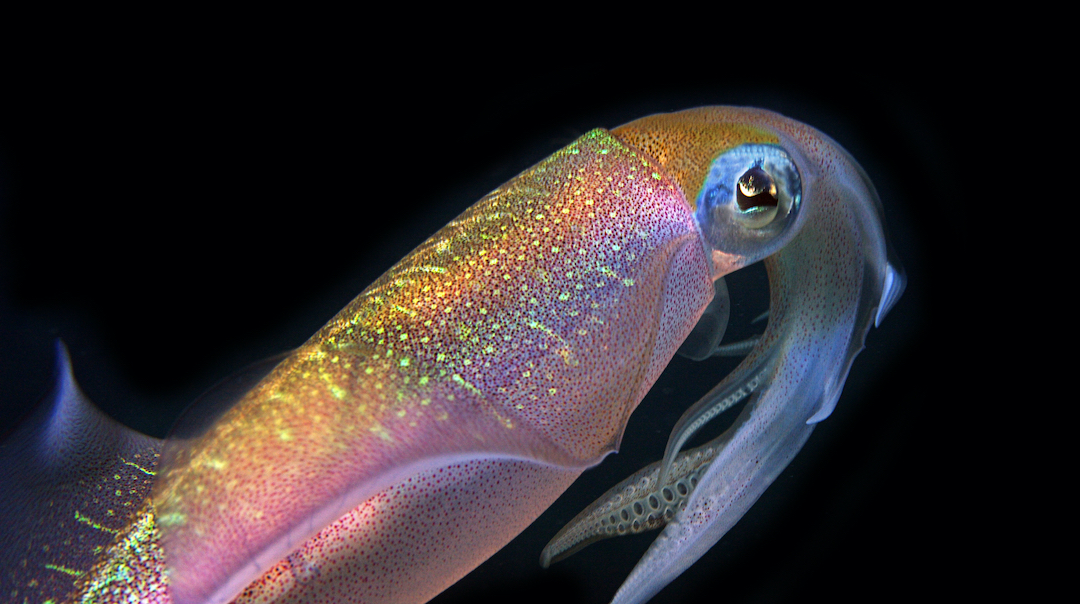
Squids are masters of camouflage and have evolved several mechanisms to blend in with their surroundings. They can change the color and texture of their skin to match the environment using a network of specialized cells called chromatophores. These contain a pigment that can be rapidly expanded or contracted to change color and pattern.
Unfortunately, it’s hard to understand precisely how these animals can become reversibly invisible as researchers cannot culture their cells in a lab. So the next best solution? Replace them with human ones instead.
Squids and other cephalopods have this ability deemed as “tunable transparency,” which allows them to change how much light is absorbed and fine-tune the structural coloration of their cells. This also affects how it is scattered through microstructures.
Alon Gordetsky, who presented the findings at the American Chemical Society, commented on how this “crazy idea” was to use human cell cultures to replicate this ability and study it closer.

The team manipulated skin cells that can aid in structural coloration via proteins called reflectins. These are known as leucophores, which tend to clump together to create nanoparticles that can bounce light back to appear white.
The more light that can filter in them changes them from opaque to transparent, and the less that passes through has the opposite effect.
Human cells were mixed with reflectins from squids and added to salt to get them to clump together. By controlling how much salt is introduced, they could also regulate transparency.
One of the main goals of this study is to aid scientists in better understanding squids so that they might replicate their unique properties in inventions such as liquid windows. Alas, this does not mean we are one step closer to invisibility becoming a thing, but we might be on the precipice of new future-proof innovations.
[via Futurism and American Chemical Society, images via various sources]


