
Face Of 30,000-Year-Old Egyptian Human Gets Digitally Reconstructed In 3D
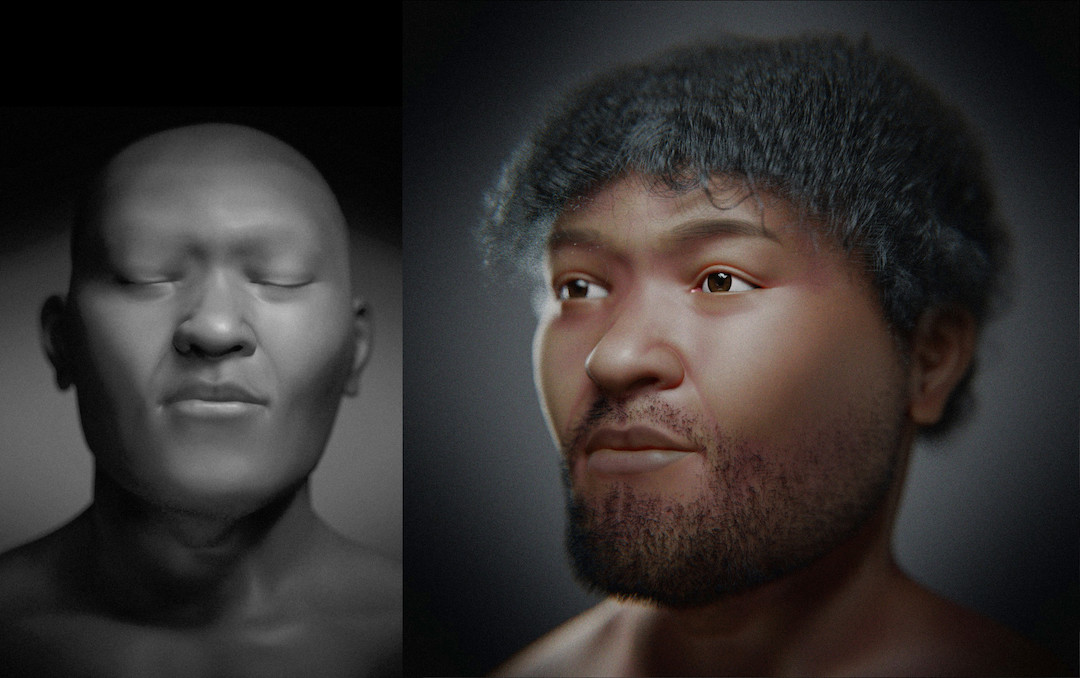
30,000 years ago, an Egyptian man was buried in the Nile Valley at a site called the Nazlet Kater 2 (NK2). Now with the help of 3D technology, a team of scientists from Brazil has taken his remains and reconstructed his face.
The body was discovered in 1980, and anthropological studies initially showed that the man was of African ancestry, stood at five feet and three inches, and was between 17 and 29 when he died.
He was later transferred to the Cairo Museum, where he has since rested. However, his visage is being recreated in exquisite detail to understand life from yesteryear better.
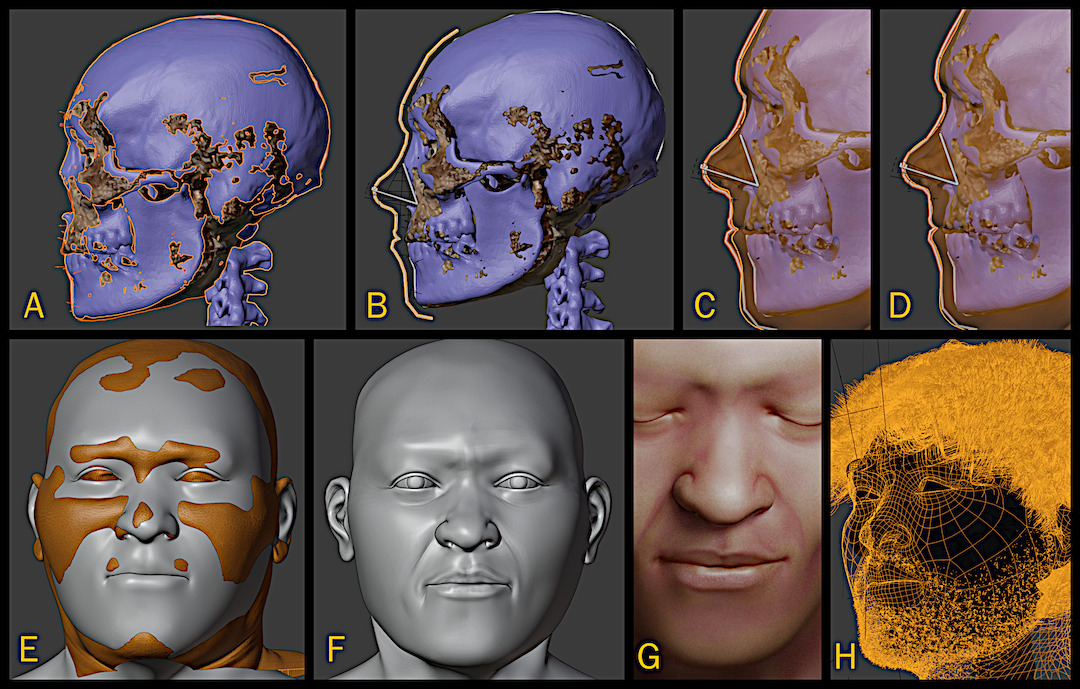
The skeletal remains were put through 3D reconstruction, and during this process, researchers were alerted that he was missing a portion of his skull. The team believes this could have been from a mining accident as scans of his body showed signs of heavy-duty work, which could have led to his death. A computerized tomography (CT) scan was then employed to rebuild that part of his head in the final product.
The team first produced a rough structure before photogrammetry was used to digitally stitch all the renders together and create two virtual 3D models. The first is a black-and-white version of the man without hair and closed eyes. The second version, however, takes on some artistic liberties by adding period-accurate hair and a beard. He also has his eyes open in this iteration, adding a little life.
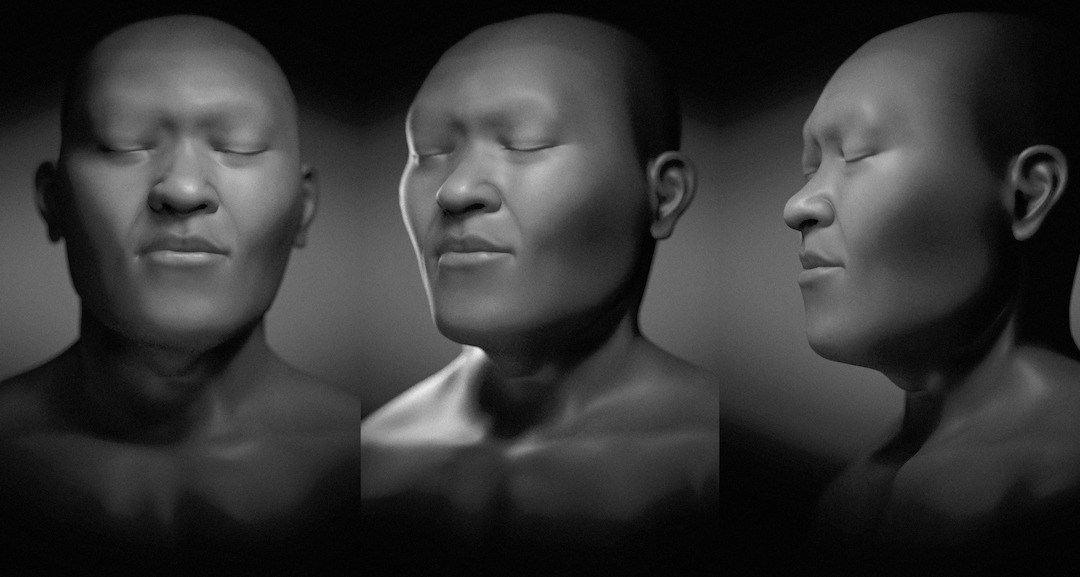
The study posits that this skeleton contains the oldest Homo sapien remains found in Egypt and is one of the oldest in the world. Reconstructing his facial features could bring us closer to understanding human evolution.
In this instance, the team pointed out one main difference: his jaw is more perforated than a modern human’s. “In general terms, the skull was considered modern, but it has some elements documented as archaic, namely the large respiratory branch of the mandible, straightness of the scaly suture, and alveolar prognathism,” explains the paper.
[via Interesting Engineering and Live Science, image via Cicero Moraes, Moacir Elias Santos (CC BY 4.0)]


