
World’s Oldest Piece Of Tartan Could Be This Tattered Scrap Found In A Bog
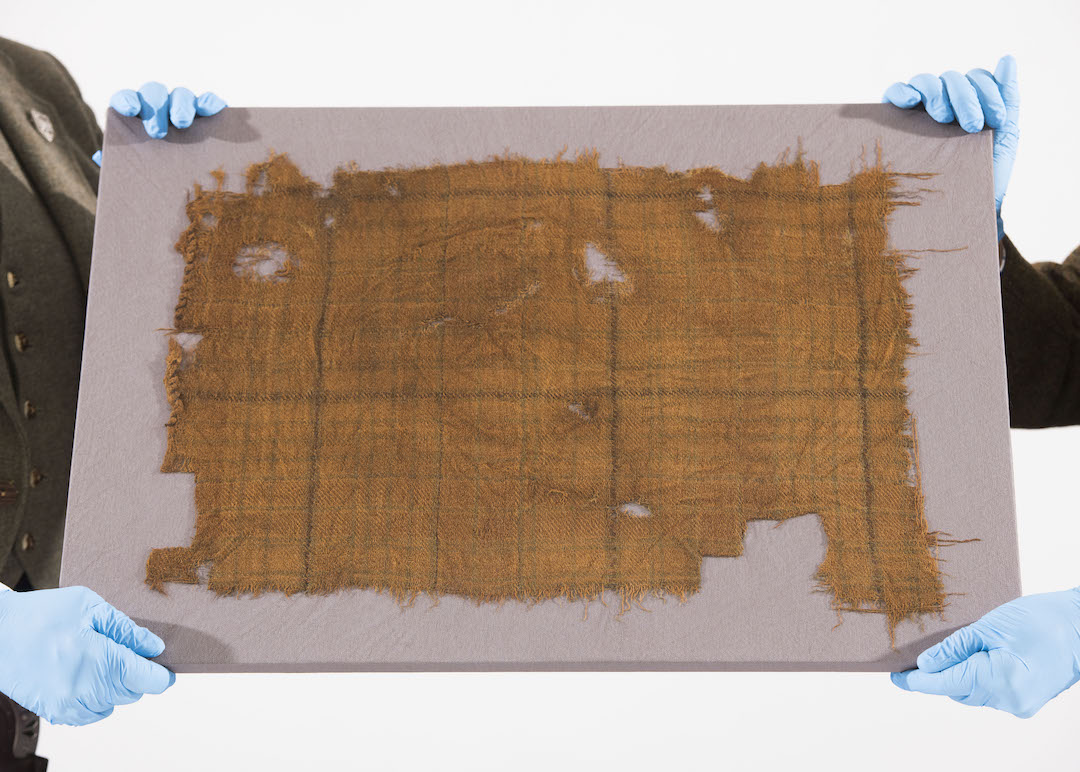
A shabby piece of cloth uncovered from a peat bog in Glen Affric, a region in the Scottish Highlands, is most likely the oldest known specimen of tartan—the colorful, patterned cloth often associated with the country and its history.
According to V&A Dundee, the Scottish Tartans Authority commissioned a Dye Analysis and Radiocarbon test on the scrap, which showed that the “true tartan”—reportedly found 40 years ago—dates all the way back to 1500 – 1600 AD.
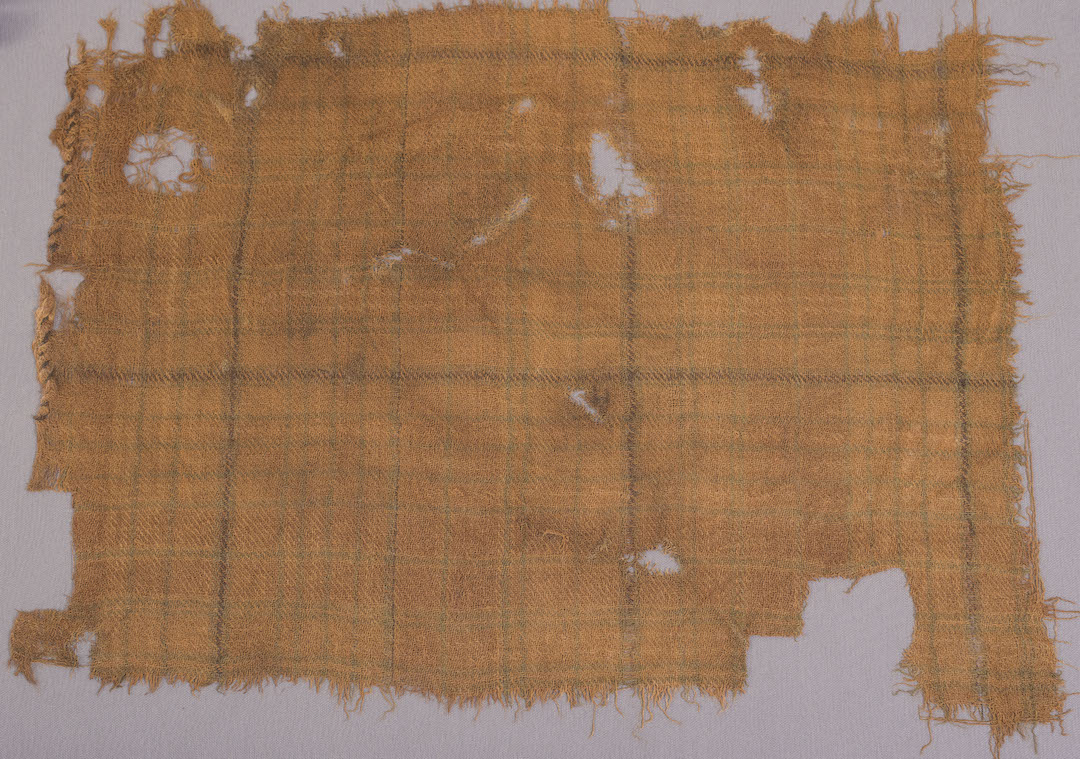
To figure out the provenance of the textile, scientists from the National Museums Scotland first used high-resolution digital microscopy to identify four colors for analysis: green, brown, red, and yellow.
Results found that indigo/woad was present in the green dye, but proved inconclusive for the other colors due to how degraded the fabric had become over the centuries. Nonetheless, the absence of artificial or semi-synthetic dyes pointed towards a pre-1750s make.
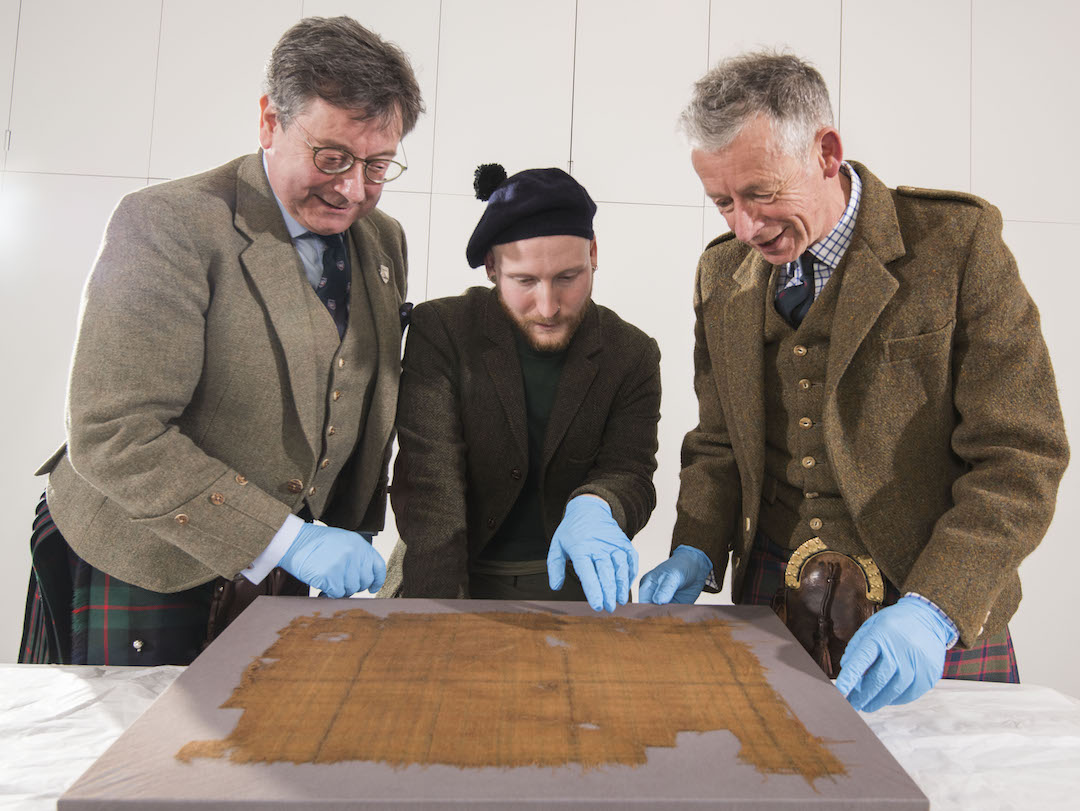
With this information, the scrap then underwent additional radiocarbon testing at the SUREC Radiocarbon Laboratory in East Kilbridge. This identified the textile was possibly created between 1500 to 1655 AD, with 1500 to 1600 AD thought to be the “most probable.”
This makes the particular piece of tartan the oldest-known true tartan found in Scotland, which till now was regarded as the Falkirk “tartan”—a simpler check pattern woven using undyed yarns from the third century.

Those who wish to get a peek at the Glen Affric tartan can do so at the V&A Dundee’s Tartan exhibition, which will be displayed along with over 300 objects that tell the tale of the pattern’s “universal and enduring appeal” throughout fashion, architecture, graphic design, and more.
“The Glen Affric tartan is clearly a piece of national and historical significance. It is likely to date to the reign of James V, Mary Queen of Scots, or James VI/I,” explained John McLeish, Chair of The Scottish Tartans Authority.
“There is no other known surviving piece of tartan from this period of this age. It’s a remarkable discovery and deserves national attention and preservation. It also deserves to be seen and we’re delighted that it is to be included in the Tartan exhibition at V&A Dundee.”
[via Artnet News and V&A Dundee, images via V&A Dundee]


