
NASA Unveils Plans For Futuristic Space Pharmacy, Asteroid Defense System
While NASA is steadily preparing to send humans back to the Moon, it’s not slowing down in other areas of innovation, as the agency recently selected the latest projects to be funded under its Innovative Advanced Concepts (NIAC) program.
Of the six research teams that were chosen, one idea involves the development of a space pharmacy that will allow astronauts to access treatments and medicines during long stints in orbit, with the hope that they will one day be able to create their own drugs on demand.
This astropharmacy could act as a station to treat persons suffering from radiation exposure or to improve astronauts’ bone health, two ailments that are common complaints of those who head into space.
Another plan will see the creation of a planetary defense system that will allow incoming asteroids to be pulverized on sight, with the Earth’s atmosphere acting as a “shield” against the debris. This involves using small, hypervelocity kinetic penetrators to break up large space rocks.
Once split into smaller fragments, the pieces will then burn up upon entering the atmosphere due to the extreme heat and pressure, providing the planet with a “rapid response capability to mitigate a disastrous impact” from an asteroid or comet.
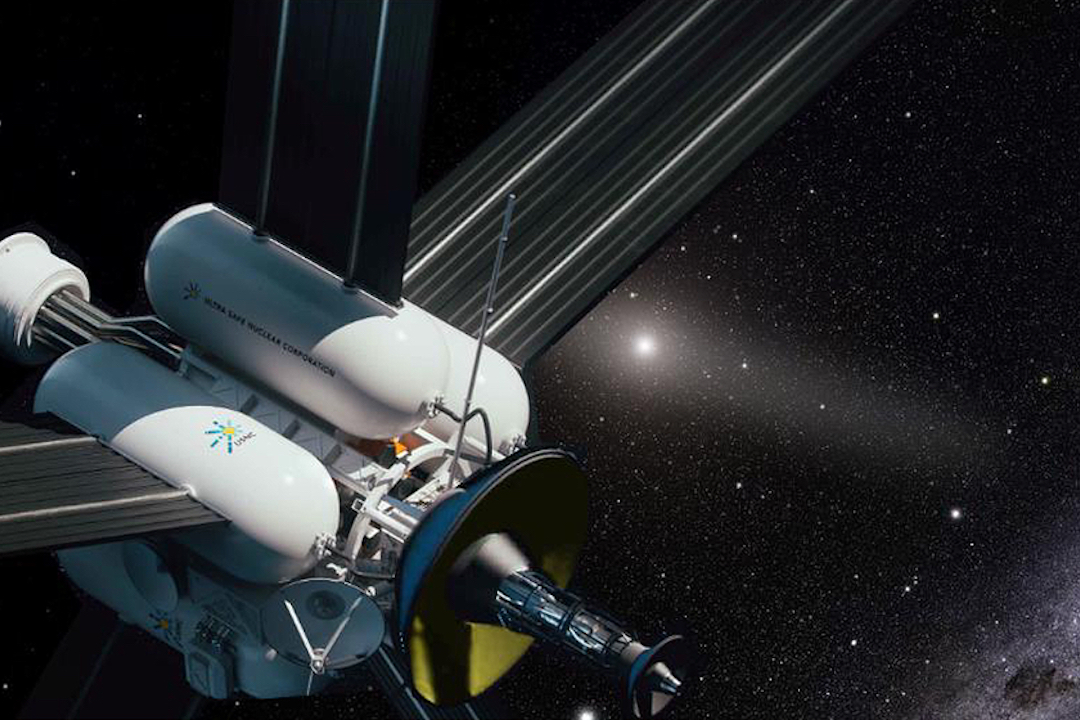
Other concepts include a quantum radar to improve sensing studies of space, solid-state propulsion technology for air mobility vehicles, a radioactive electric propulsion system to study fast-moving objects, and a massive radio telescope array.
Each of the six projects will receive up to US$600,000 in funding over two years to further develop the ideas.
“These new awards showcase the breadth of how NIAC-supported concepts can change exploration,” said Jim Reuter, Associate Administrator for NASA’s Space Technology Mission Directorate (STMD).
“From revolutionary propulsion systems for deep-space missions to advances in aviation to change how we travel here on Earth, these technologies would radically expand our capabilities in air and space.”
[via Interesting Engineering and Gizmodo, cover image via NASA / Christopher Morrison]


