
Can You Spot Your Ancestors In These Newly Digitized 19th-Century Silhouettes?
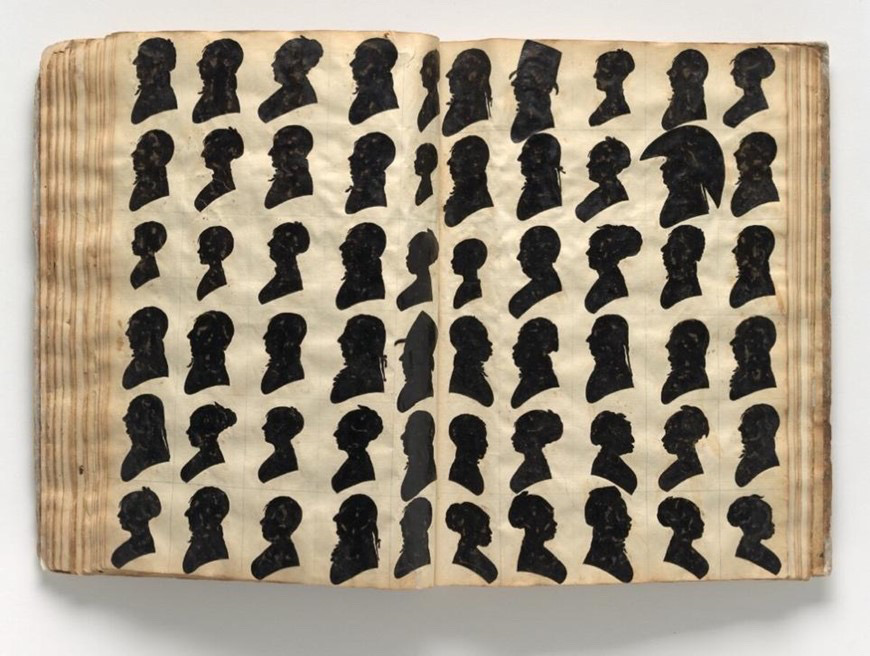
Before photo booths with funky props became a thing to remember milestones by, there was an English man named William Bache who, between 1803 and 1812, covered a significant stretch of the United States to craft silhouette portraits of anyone interested in obtaining a keepsake of their face.
Two centuries later, the Smithsonian’s National Portrait Gallery (NPG) has released his ledger book of over 1,800 cut-paper profiles online in hopes of connecting some of these faceless figures to their descendants.
In his heyday, Bache’s name was uttered by members of social classes high and low thanks to his unequivocal knack in delivering accurate portraits quickly and cheaply—it didn’t matter if he had no professional art training. The man speedily shaded side profiles with the help of a patented machine called a physiognotrace to trace the outlines of his subjects’ faces.
In a time when portraiture could only be afforded by the elite, the artist democratized this luxury and rendered profiles for just 25 cents (about US$5 in today’s currency) per set of four. With these drawings predating photography, they were possibly some of the first-ever snapshots clients had seen of themselves.
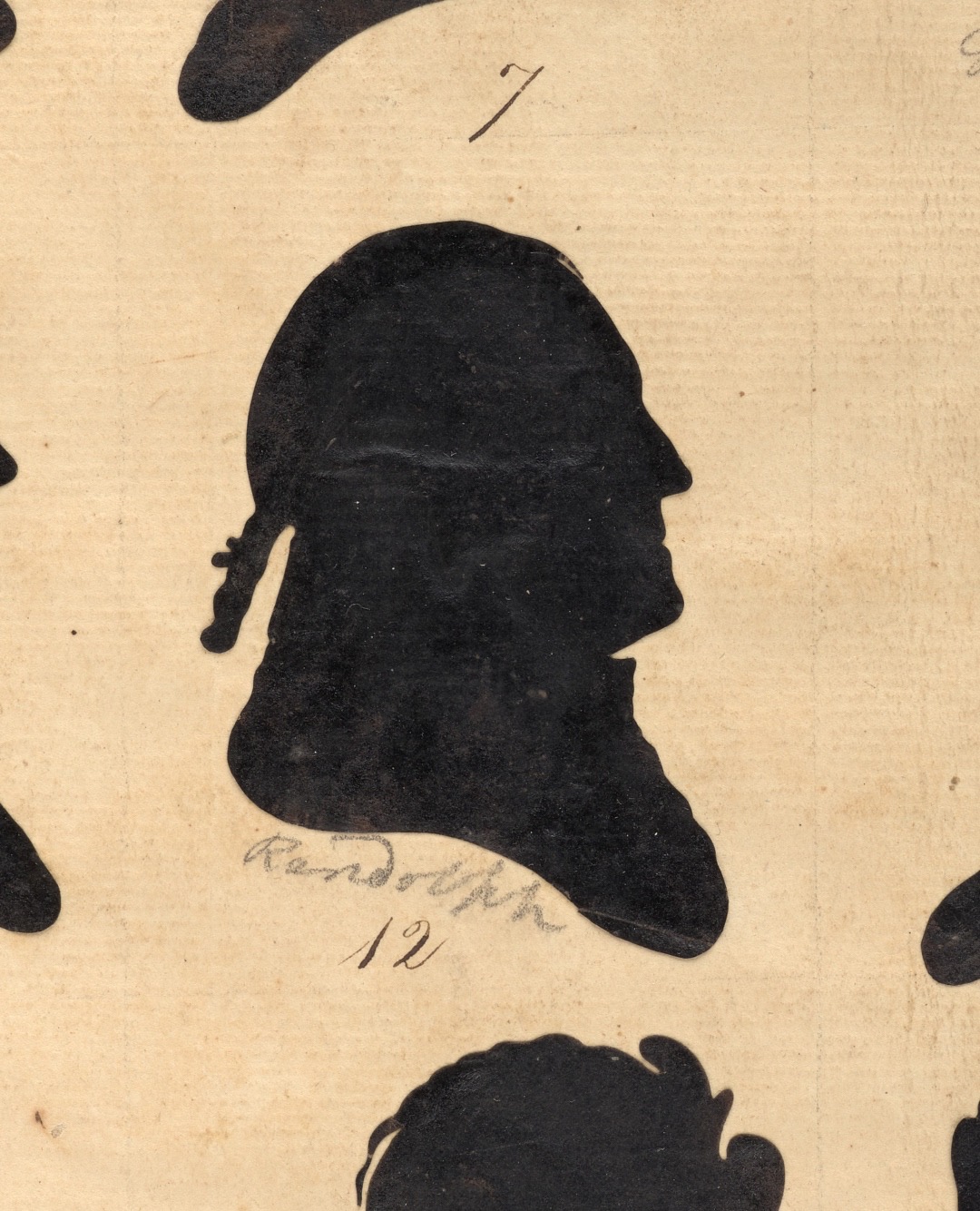
Image via National Portrait Gallery, Smithsonian Institution; partial gift of Sarah Bache Bloise (CC0)
Their faces shaded in dark ink, the social ranks and skin colors of subjects were leveled off.
Bache, who emigrated from England to Philadelphia in 1793, cut out some of his artwork and preserved them in a ledger book. But when the Smithsonian obtained these unique blots of history, it found that the entire album was poisoned.
The book was laced with arsenic, in fact. Experts still have no real answer as to why the chemical was found in these pages, but as arsenic was widely used in medicines and dyes in the Victorian era, its appearance here didn’t really surprise them.
As such, the gallery has digitized Bache’s portraits and shared them on a new microsite, enabling observers of the future to flip through the pictures and look closely without being poisoned. The initiative was made possible after Getty Foundation’s Paper Project provided funding to Robyn Asleson, the museum’s curator of prints and drawings, to resuscitate the silhouettes for the digital era.
The website reveals the identities of hundreds of previously unknown sitters and features an interactive timeline of Bache’s life, conservation reports, and more. Explore the site now https://t.co/C3h4KPuu1s pic.twitter.com/1iRVn2W2E8
— Getty (@GettyMuseum) March 20, 2023
Wearing hazmat suits, Asleson and her expansive team studied the lethal pages and photographed them in high-resolution. To delve into the lives behind the obscured faces, the researchers scoured newspapers, Ancestry.com, and other databases to learn more about the identities listed in the ledger.
Handwritten in the book were the names of half of the sitters, among whom were famous figures like President Thomas Jefferson and First Lady Martha Washington. The records also mentioned everyday individuals like traveling entertainers, tavern keepers, a young bride, a comedian, and dance instructors.
(2/2) Conservators discovered that the album contained arsenic, making it unsafe for handling or displaying without special precautions.
— National Portrait Gallery USA (@smithsoniannpg) March 20, 2023
Today, thanks to the @GettyFoundation, the entire volume of silhouettes is now available online: https://t.co/SMu167HIln
Bache also conveyed the relationships between characters in the log book, depicting husbands and wives by making their portraits face each other.
Having traveled from Maine to Virginia and down to the south, from Louisiana to Cuba, Bache created portraits of diverse individuals, including many Afro-Caribbean sitters. The microsite thus serves as a rare opportunity for people of mixed heritage, especially descendants of figures from racially-diverse New Orleans, to reconnect with their ancestors.
“Although the Portrait Gallery has owned this album of silhouettes for over 20 years, it took the support of the Getty and the digital resources that are now available to finally unlock its secrets,” Asleson shares.
“Digging deeply into the circumstances of the album has shed fascinating new light on the artistic practice of William Bache and has yielded a few surprises.”
You can safely access this hazardous resource here.
[via Smithsonian Magazine and Smithsonian News Desk, images via various sources]


