
Lightest Champagne Bottle Is In The Works For A Truly Bubbly Experience

Image courtesy of Telmont
A prominent champagne house plans to make bubbly that feels light on the tongue and hands.
Telmont has successfully completed tests with French glassmaker Verallia for an 800g (1.75 lbs) bottle, which is 35g (0.08 lbs) lighter than the standard weight for sparkling wines. Although the difference seems marginal, the brand describes that this reduction is unprecedented and has thus required much trial and error. Telmont says that it will “gradually adopt the lightest Champagne bottle.”
The pair have been pushing the boundaries of the structure of carbonated wine packaging, lightening Telmont bottles from 900 to 835 grams a decade ago, and reducing a further 35 grams now—a feat that’s said to take significant technical knowledge. They’re taking small sips of action so as not to overwhelm the bottles’ mechanical threshold for gas pressure.
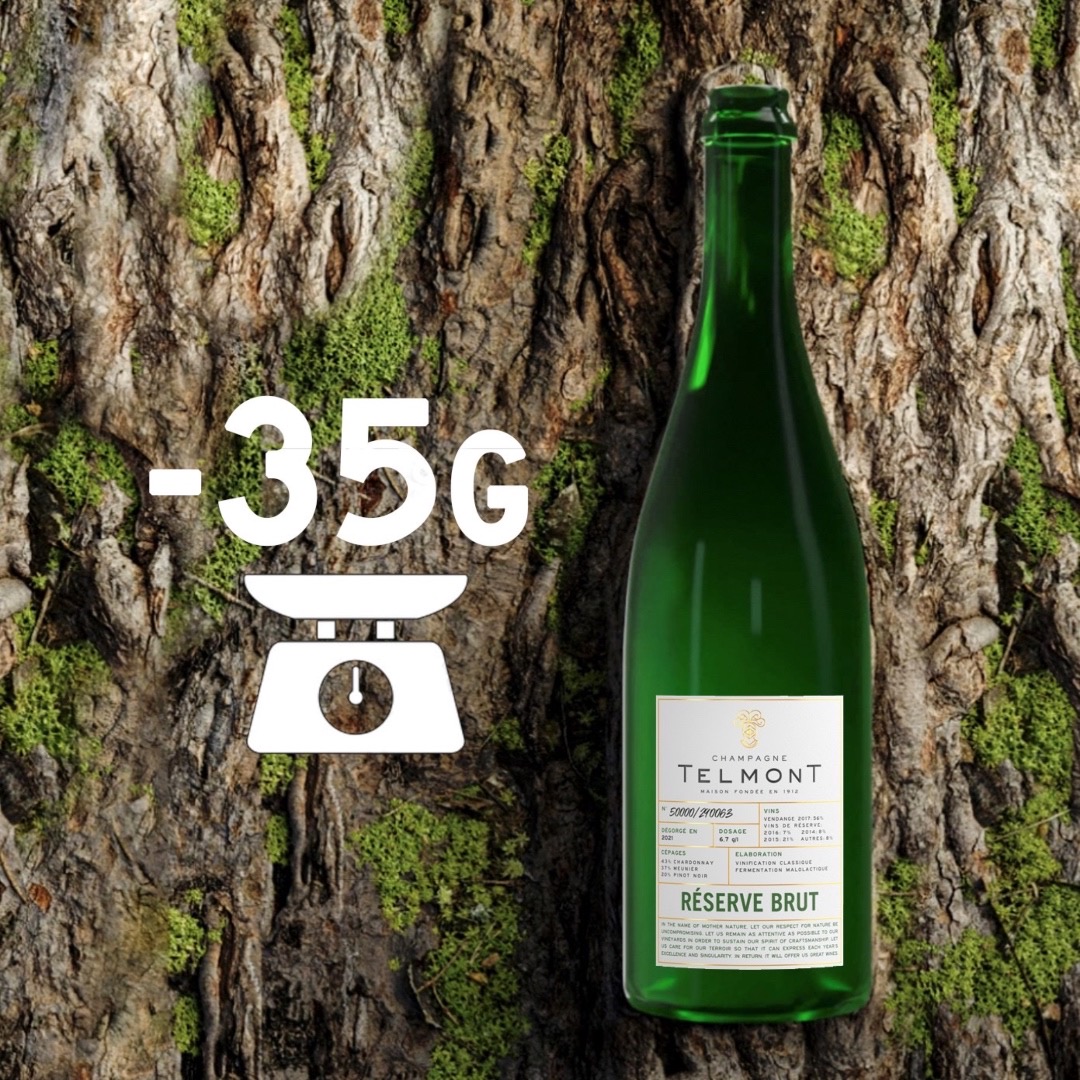
Image courtesy of Telmont
With trimmer bottles, Telmont—which has Leonardo DiCaprio as one of its investors—says it can lower its total emissions, of which glass makes up 24%. “Lighter bottles contain less glass, and therefore generate less carbon emissions during the glass melting and production processes: around 4% less CO2 per bottle produced,” it explains.
The new and improved version will also use less fuel during transport, the champagne maker elaborates.
Telmont has tested the ultra-lightweight design on 3,000 bottles to “highly conclusive” results. It is now upscaling production with an initial batch of 30,000 units.

Image courtesy of Telmont
The maison notes cutting its bottles down to just 800 grams will take it closer to its goal of being climate-positive by 2030 and net-positive by 2050.
Says DiCaprio in a statement: “With an ambitious goal of becoming the first climate-positive champagne house by 2030, and net positive by 2050, this step demonstrates Telmont’s commitment to reducing the carbon footprint of winemaking and changing the ways they cultivate, produce and transport their champagne.”
The first wine to float the light bottle to the masses is Telmont’s Réserve de la Terre, which ages for three years. Owing to the winemaking process, this batch, with the updated technology, will only be ready in 2026.
View this post on Instagram
[via Telmont, images courtesy]


