
Researchers Uncover Unexpected Wall Paintings Of Christ, Virgin Mary In Sudan
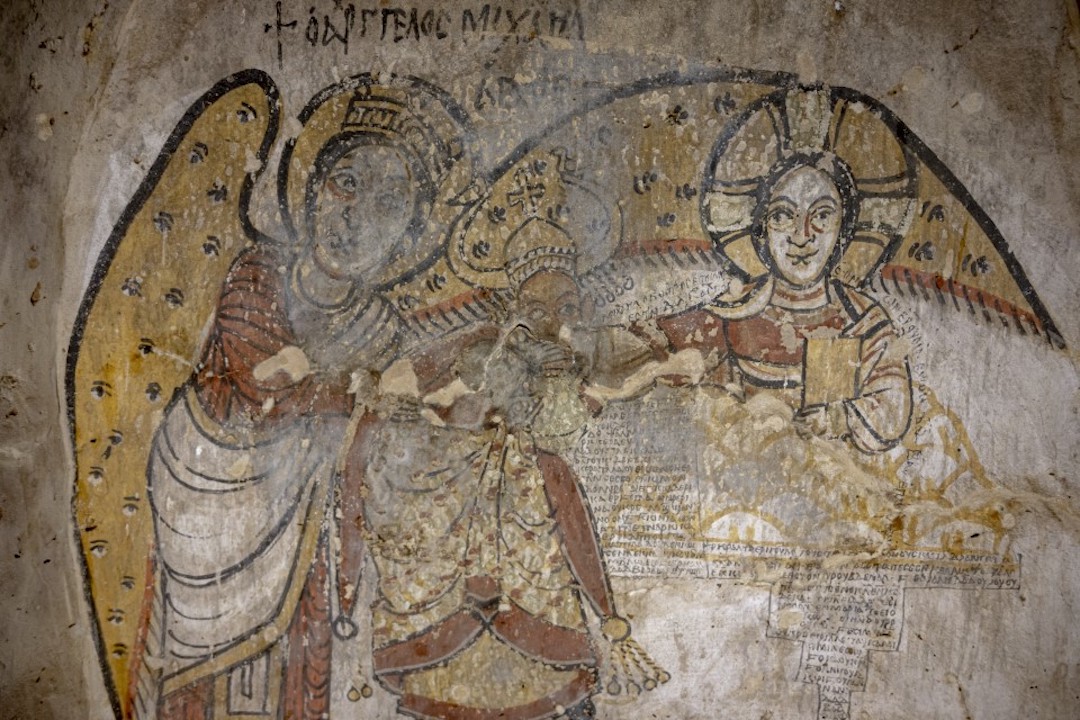
If there’s one thing archaeologists didn’t expect to find in the old Sudanese village of Old Dongola, it was medieval Christian wall paintings that have never been documented. But that’s exactly what researchers Dr Lorenzo de Lellis and Maciej Wygo chanced upon during their explorations.
While trudging through a labyrinth-like complex of rooms made of sun-dried brick, the scientists noticed walls of a hidden chamber were decorated with scenes of Christ and the Virgin Mary. It’s believed the house dates back to the Funj period during the 16th to 19th centuries.
Aside from portraying Mother Mary and Christ, one particular scene on the mural depicted a Nubian King along with Christ and the Archangel Michael. However, the researchers noted it wasn’t the “typical representation” of a Nubian ruler being protected by saints and angels.
Instead, the King is shown as bowing to Christ—seated up in the clouds—and kissing his palm, while Archangel Michael supports the royal and spreads his wings to shield both of the men. It certainly is intriguing, considering there have been no similar scenes seen in the culture’s art.
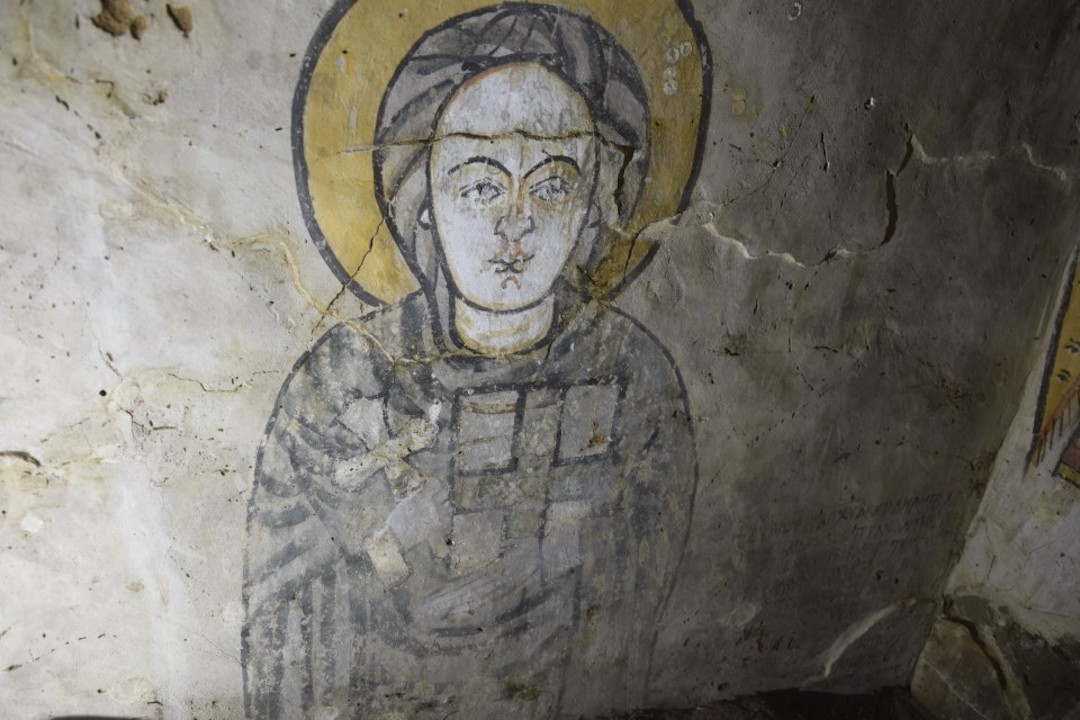
Interestingly, the scientists spotted a figure of the Virgin Mary painted on the north wall of the chamber that did not match the usual representation of Christ’s mother in Nubian paintings. She appears dressed in dark robes, holding a cross and a book.
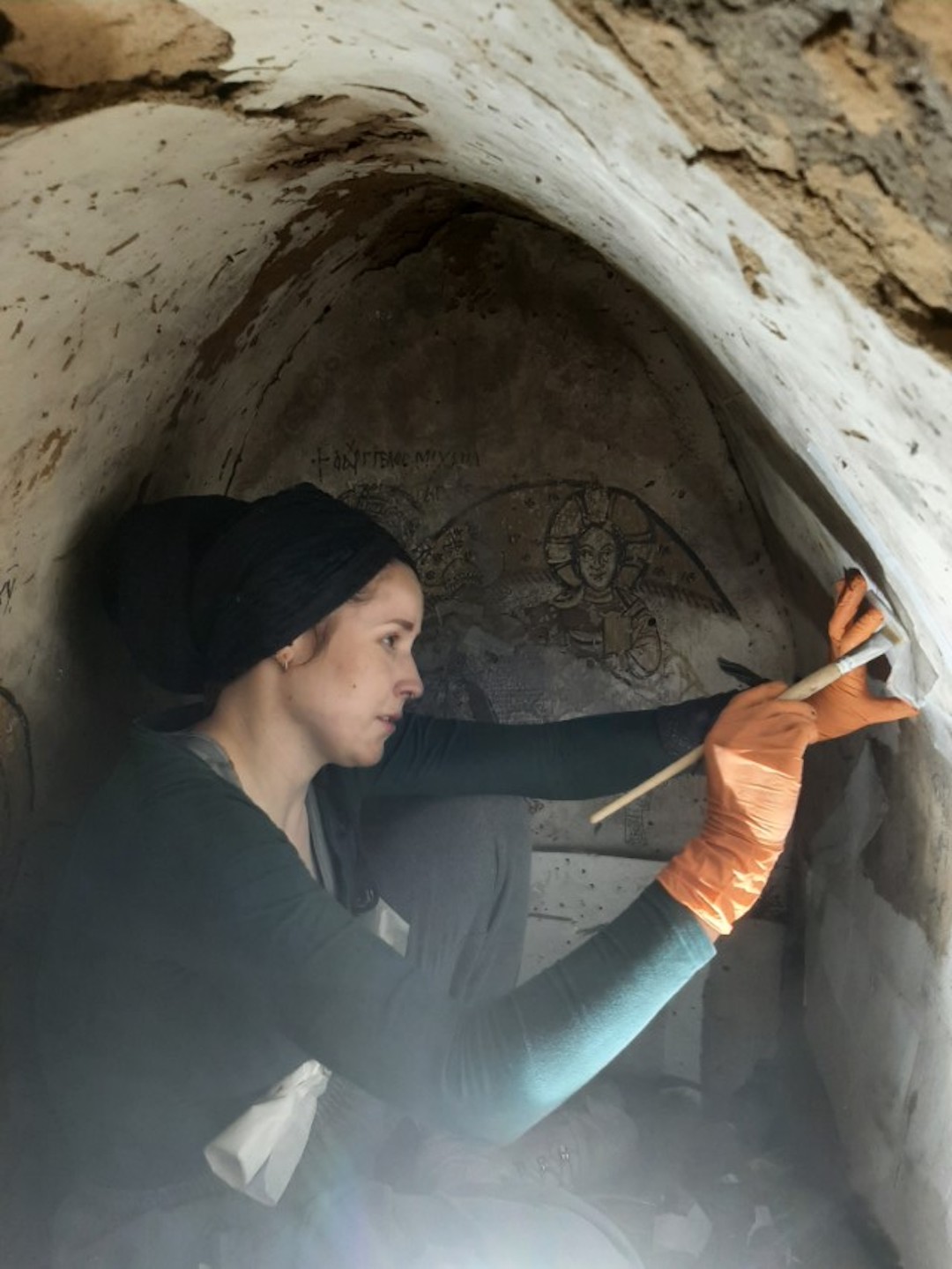
According to the University of Warsaw, archaeologists are currently working on deciphering the inscriptions that accompanied the paintings. Some have been identified as part of the Liturgy of the Presanctified Gifts, while the writing in Old Nubian script is “extremely difficult to decipher.”
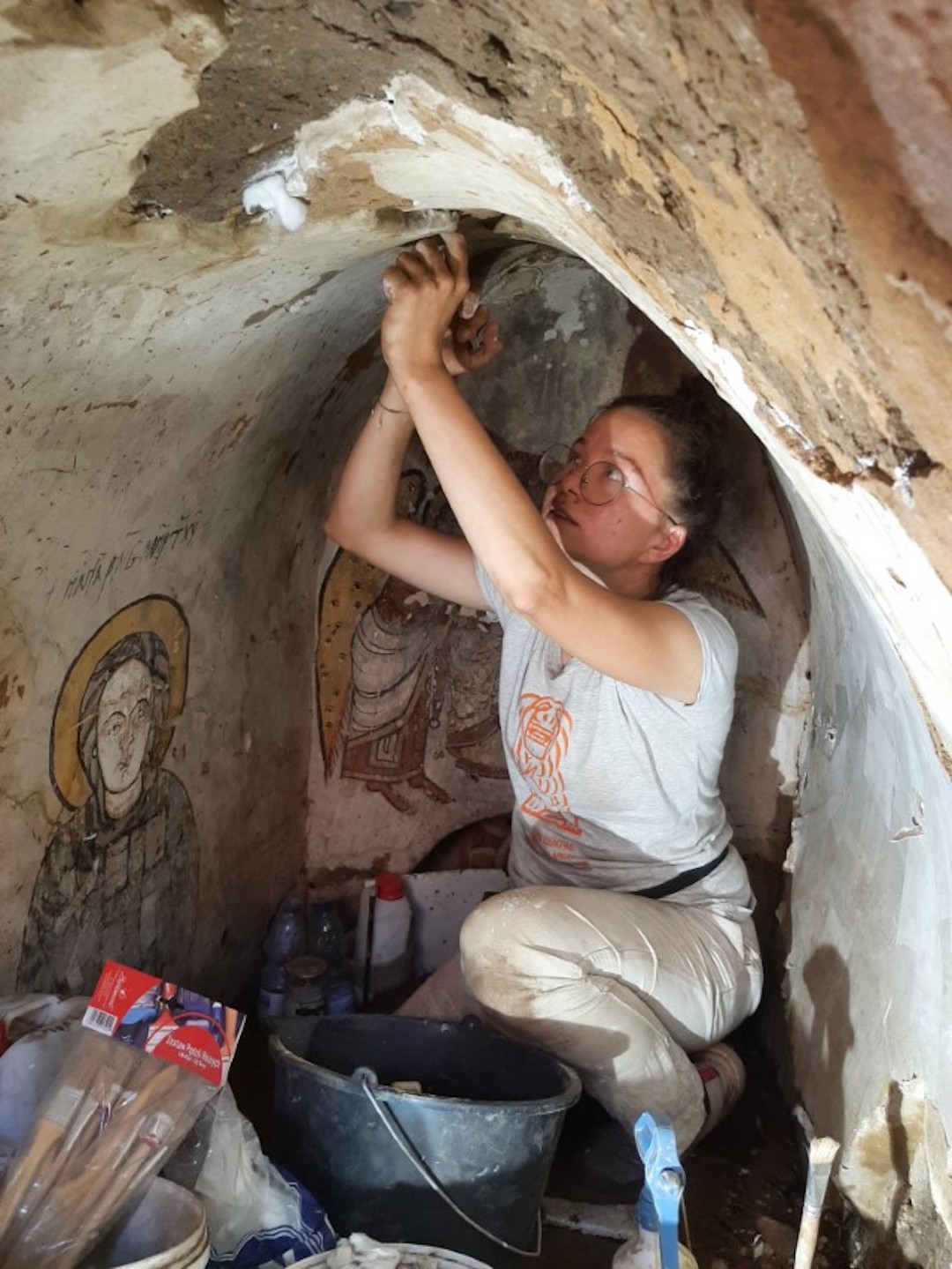
So far, it’s thought that the passage, found under the main scene, contains several mentions of King David and a possible prayer of protection. The ruler in question could be one of the last rulers of Christian Makuria, who was named David.
The bigger mystery is the complex home itself—how did the hidden space, packed with vaults and domes, come to be? Further excavations may be needed to uncover more of its secrets, though scientists are prioritizing the preservation of the wall paintings for now.
[via Interesting Engineering and IFL Science, images via various sources]


