
New Sugar & Wood Material Could Give Rise To Dissolvable Utensils

Reduce, reuse, recycle—a message that’s been repeated over and over as the world tries to battle climate change and its ongoing effects. But there are still instances we fall short, such as when using single-use cutlery to eat takeout on the go.
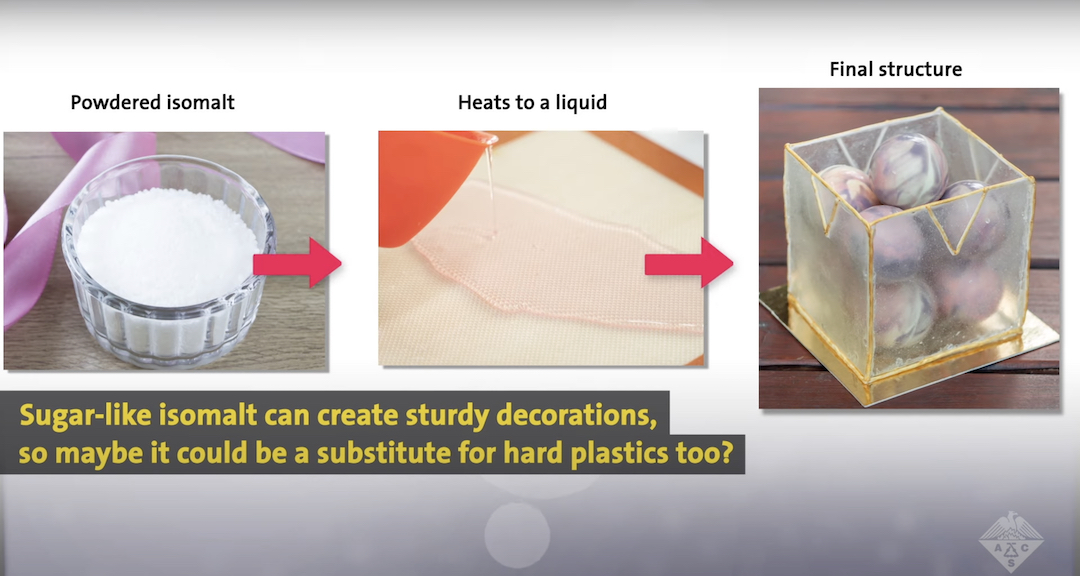
As such, scientists from Idaho’s Boise State University have come up with a new material that can degrade on demand. The innovation is based on isomalt, an alcoholic substance derived from sugar beets that can be used to replace regular sugar.
In fact, that’s the compound used by bakers to create decorate structures on cakes and pastries that stand upright but quickly break down when exposed to water. Scientists set out to make it even stronger by adding pure plant-derived cellulose, cellulose or sawdust, or powdered wood.
The three different mixes then went through the conventional plastic manufacturing process, where they were extruded into pellets, heated, and formed into household items such as a saucer and chess piece.
Researchers found that the mixed solutions doubled the strength of the isomalt in all three scenarios, making the new material even stronger than common plastics polyethylene terephthalate (PET) and polyvinyl chloride (PVC).
The best part? The isomalt retained its lightweight properties and was still able to dissolve in just minutes when placed in water. To prolong its shelf life, scientists coated some of the saucers with food-grade shellac and cellulose acetate, which stayed submerged for up to seven days.
Going forward, the team aims to use the technology to produce cutlery and other single-use items found in restaurants and fast food chains all over the globe. The ultimate aim would be for customers to crush their utensils and simply spray them with water to dissolve once discarded.
Even if these items made their way into the landfill, just a small crack in the coating would allow for the entire structure to collapse into sugars and plant-based additives, which could simply act as fertilizer for the soil.
[via New Atlas and Phys.org, images via American Chemical Society]


