
This Smart Wound Dressing Changes Color To Signal A Possible Infection

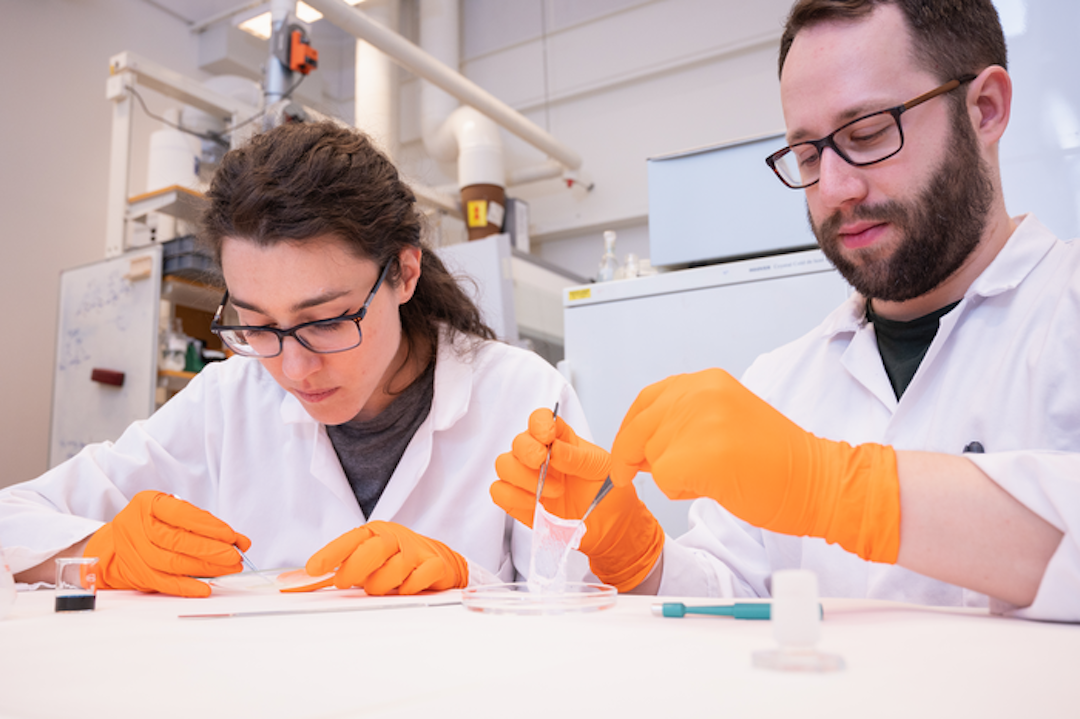
What if it were possible for wound dressings to reveal early signs of infection so it could be treated as soon as possible? That’s what researchers at Linköping University in Sweden have developed with a nano-cellulose wound dressing, calling it a “further step” in the area of wound care.
While the term “skin-deep” is often used to signal a benign injury, a wound suffered on the largest organ of the human body still hurts. When a lesion occurs, it disrupts the normal function of the skin and can take a long period of time to heal. Worse still, infections of the wound could be fatal.
Traditionally, most dressings are changed once every two days, during which caregivers have to lift the dressing and assess the injury based on its appearance. This procedure is time-consuming and causes pain to the patient as the wounded scab is disturbed over and over.
As such, the team, in partnership with scientists at Örebro University and Luleå University, decided to create an innovative dressing solution that can point doctors and nurses to signs of infection without disrupting the healing process.

Made of a tight mesh of nano-cellulose, the dressing can keep bacteria and microbes out of the wound while allowing liquids and gases to pass through, a key component to healing a cut. Once applied, the dressing will not need to be removed apart from if the color changes.
Just how does the color change all on its own? As infected lacerations show an increased pH value, researchers chose to coat the dressing in bromthymol blue (BTB) dye via a silica material, which changes from yellow to blue when the pH value exceeds seven.
Furthermore, as antibiotics are the go-to medication to treat infections, spotting one early could allow for the area to be treated locally instead. To boost this, the team is looking to include anti-microbial substances that can kill off all types of bacteria on wounds.
The scientists predict it will take at least five to 10 years before the new dressing will be available in mainstream healthcare, considering how long it takes for products to pass rigorous tests. Perhaps, by then, there’ll be an entirely new type of wound treatment for patients worldwide.
[via Phys.org and Linköping University / EurekAlert, images via Olov Planthaber / EurekAlert]


