
Ancient Egyptian Animal Coffins ‘Blasted’ Non-Invasively To Reveal… Lizards
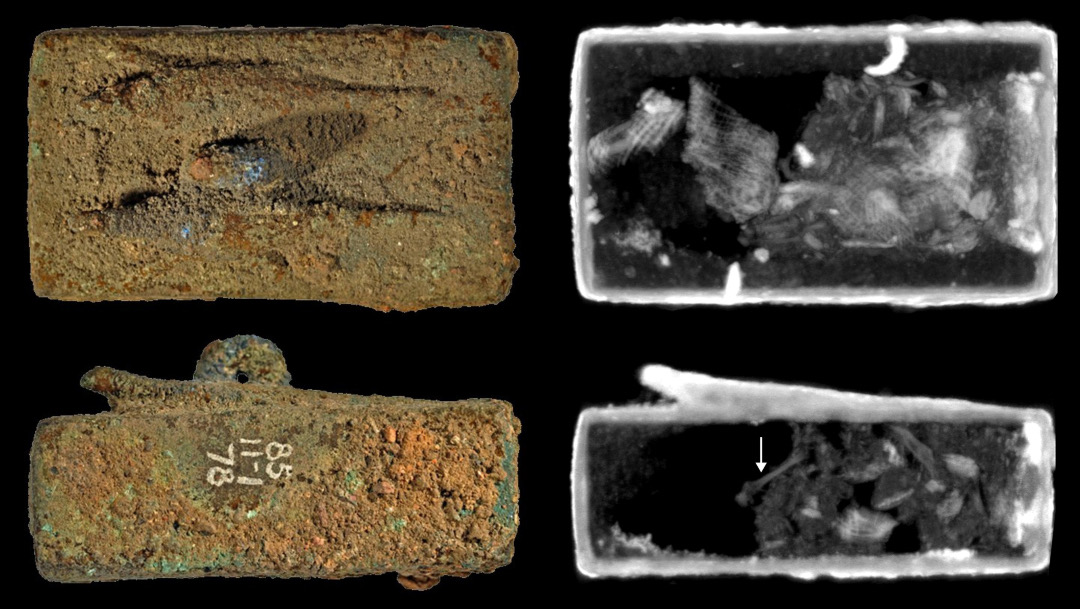
For 2,500 years, six Egyptian animal coffins were left unopened. Researchers have in recent times tried to analyze them using X-ray scans, but those attempts were unsuccessful.
So, to carefully inspect the coffins without opening them and risking the destruction of the contents, scientists at the British Museum—of whom the relics are in possession—turned to a more precise, unique visualization technique called neutron tomography.
It was common practice for animals to be mummified during ancient Egyptian times. Some animals were pets of grieving owners; others, like the ones in these six coffins are believed to be, were viewed as physical incarnations of deities or served as offerings for the gods.
With neutron tomography, researchers produced imagery of the insides of the coffins based on the extent to which neutrons being fired at the contents were able to pass through them.
As the scientists outline in a study published in Scientific Reports, neutron tomography is a better method at scanning metals—and in the case of the six coffins, copper compounds—than X-ray imaging.
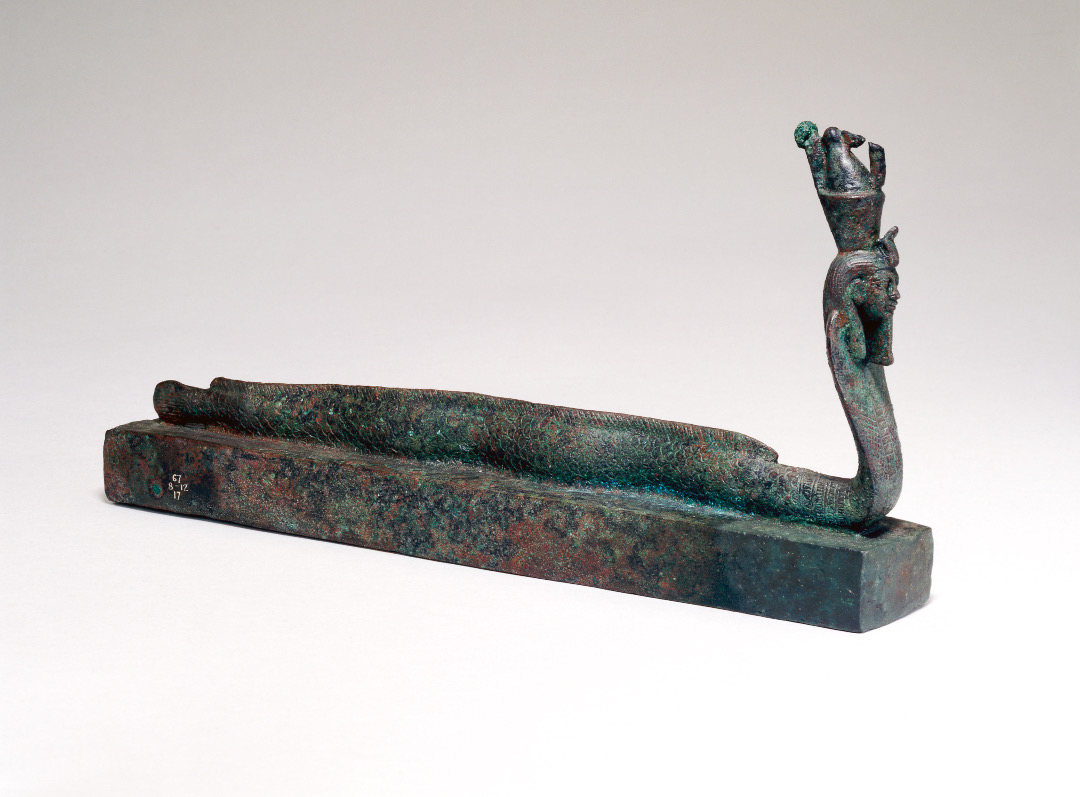
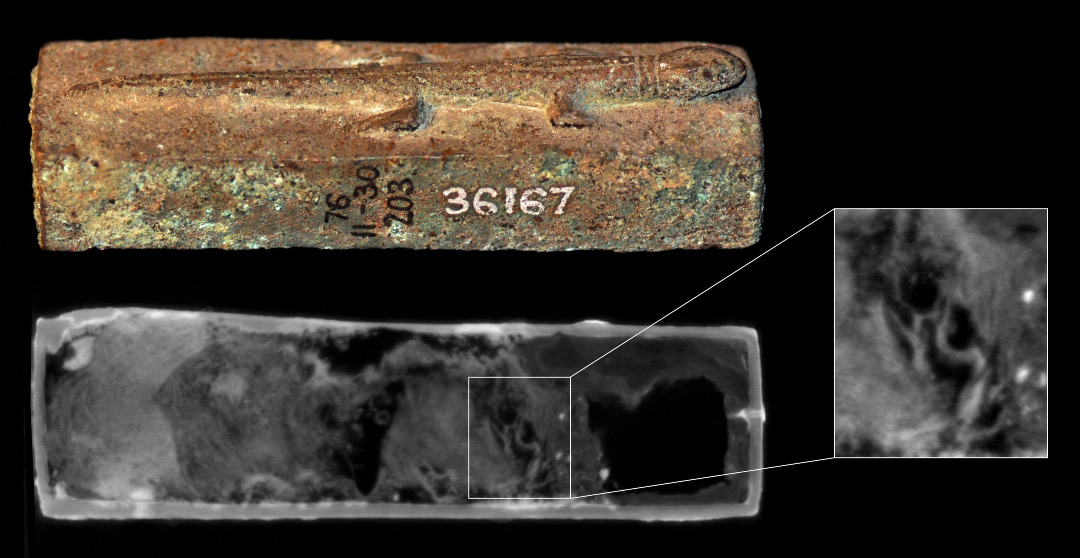
Three of the coffins, dating back to 500 to 300 BCE and uncovered in the ancient city of Naukratis, were adorned with lizard and eel sculptures, along with loops, at the top. One other from 664 to 332 BCE was topped with a lizard figure and was excavated from the long-gone Tell el-Yehudiyeh. The other two, whose origin is unknown, were decorated with eel- and cobra-human hybrid sculptures, and dated back to between 650 and 250 BCE.
The team details that such coffins that remain sealed after all this time are hard to come by.
Following the imaging process, the authors confirmed that the coffins contained bones of the lizard genus Mesalina, which were sand and desert lizards that thrived in Northern Africa. They were also able to pinpoint one of the specimens to have been a red-spotted lizard.
Three of the reptilian corpses were evidently wrapped in textile fragments consistent with linen, a common material used in ancient Egyptian mummification.
With the three coffins that had loops, the scientists theorize that the hoops were used to hang them on temple walls, statues, or boats during rituals.
Traces of lead were found in the coffins without the loops. The authors surmise that it was added to distribute the weight in two of the structures, and to fix a hole in the third. Lead was also believed to hold magical properties and was largely used in love spells and curses during ancient Egyptian times.
The coffins are said to have been associated with Egyptian creator and sun deities like Atum, who was often portrayed with a human head and a part-cobra, part-eel body.
Taking a look inside ancient Egyptian animal coffins... the @britishmuseum used neutrons at ISIS to look inside objects that were 1500 years old.
— ISIS Neutron and Muon Source (@isisneutronmuon) April 20, 2023
This video shows what they saw inside the lizard coffin...
Full article in @SciReports:https://t.co/B3wOLvLawa pic.twitter.com/zUxgz0NyET
“In the first millennium BC, lizards were commonly mummified in ancient Egypt, as were other reptiles, cats, dogs, falcons, ibises, shrews, fishes... Lizards, like snakes and eels, were particularly associated with ancient Egyptian solar and creator gods such as Atum and perhaps, in the case of Naukratis, with Amun-Ra Shena,” notes Dr Aurélia Masson-Berghoff, Project Curator at the British Museum.
“With the help of neutron imaging, we have the potential to learn more about the ritual and votive practices surrounding these once impenetrable animal coffins, the ways they were made, used and displayed,” Dr Masson-Berghoff adds.
[via Gizmodo, Newsweek, Scientific Reports, EurekAlert, images via The British Museum]


