
Physicists Enlarge Schrödinger’s Cat To Its ‘Fattest’ Yet… With Crystals
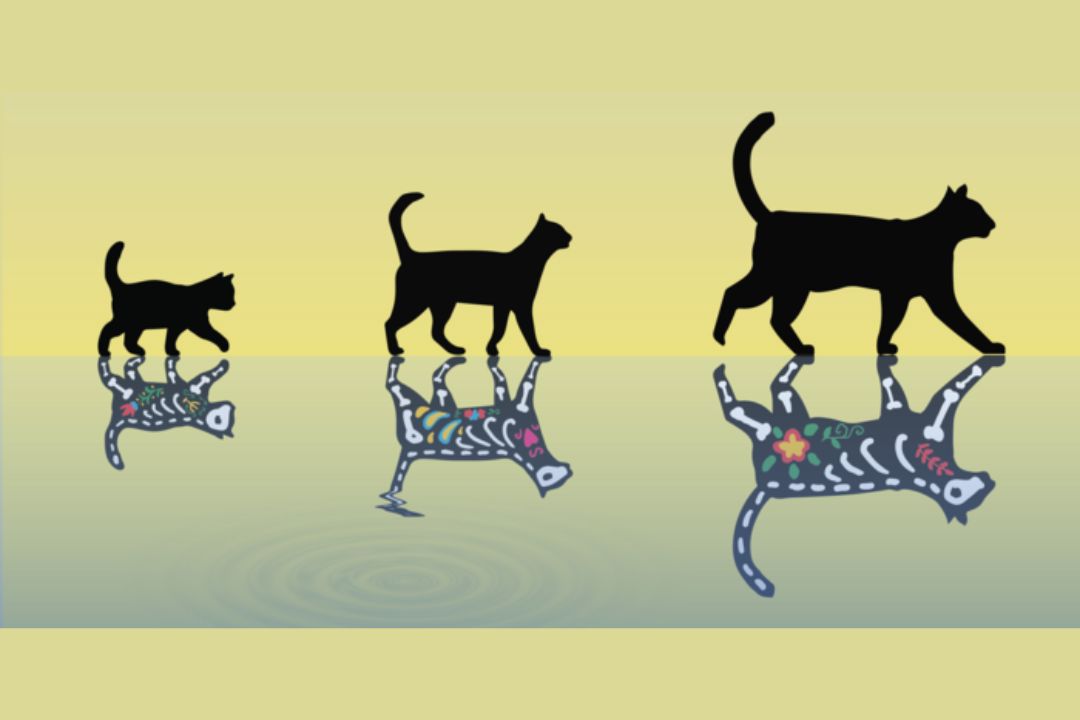
Ah, Schrödinger’s Cat, one of the most enduring thought experiments developed by Erwin Schrödinger back in 1935. Since then, many have reflected on if the metaphorical pet is alive or dead in an attempt to figure out quantum states.
In the original iteration of the problem, a cat, a flask of poison, and a radioactive source are sealed together in a box. If an internal monitor detects radioactivity, it means the flask has shattered and released the poison, thereby killing the cat.
However, after a while, the scientist posits that the creature is simultaneously alive and dead. Though if one were to peek into the box, the cat would be either—not both—at the same time, questioning the reality of quantum mechanics.
Now, researchers at ETH Zurich have decided to fatten Schrödinger’s Cat in an attempt to test the boundaries that quantum mechanics give away to classic physics. But wait, it gets more complicated than that.
Instead of a cat, this time, the scientists hypothetically place a small crystal in a superposition of two oscillation states (up or down instead of the original dead or alive).
In addition, the atom is represented by a superconducting unit, while an electric-field-creating material is added to the circuit so the superposition can transfer over to the crystal when it changes shape while oscillating.
“By putting the two oscillation states of the crystal in a superposition, we have effectively created a Schrödinger’s Cat weighing 16 micrograms,” explained Professor Yiwen Chu from the Laboratory for Solid State Physics.
While the weight—equivalent to a grain of sand—is nowhere near that of an actual cat, it measures several billion times heavier than an atom or molecule, essentially making it the “fattest quantum cat to date.”
Going forward, the team hopes to be able to push the limits of crystal cats even further, which could allow scientists to figure out the reason behind the disappearance of quantum effects in our world of real felines.
As Matteo Fadel, a physicist at ETH Zurich, told Gizmodo, no one truly knows the true boundary between the two worlds, which lends itself to why these thought experiments of demonstrating quantum effects are so “groundbreaking.”
[via Gizmodo and ETH Zurich / EurekAlert, cover image via ETH Zurich / EurekAlert]


