
Robotic Jellyfish Can Suck Up Ocean Debris Without Even Touching It
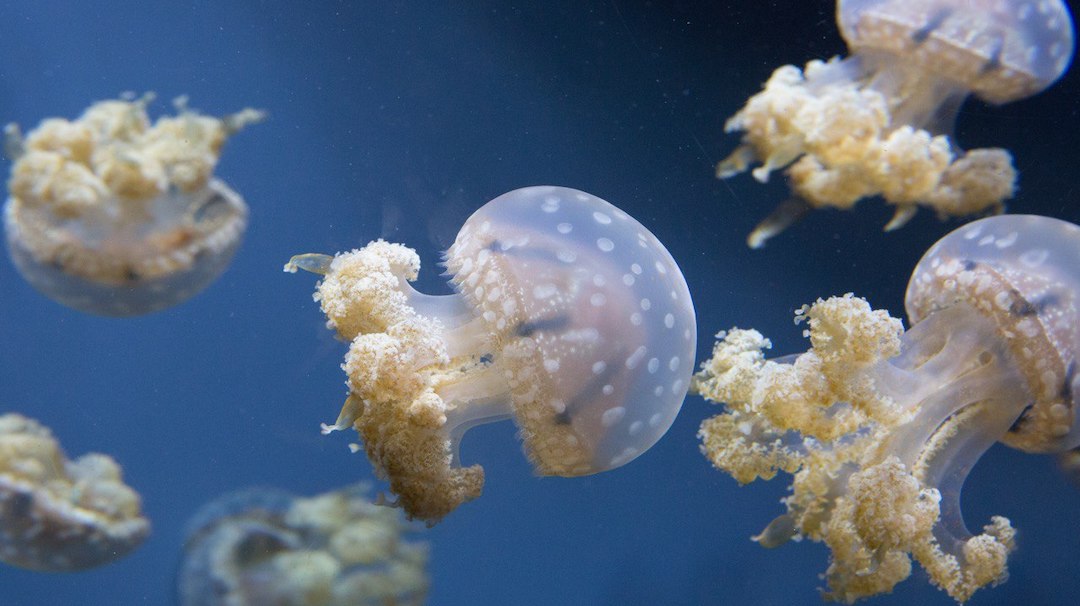
The hypnotic movements of a jellyfish are not just captivating to watch behind the glass of an aquarium or on a scuba dive. They could also prove to be quite helpful in developing robots that will help keep oceans clean.
The Max Planck Insititute For Intelligent Systems (MPI-IS) is behind a new aquatic robot and has devised a way for it to ebb through the water just like the sea creature it was inspired by. According to the study published in Science Advances, it has six actuators filled with artificial muscles called HASELs. These are oil-filled sacs that are covered in electrodes.
A current is passed through these electrodes, turning them into positive charges. The robots can then discharge the current into the surrounding negatively charged ocean water to create a cycle that circulates the oil in the bags, pushing it back and forth.
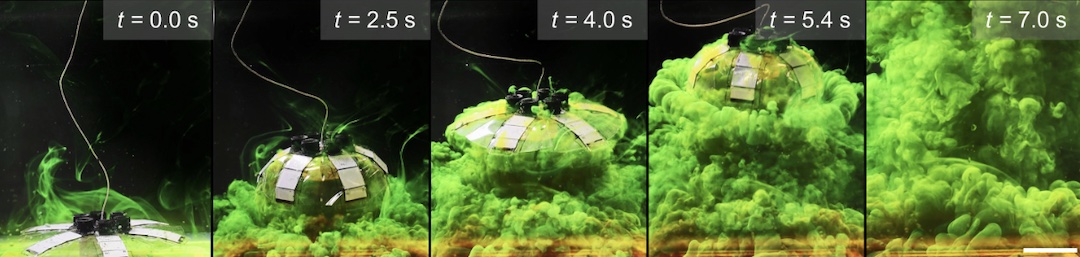
This movement stirs up a current around it, and particles will be drawn into it. The study’s first author, Tianlu Wang, noted that, “when a jellyfish swims upwards, it can trap objects along its path as it creates currents around its body. In this way, it can also collect nutrients. Our robot, too, circulates the water around it. This function is useful in collecting objects such as waste particles. It can then transport the litter to the surface, where it can later be recycled.”
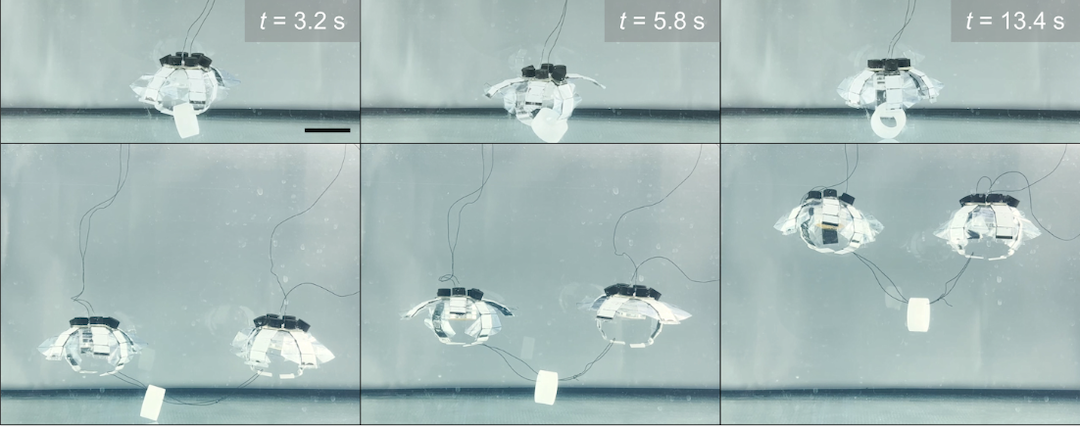
This touch-free option for collecting waste and debris is a good alternative for cleaning delicate areas such as coral reefs. It can also grasp onto more complex objects, like a face mask, if two robots work in tandem like a pincer.
Right now, one of the main caveats of the study is that the jellyfish bots need to be connected to a power source to work. However, the team is working to have them autonomously swim through the ocean.
Check out the video below to catch them in action.
[via New Atlas and Max Planck Institute For Intelligent Systems, images via various sources]


