
Smart Fabric Is World’s First To Change Color, Shape With Heat And Electricity
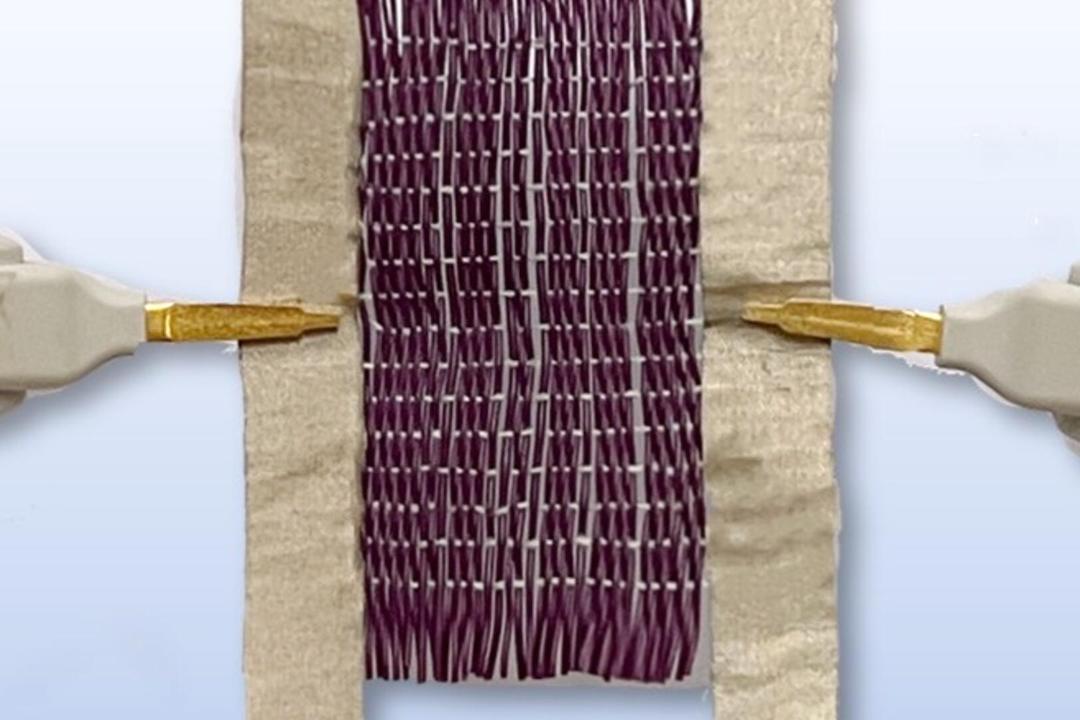
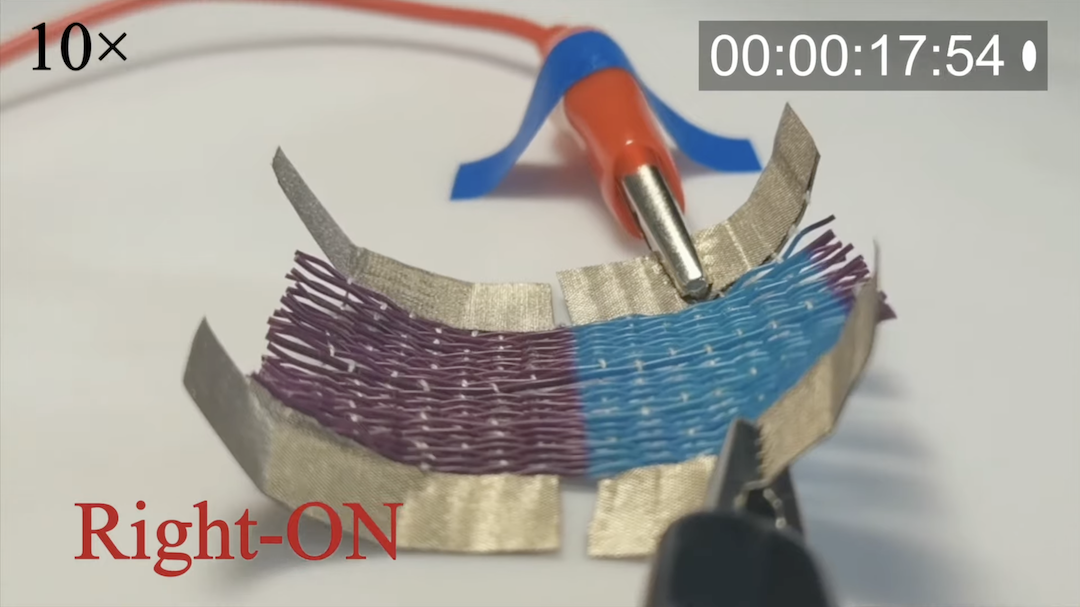
Researchers at the University of Waterloo have come up with a novel “smart material” that responds to both heat and electricity, in what the team claims is the world’s first to change its color and shape based on two different stimuli.
According to the team, this innovation could give way to a wide range of applications, including the future creation of clothing that warms up while its wearer is walking, or vehicle bumpers that return to the original shape after being misshapen in a collision.
Notably, this future-forward material is inexpensive and eco-friendly to manufacture, comprising polymer nano-composite fibers made from recycled plastic and stainless steel in a woven structure—put together with a device similar to that of a traditional loom.
The union of “soft” and “hard” components, in addition to the flexible weaving process, allows for the material to be used in an incredibly versatile manner, allowing designers the freedom to explore and control the fabric’s unique properties.
Additionally, the researchers revealed that this iteration of the material responds to a lower voltage of electricity than its predecessors, making it all the more energy-efficient and cost-effective. This lower voltage requirement also allows it to be integrated into smaller, portable devices.
Before the fabric can come into mainstream use, scientists will have to figure out how to improve its shape-memory performance. This characteristic will be key for the material’s application in the field of robotics, which would require it to stand the test of weight transfers during tasks.
“As a wearable material alone, it has almost infinite potential in artificial intelligence (AI), robotics, and virtual reality games and experiences,” said Dr Milad Kamkar, Professor of Chemical Engineering at Waterloo.
“Imagine feeling warmth of a physical trigger eliciting a more in-depth adventure in the virtual world,” he teased.
[via New Atlas and University of Waterloo, images via University of Waterloo]


