
Ancient ‘Stone Of Destiny’ Reveals Unknown Markings Ahead Of King’s Coronation
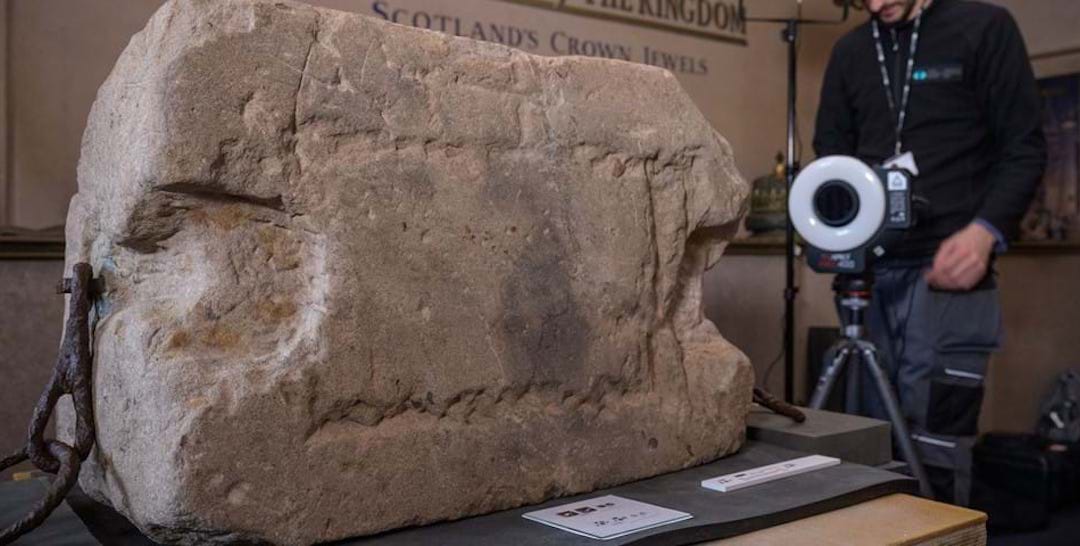
Just as the coronation of England’s new King is about to take place on May 6, an ancient Scottish relic that often plays a role in the ceremony has just been discovered to have symbols on it that were not previously known.
The Stone of Destiny—or the Stone of Scone—was found in the 13th century and was used in rituals for Scottish monarchs. However, in 1296, King Edward I seized it to be built into the throne at Westminster. It was later returned to Scotland in 1996.
In modern times, the artifact will only ever leave Scotland for coronations held at Westminster Abbey, and will sit beneath the coronation chair where the monarch will be crowned.
However, a new study on the relic carried out by Historic Environment Scotland, a public organization responsible for preserving the stone, uncovers new insights into its historical tale.
One of the first things discovered was a set of Roman numerals including a ‘v’ symbol and three X-shaped signs. Ewan Hyslop from Historic Environment Scotland notes that the organization did not previously record these numerals, and it is unknown why they were carved or the significance behind the marks.
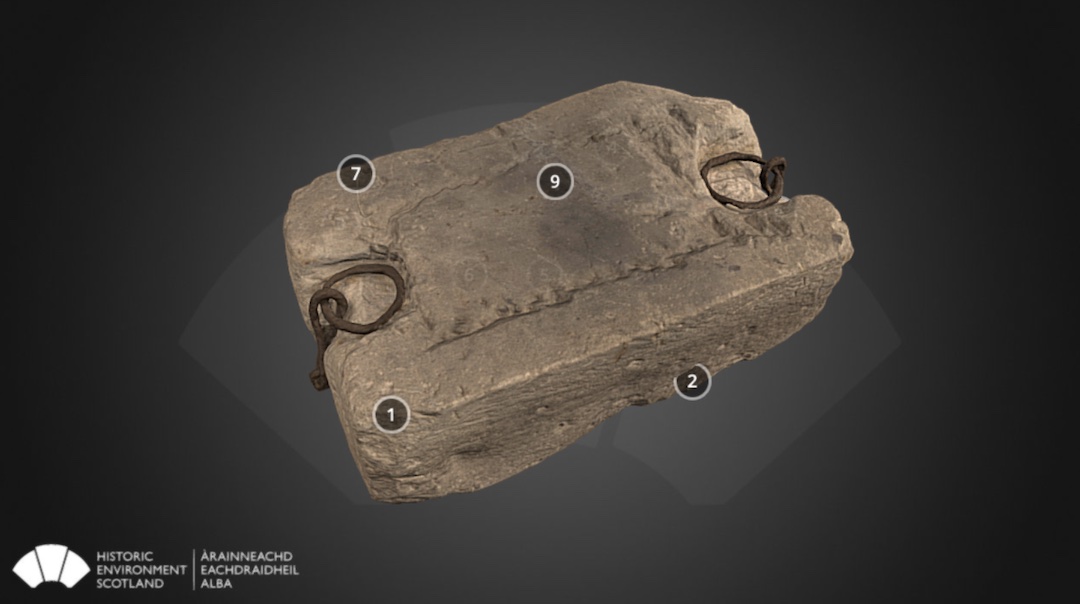
Per Technology Org, Ewan Campbell, a senior lecturer on archaeology from the University of Glasgow, offered his independent insight and posited that they might not be Roman numerals but could be primal renditions of crosses. Based on the position of the markings, Campbell speculates that they could have been added during its time in England.
Further X-ray fluorescence (XRF) examination showed copper alloy stains, indicating that a copper or brass artifact might have once rested on the stone. The researchers consider this finding to be more significant than the numerals.
Lastly, there was the discovery of gypsum plaster coating the stone. This alludes to the fact that a plaster cast used to replicate the relic might have been used at one point in history. The only issue with that is that there have been no records of a replica being made.
If you’re interested in seeing more of the stone up close, you can view 3D scans of the monument online.
[via Technology Org and Live Science, images via various sources]


