
MSCHF Matchmaking Site ‘Hot Chat 3000’ Lets AI Determine How Attractive You Are
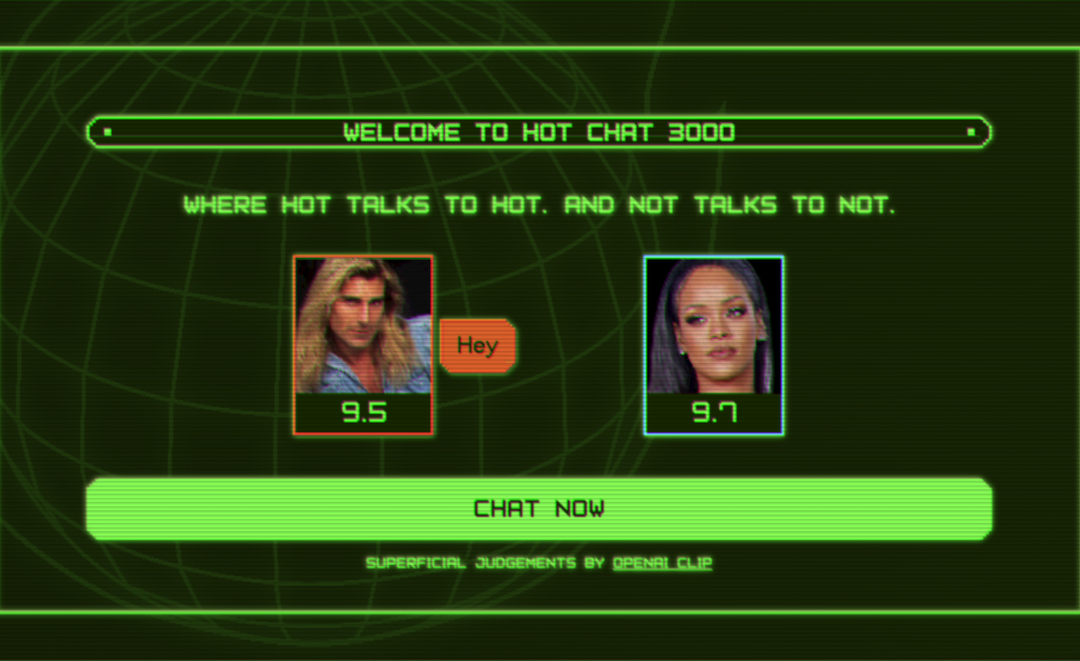
It’s often said that beauty lies in the eye of its beholder. What, then, if that beholder is a machine-learning algorithm? That’s what art collective MSCHF is exploring with its latest release—Hot Chat 3000—a matchmaking service that lets artificial intelligence (AI) determine one’s attractiveness.
The group, most notorious for its ‘Satan Shoes’, long experimented with different eye-catching launches, including special Super Mario boots, cartoonishly-huge Astro Boy shoes, and even an ATM that shows off the wealthiest user’s funds.
Of course, as with all of its projects, there’s a deeper meaning beyond just allowing users to learn how good-looking a computer thinks they are. Through this, the group aims to showcase how intrinsic bias is impossible to escape in technology, even when it comes to pairing people up.

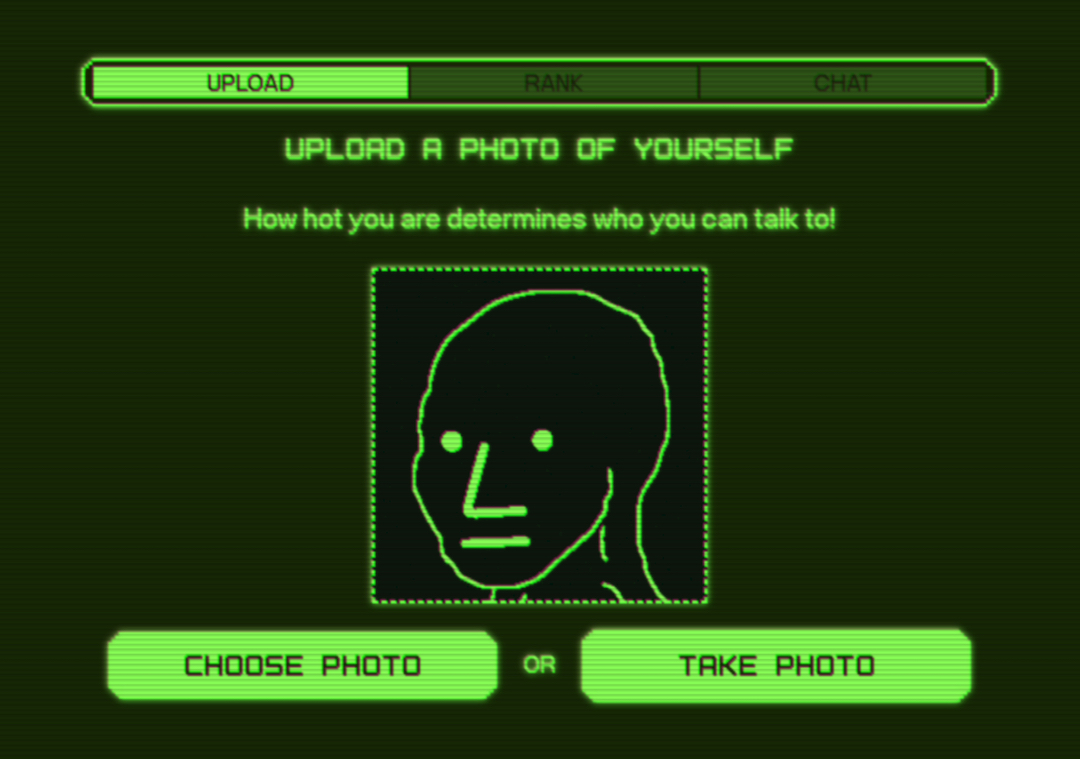
The system works by ranking chat participants on a scale of one to 10, with the higher numerals signaling a “hotter” individual. Those assessed to be within the same numeric group will be eligible to chat with one another, and perhaps find love in the process.
As impressive as AI’s rapid growth has been, MSCHF wants to remind the public that sociopolitical context and history are embedded into the very makings of the technology, which in this case, can become a “stereotype visualizer and implicit bias amplifier.”
While we may try our hardest to deny it, conventional beauty standards still plague these machine-learning models. For example, attractivenesstest.com appears to rank images of blonde children disproportionately at the top of its “attractiveness scale.”
“Hot Chat 3000 is built from pre-existing stock parts: it is a snapshot of what a convenient assemblage of publicly-available models and datasets determine hotness to be. HC3K visualizes a system we are or will soon be subjected to,” concluded the collective. Yikes.
View this post on Instagram
[via Artnet News and Polygon, images via Hot Chat 3000]


