
Robot Gripper With Great Reflexes Could Be New Cleaning Tool To Dispel Clutter
Typical robotic grippers function similarly to an arcade claw, just without a human controlling its movements. These gadgets still rely on planning out a series of moves to grab onto an object; if the gripper misses, it goes all the way back to the starting point to map out a new route.
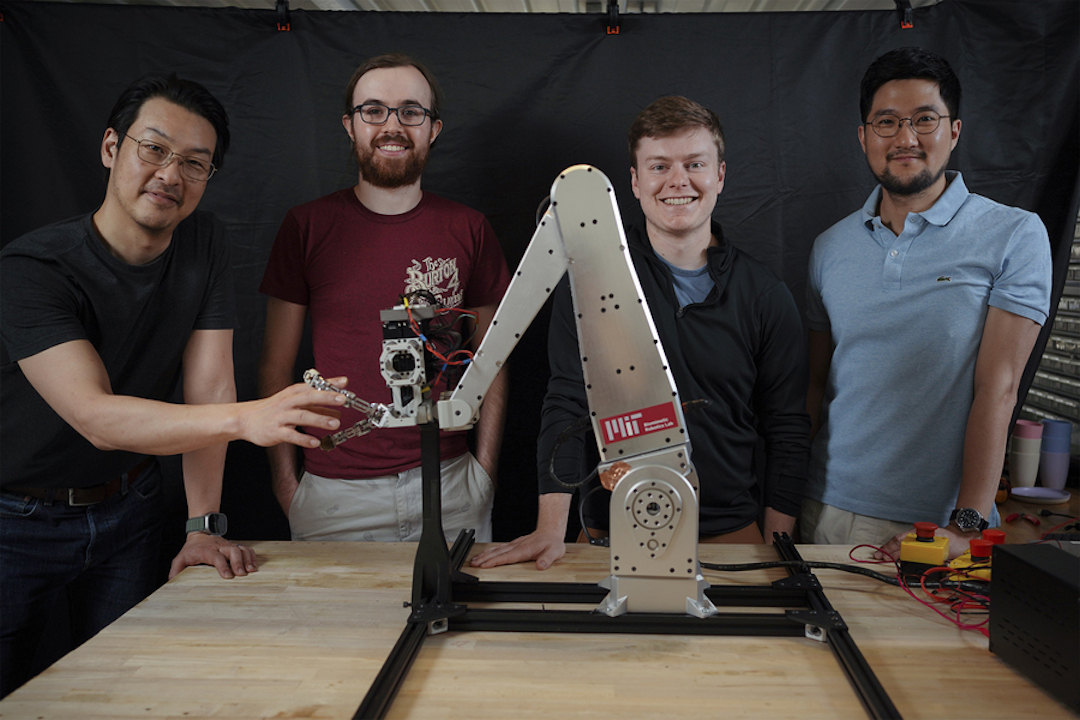
Hoping to bestow a “more nimble, human-like touch” to androids, a team of engineers from the Massachusetts Institute of Technology has invented a gripper that boasts greater reflexes, allowing it to adapt at the moment to get a better hold of an item instead of starting all over.
The device can make “last-centimeter” adjustments—a term the researchers coined off of the “last-mile” delivery remark—without having to engage a higher-level planner. Imagine fumbling around in search of the television remote control without giving it much thought, just like that.

According to the scientists, this design is the first to incorporate reflexes into robotic planning architecture, though the impressive gadget currently remains a proof of concept, as the team works to extend its capabilities to more complex reflexes going forward.
“In environments where people live and work, there’s always going to be uncertainty. We’re hoping a robot with reflexes could adapt and work with this kind of uncertainty,” explained Andrew SaLoutos, a graduate student in MIT’s Department of Mechanical Engineering.
To demonstrate the gripper’s reflexes, the team tasked it to clear a cluttered shelf. The goal was to determine if the device could grasp a variety of household objects, including a bowl, a cup, a can, an apple, and a bag of coffee grounds.
Impressively, the robot was able to adapt to each object’s unique shape and rigidity, successfully picking up and placing the objects into their respective positions over 90% of the time without having to back out and start over from scratch.
In addition, when researchers shifted the cup’s position, the gripper—which does not have a visual update of the object’s new location—was able to readjust its stance on demand, feeling around till it could get the item comfortably in its grasp.
Could future smart vacuums come with a robotic gripper arm to help clean and rearrange our shelves? One can only hope.
[via TechCrunch and Massachusetts Institute of Technology, images via Jodi Hilton / Massachusetts Institute of Technology]


