
Amnesty International’s AI-Generated Images Of Abuse Draw Contentious Responses
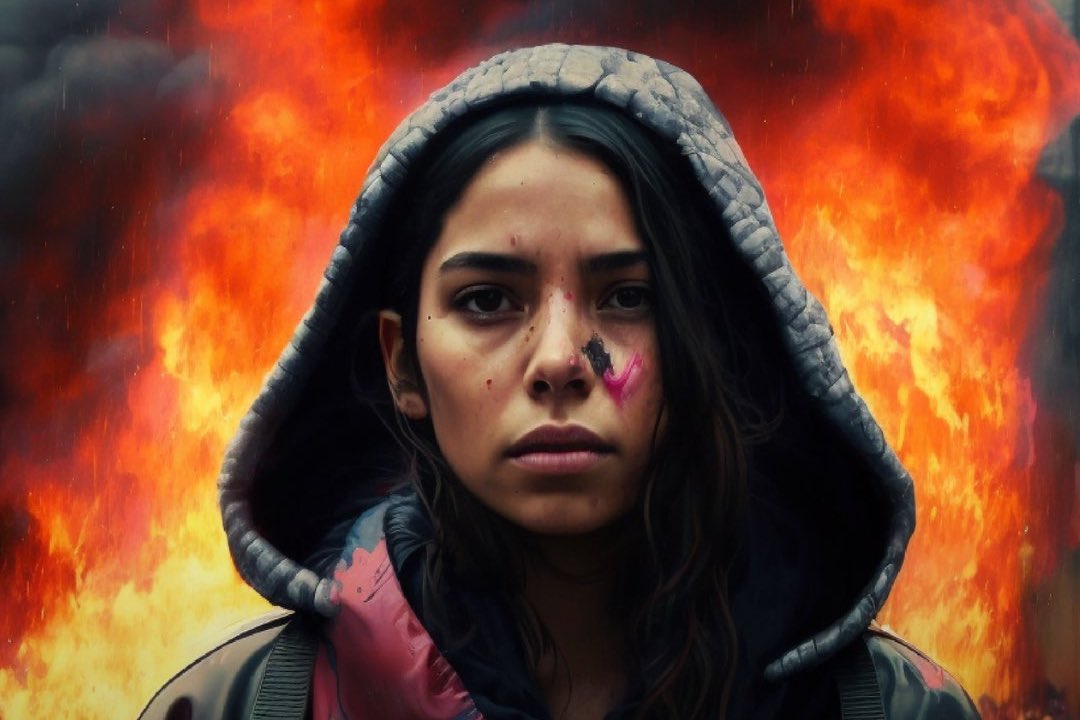
Recently, human rights organization Amnesty International posted images to commemorate the two-year anniversary of a major protest in Colombia, where protestors were harmed by police in alleged “human rights violations.”
The series of tweets, posted from the group’s Norway regional account, has been revealed to have been created by an artificial intelligence (AI) generator to protect the anonymity of the activists involved, but not everyone seems to agree with the method.
Many on social media have voiced concerns about the organization’s use of AI images, which they believe could undermine the credibility of such causes, as it would become increasingly difficult to discern real and fake footage.
🧵Today marks 2 years since the National Strike (#ParoNacional) in Colombia started 🇨🇴
— Amnesty Norway (@Amnesty_Norge) April 28, 2023
What were mostly peaceful protests was met with disproportionate and excessive use of force by both police and military 🪧 👮ðŸ½ðŸª–
It happened with impunity and without subsequent police reform pic.twitter.com/3na8zsdkRM
However, Amnesty doubled down on its decision, telling Gizmodo that it opted to use AI to portray the events as it would be able to show the reality of the protests “without endangering anyone who was present.”
The organization said that prior to the campaign, it had consulted with partner organizations in the nation, deciding to turn to the technology as a “privacy-preserving tool” that would not reveal protestors’ real identities.
A spokesperson pointed out that those who participated in the National Strike are still at risk of being criminalized by the Colombian authorities and that exposing authentic footage of the event would endanger these individuals.
The riot police used less lethal weapons to punish protesters and deter them from exercising their right to freedom of assembly and freedom of expression.
— Amnesty Norway (@Amnesty_Norge) April 28, 2023
More than 1ï¸âƒ£0ï¸âƒ£0ï¸âƒ£ people suffered eye injuries as a consequence of police repression in 2021.https://t.co/wcI3NXo9tY pic.twitter.com/RNKYIAhSK6
As such, the organization believes the AI-generated pictures were a “necessary” alternative to help illustrate the event that took place, with the added measure of a disclaimer at the bottom of the pictures so that it would not be misleading.
In addition, Amnesty told Vice that the fake images were purposefully edited to be distinguishable from real-life photography, such as vivid colors and a more artistic style. Imperfections were also left untouched.
Amnesty also documented how Colombian police used gender-based violence, including sexual violence, to punish or silence protesters. This disproportionately affected women, LGBTQI+ people, afros and indigenous people.https://t.co/52XyVZW113 pic.twitter.com/RDEwi1hEcn
— Amnesty Norway (@Amnesty_Norge) April 28, 2023
Will the use of AI images by advocacy groups put more doubt on reports surrounding these important events? Or will journalists be tasked with a heavier burden to prove that these sightings genuinely happened?
No one knows for certain the effect this will have on how the world trusts news going forward, but it’s easy to see why some in the industry are worried that AI-generated pictures could undermine their credibility in the long term.
Ultimately, civil society reports reported at least:
— Amnesty Norway (@Amnesty_Norge) April 28, 2023
âž¡ï¸ 89 deaths
âž¡ï¸ 106 accusations of gender-based violence
âž¡ï¸ 3.546 arrests
âž¡ï¸ hundreds of torture victims and disappeared
Colombia needs a comprehensive police reform! pic.twitter.com/FotuukV2EW
Please don't use AI imagery for this. It shatters your credibility
— Lachlan (@bitcloud) May 1, 2023
NO NO NO NO NO NO NO NO NO NO NO NO NO NO.
— Sam Gregory (here, there, everywhere...) (@SamGregory) May 1, 2023
Don't do this - human rights defenders already have images and videos undermined - don't contribute to it by utilizing AI-generated imagery in this way. Yes, there will be ways to use AI-generated imagery for advocacy - this is not it. https://t.co/2oO3tXidOY
You are playing with your credibility! For every other picture, people can say - its just AI, its probably just fake. Regardless if its a real photo or not. Stop doing this!
— Taco de Koning (@tacodekoning) May 1, 2023
[via Gizmodo and Vice, cover image via Amnesty Norway]


