
3D-Printed Toothbrush Adaptors Help Those With Dexterity Challenges Brush Better

Landor & Fitch, a brand consulting firm based in San Francisco, California, has come up with an innovative solution to make oral care accessible to those who struggle with dexterity: 3D-printed toothbrush adaptors.
Product Innovation Design Director Jack Holloway told Design Week that the idea for a customizable toothbrush holder came about when the team learned of the 360 million people across the globe who face arthritis, carpal tunnel syndrome, and tremors daily.

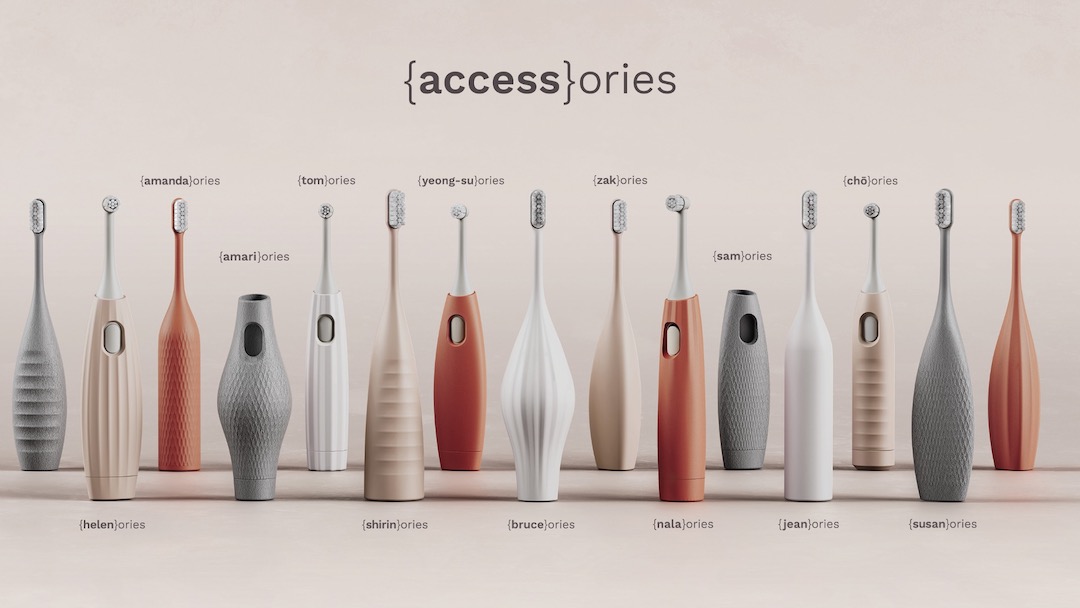
These dexterity conditions make it difficult for users to hold onto a standard toothbrush, which usually has a “very thin” base. As such, {access}ories was born, providing 144 add-on options that are compatible with both manual and electric toothbrushes for more comfortable brushing.
During his research, Holloway discovered that those suffering from dexterity challenges often turn to “hacks” to make oral care an easier experience, such as by adding tennis balls and string to increase the surface grip of the toothbrush.

To look further into the needs of users across the spectrum, the design studio assembled a ‘Makers Lab’ with ten participants aged 19 to 67, each facing a different dexterity issue. This allowed them to put early prototypes to the test and give feedback on different adaptors.
As such, when a customer visits the {access}ories website, instead of a one-site-fits-all solution, they’ll be brought through a “diagnostic journey” of several questions to identify which shape, width, and texture of an adaptor will best suit their needs.
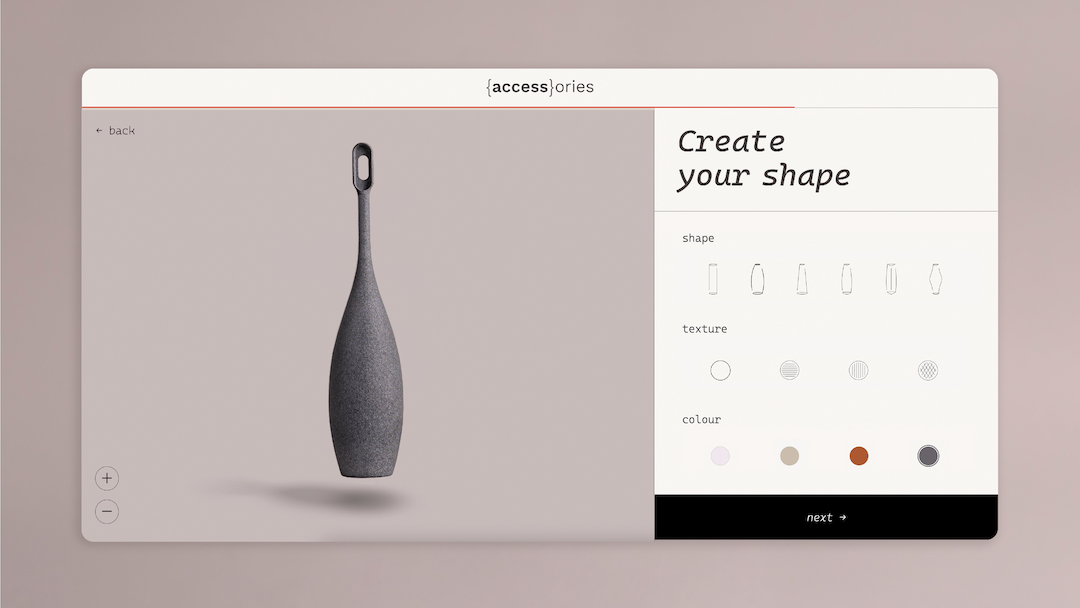
Users can mix and match seven different shapes, three width diameters, and four textures to create the best fit for a manual or electric toothbrush. The studio plans to collect the data to gain insight into what combinations more customers opt for.
Additionally, a key component of the plan involves 3D printing, which will allow the company to bypass the two- to five-year manufacturing wait and launch the products quickly. Each adaptor will be made from a resin-based plastic that meets oral care product health requirements.
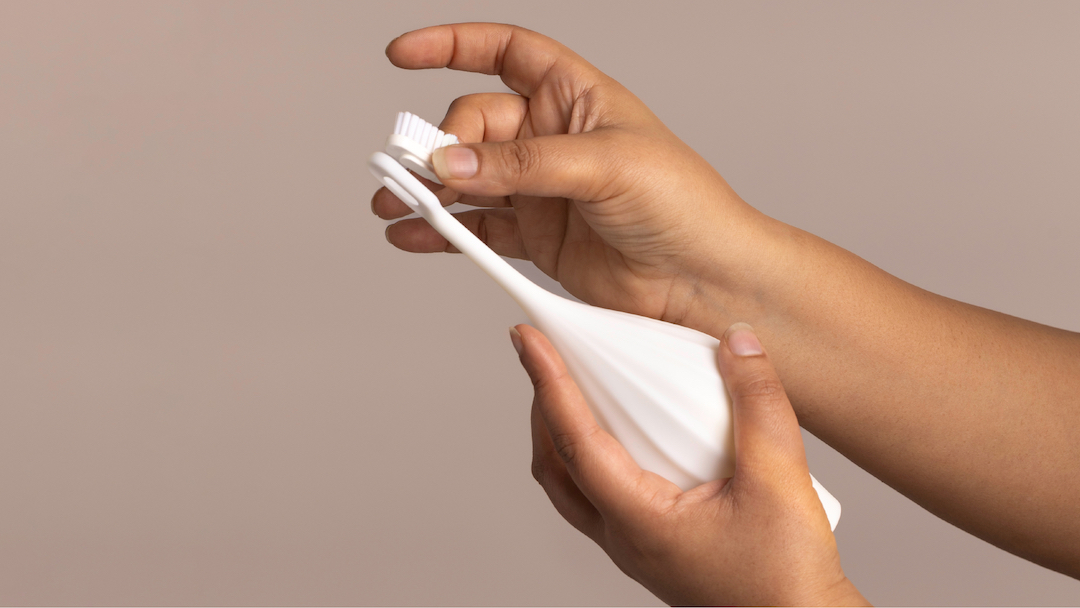
At the moment, the {access}ories adaptors are not being sold, but the company expects the manufacturing cost of a single product to be below £40 (US$49). If production is able to scale up, the cost could drop further.
Landor & Fitch are committed to moving ahead with the project, as the studio does not want to simply “launch and leave,” knowing that the service could go beyond just oral care, which would be “life-changing for many people.”
Head here to visit the official {access}ories website, or check out the studio’s other works on its official website, Facebook, and Instagram.

[via Design Week and Landor & Fitch, images by Landor & Fitch and featured with permission]


