
NASA’s New Animation Helps You Grasp The Incredible Size Of Black Holes
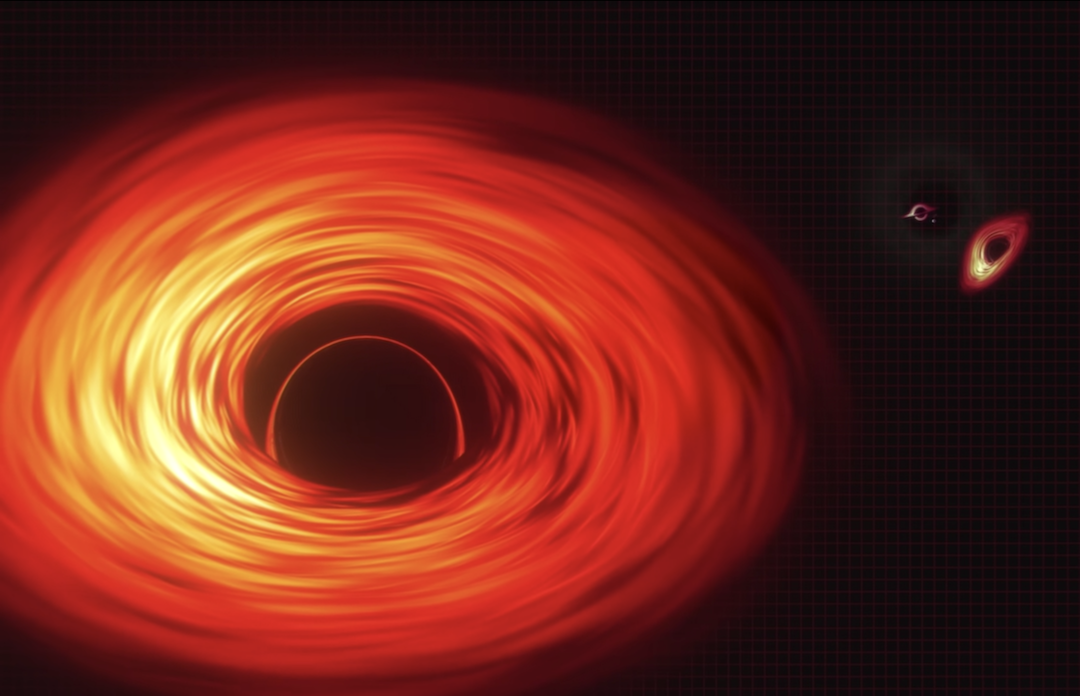
Sure, one may understand the concept of supermassive black holes, but is it possible to truly understand the magnitude of the heaviest object in space? NASA’s latest animation hopes to shed some light on what it truly means to grasp the differences in the size of a black hole.
For comparison, the agency decided to go with the heaviest object most familiar to people on Earth: the Sun. Using the Sun as a reference point of one solar mass, it’s astonishing to think that the smallest—J1601+3113—already measures 100,000 times greater than that.
The animation then moves on to larger black holes, with the heaviest of them all being the TON 618. This truly supermassive black hole is 60 billion times the mass of the Sun and is one of the few black holes so far away that astronomers have directly measured.
“Direct measurements, many made with the help of the Hubble Space Telescope, confirm the presence of more than 100 supermassive black holes,” explained Jeremy Schnittman, a theorist at NASA’s Goddard Space Flight Center.
“How do they get so big? When galaxies collide, their central black holes eventually may merge together too,” he explained.
Check out the 10 supersized black holes that “occupy center stage” in their respective galaxies, and see how they compare in size to one another and the sun.
[via Interesting Engineering and Gizmodo, cover image via NASA Goddard]


