
The Met’s Vermeer Painting Believed To Have Hidden Portrait Of Artist Himself
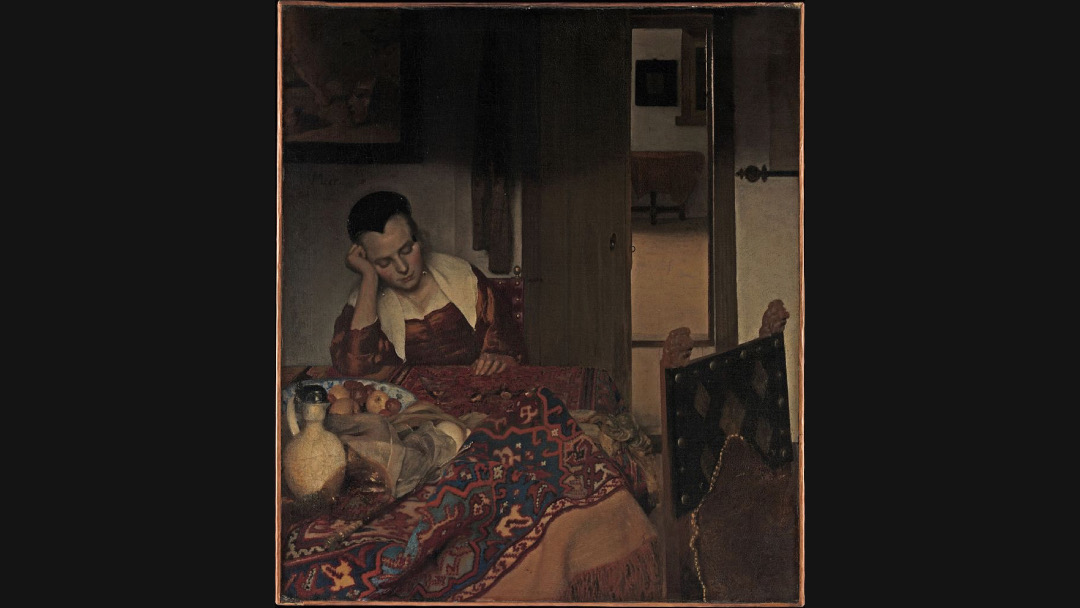
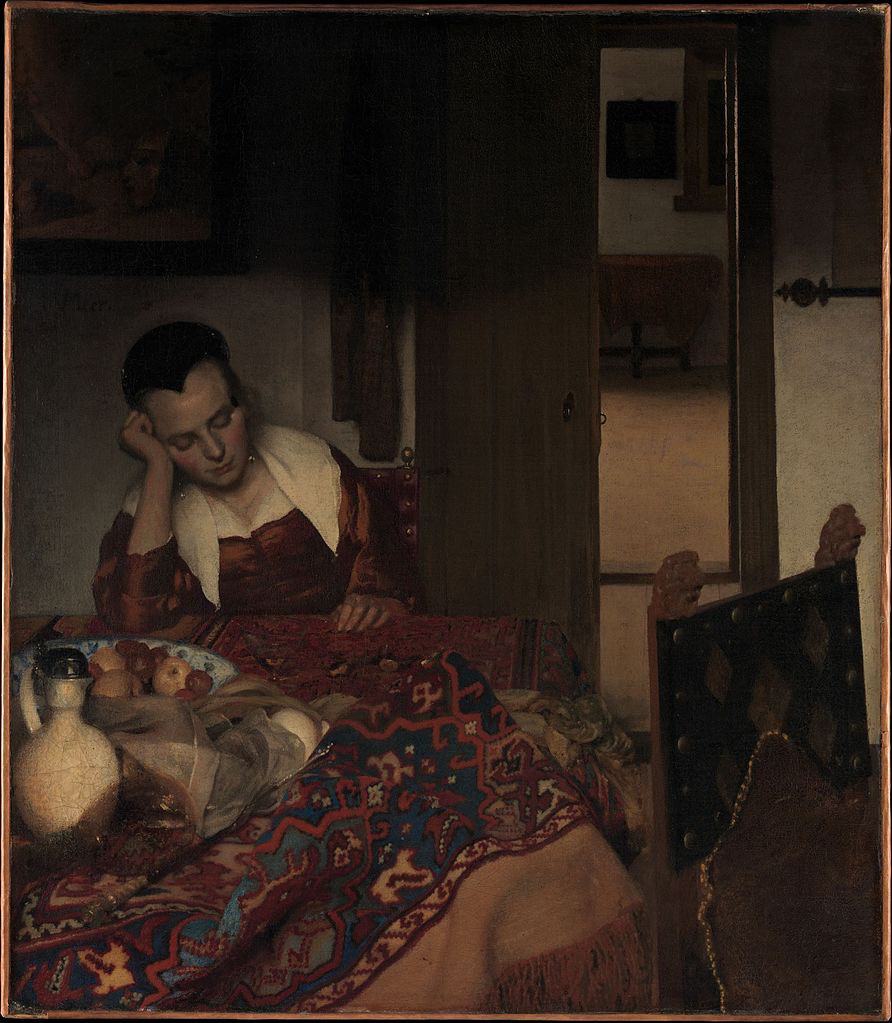
Johannes Vermeer’s A Maid Asleep (1656–1657). Image via Metropolitan Museum of Art / Wikimedia Commons (CC0 1.0)
Johannes Vermeer is reputed for documenting 17th-century everyday life in his paintings. On the rare occasion, he may have even captured himself at work, apparently.
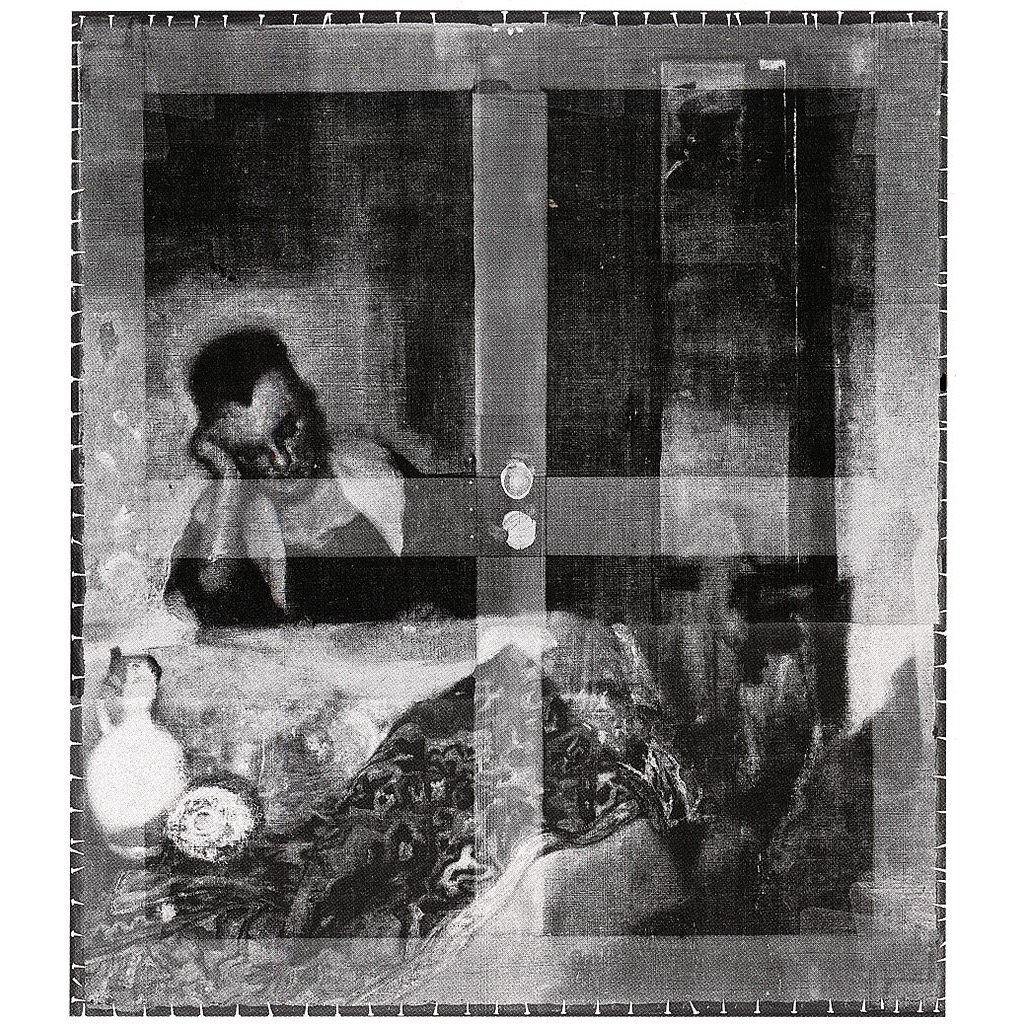
More theories on the Dutch master’s works have come to light as the world’s largest Vermeer exhibition, held at the Rijksmuseum in Amsterdam, presents scans with details previously invisible to the human eye. For a while now, experts have known that Vermeer’s A Maid Asleep, owned by the Metropolitan Museum of Art in New York, once featured a man in a doorway that the artist eventually painted over. It was long speculated that the male figure was the lover of the young woman in the painting, Artnet News reports.
The Met conservator Dorothy Mahon and research scientist Silvia Centeno are challenging this concept after having examined the artwork under a non-invasive X-ray fluorescence technique. New imaging tells them that the doorway with the man may have, in fact, been a self-portrait. The pair shared their findings at a symposium hosted by the Rijksmuseum, titled A Maid Asleep and Study of a Young Woman: Recent Findings From Imaging and Chemical Analysis, in March.
The evidence suggests that the man was reaching out, as though he was holding a paintbrush. As for the door, it was once an easel, but Vermeer purportedly reworked it into a window frame. In the final version, he painted over this self-portrait-turned-door, so the public couldn’t see the man at all.
Art historian Martin Bailey now has another piece to back this research, sharing with the Art Newspaper that Vermeer might have been inspired by fellow Dutch artist Nicolaes Maes, who lived less than 20 miles away.
In Maes’s The Naughty Drummer (c. 1655), the artist had painted his reflection in a mirror.
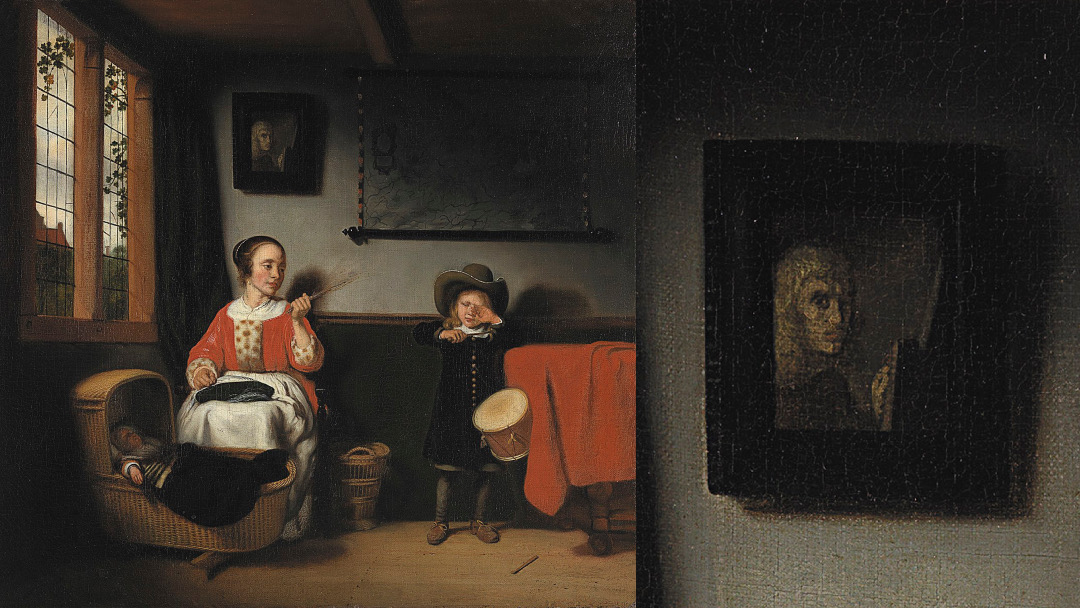
Nicolaes Maes’s The Naughty Drummer (1655). Image via Thyssen-Bornemisza Museum / Wikimedia Commons (public domain)
Vermeer finished A Maid Asleep between 1656 and 1657, a little later after Maes completed The Naughty Drummer. Granted, there’s no record of the two painters being friends, but Bailey posits Vermeer could have seen the other work and felt compelled to recreate this element in his own painting.
According to the Art Newspaper, Vermeer painted mirrors in several of his artworks, and his collection of items showed that he owned one.
If the theories are right, then the woman in the Vermeer art may not have been a maid, after all, but a model who got tired posing for the picture. If so, the painting could be due for a name change.
Speaking of mistaken art titles, just recently, Vincent van Gogh’s Red Cabbages and Onions was renamed after a chef noticed a few curious details in the vegetables.
[via The Art Newspaper and Artnet News, images via various sources]


