
3D-Printed Heads With Working Ears & Mouths Swivel To Analyze Sound
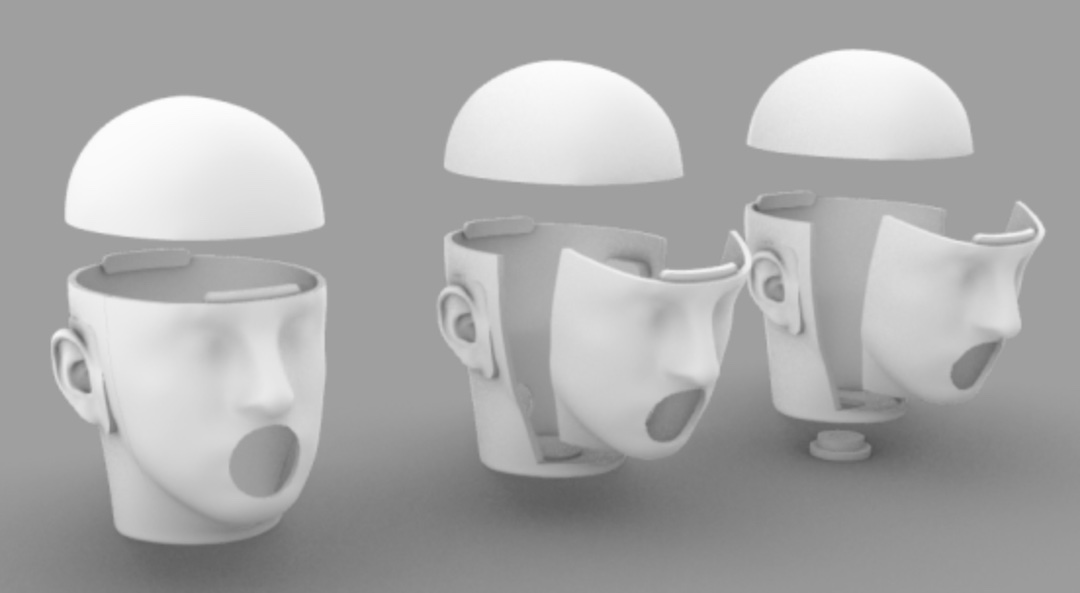
When developing acoustic devices such as hearing aids, researchers depend on specific tools to help them record and process audio to better understand how ears take in sound, especially in crowded situations.
Unfortunately, such instruments, known as acoustic head simulators, are expensive and hard to come by. However, a team from the University of Illinois Urbana-Champaign has devised a way to create such tools inexpensively.
Acoustic head simulators are typically manikins that can mimic the way a human adult would listen. The only setback with these instruments is that they are not equipped to process data gathered from an environment where many individuals are speaking at once, like a cocktail party, as suggested by the team.
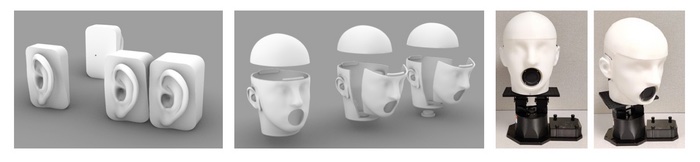
In order to gather metrics from realistic conversation scenarios, research teams require hours of recording with human subjects. Unfortunately, this would strain those who have volunteered and the team experimenting. Moreover, it is difficult for the subject to remain still while recording.
This new type of simulator removes human error and replaces the need for people in a study. The heads come with mouths that mimic speech, highly detailed ears fitted with microphones, and a neck that can swivel and take in noise from different directions.
The heads can now “talk,” listen, and move as a human would without fatigue from an arduous study. Scientists can then run the indexes through a series of algorithms to be analyzed. Of course, all the information gathered will then go towards developing hearing aids, microphones, and other listening and audio devices.
The findings from the study will be presented at the 184th Meeting of the Acoustical Society of America.
[via New Atlas and Tech Xplore, images via Augmented Listening Laboratory at the University of Illinois Urbana-Champaign, EurekAlert]


