
James Webb Gives Glimpse Into First Asteroid Belt Outside Of The Solar System
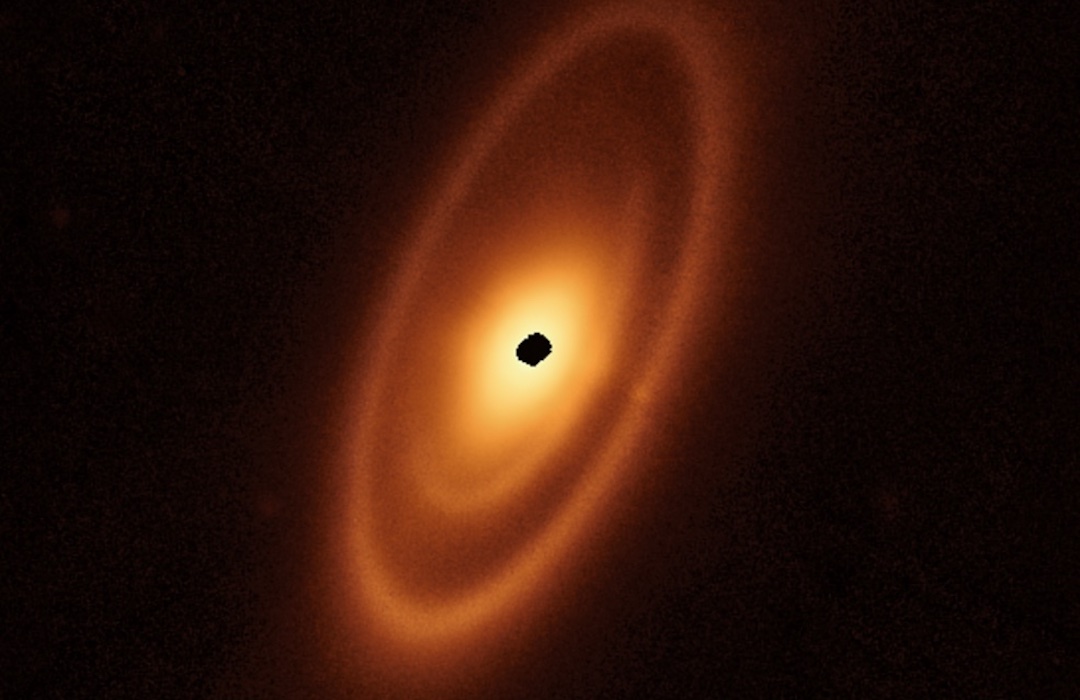
Just 25 light years away from our solar system is a young celestial body called Fomalhaut that stands at the center of a growing planetary system. It is one of the brightest stars in the night sky and glows intensely in the Piscis Austrinus constellation, or the ‘Southern Fish’.
Fomalhaut has been known to play host to a ring of rocks that might have come about after a series of collisions. This ring, in particular, has remained a topic of interest as it is the kind that planets can form from.
That is until the James Webb Space Telescope discovered it hosts three different debris fields. The closest one to Fomalhaut is not too dissimilar from asteroid systems in our own nebula. However, it is far larger. More specifically, it ranges about 80 astronomical units, around 10 times broader than what astronomers had initially estimated.
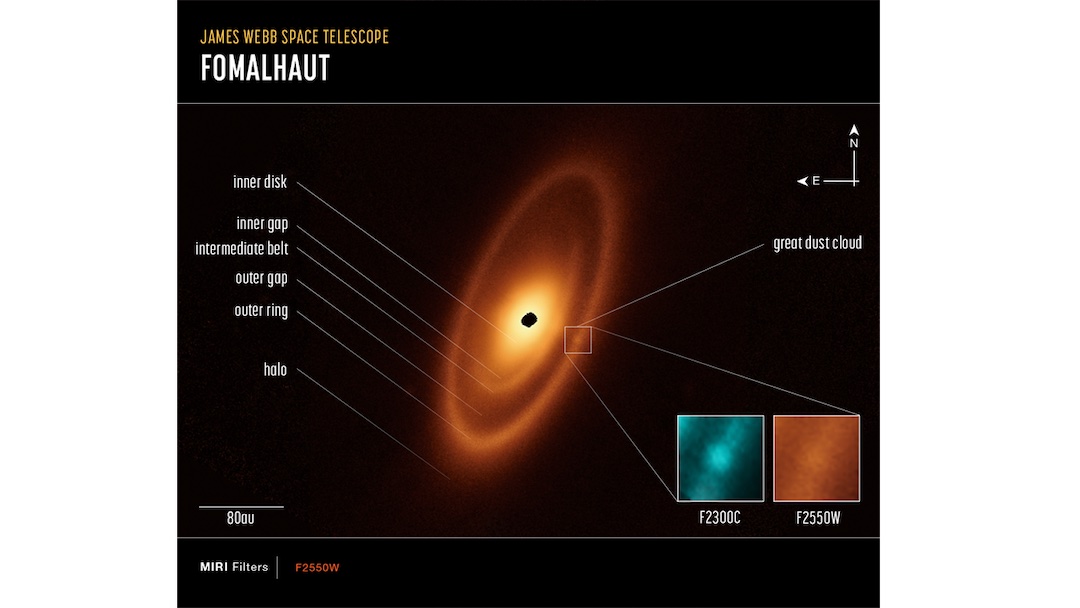
Its secondary belt is skewed 23 degrees from the rest of its orbit. Though the cause for this has not yet been uncovered, Andras Gáspár, the study’s lead author, mentioned to Science News that the star’s planets could be the reason behind its odd tilt.
The last belt was first thought to be the first exoplanet called Fomalhaut b, or Dagon. However, scientists dispelled the discovery, as it turns out that the “planet” was just an expanding cloud of dust similar to our Kuiper belt—a ring of icy space debris around the Sun. Researchers call this the Great Dust Cloud. It’s not yet known what this “cloud” is, but scientists predict that two rocks colliding 400 million years ago could have resulted in the specter surrounding it.
The one thing missing from the discovery has been its planets. So far, nothing but the belts and the star have been studied, while those on the study posit that it can’t be too far of a stretch to assume that it is hiding a planetary system as well.
[via Engadget and Forbes, images via NASA, ESA, CSA, A. Gáspár (University of Arizona)]


