
Firefighters To Get Better Protection With New Fire- & Bullet-Proof Helmets
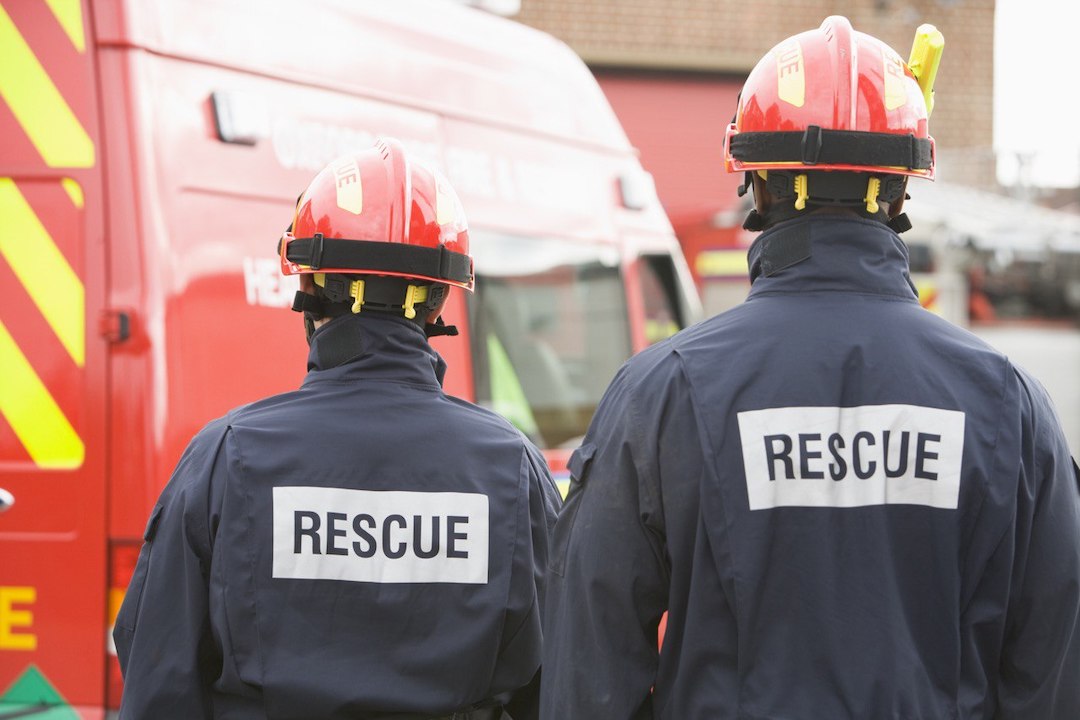
While firefighters encounter some of the most dangerous scenarios on a daily basis, they’re often not adequately equipped for out-of-the-norm encounters. Servicemen carry one helmet for fire protection and another for ballistics, but not one that protects from both at the same time.
As such, the Department of Homeland Security has collaborated with Texas Tech University (TTU) to develop a brand-new helmet that offers thermal and ballistic protection in a single unit, which can be augmented with visors, face shields, and communication devices for greater safety.
The project has been looking into Kevlar fibers—a material that has a melting point of 1040°F and has long been used in ballistic helmets and body armor. Polyester resins, which withstand temperatures as high as 386.6°F, could be reinforced with these fibers to create the “perfect” mix.

Another component engineers are working on is the center of gravity and subsequent stability of the helmet. If the headgear is too heavy, firefighters will be at risk of spinal and muscle injuries. To date, a series of prototypes have been developed and are being tested for efficacy.
To see how the prototypes would stand up against actual fire or shootouts, the helmets are tested using state-of-the-art equipment, including Delsys Trigno Wireless electromyography systems, 10-camera Eagle optical digital motion capture systems, and Pupil Core-eye trackers.

Image via Department of Homeland Security / Texas Tech University
In addition, modeling software is being used to develop realistic models of heads and necks, with HyperMesh processing helmet imaging data and OpenSim musculoskeletal modeling software helping to develop head and neck models to create the best digital helmet prototype.
The NextGen helmet could even come with built-in breathing apparatus and communication systems to avoid clunky add-ons and prevent any devices from inhibiting a firefighter’s vision and hearing during rescue operations.
Going forward, firefighters will be asked to test the new helmet in mid-2023, and once the final product is in the works, the brave men and women who serve communities all over the country will get a much-needed protection upgrade.
[via Interesting Engineering and Department of Homeland Security, images via various sources]


