
High-Rise Timber Building Endures Simulator Mimicking Actual Earthquakes
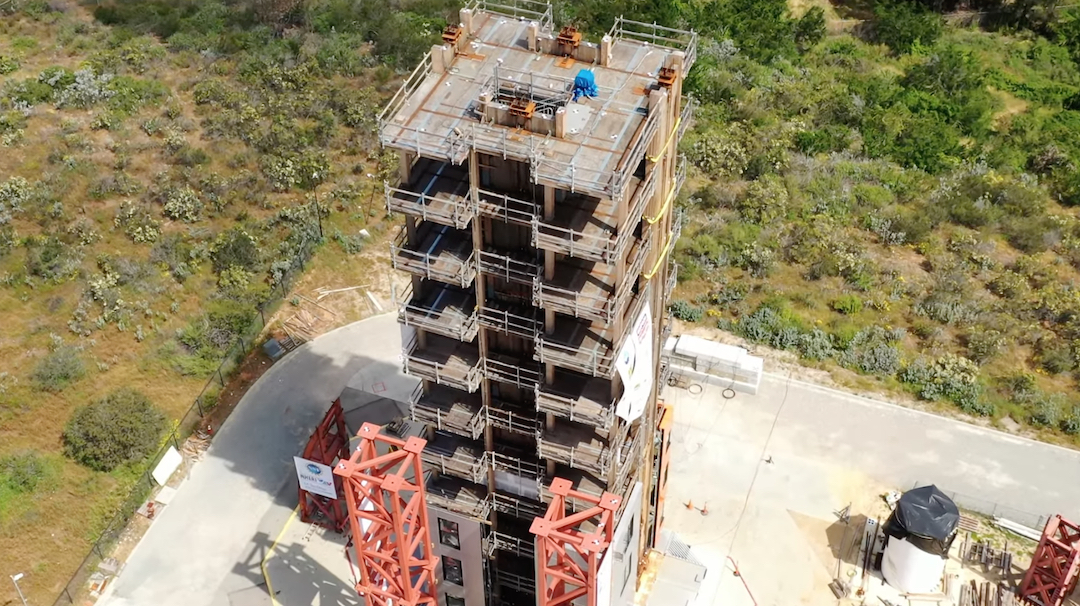
A 10-story mass timber building has made a groundbreaking record. At 112 feet, it is the tallest full-scale building to be put through a shake table earthquake simulator.
Assessing how sustainable mass-timber structures hold up against tremors is important, considering how they’ve been the stuff of fascination in the architecture world lately. With its elasticity, relative lightness in comparison with steel and concrete, and ability to absorb the energy in vibrations, wood has historically been used in construction to withstand earthquakes, but its feasibility for high-rise buildings isn’t widely known.
“Mass timber is part of a massive trend in architecture and construction, but the seismic performance of tall buildings made with these new systems is not as well-understood as other existing building systems,” explains Shiling Pei, principal investigator and associate professor of civil and environmental engineering at Colorado School of Mines.
Taking one for the forest was the TallWood Building, a 10-story monument designed by LEVER Architecture and assembled by contractor Timberlab at the University of California San Diego (UCSD) using donated mass-timber materials.
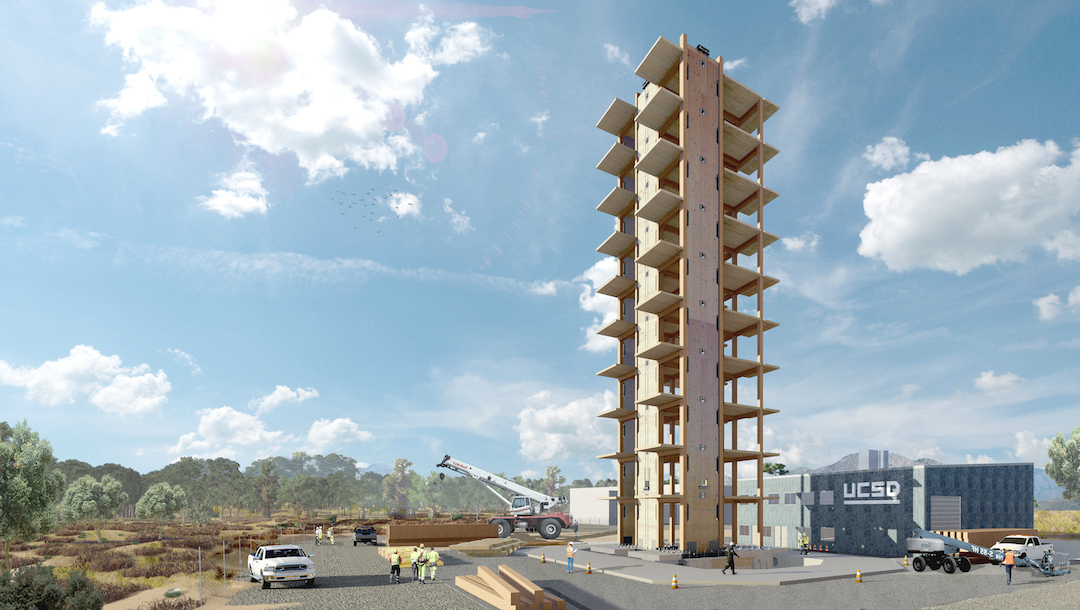
The cross-laminated timber (CLT) building is a “typical market rate prototype,” LEVER Architecture explains, and it’s developed to be resilient against quakes with its mass-timber rocking walls, “which allow the structure to rock and recenter itself during an earthquake, with no damage to the primary structural system,” and post-tensioned steel rods enforced on every level that “absorb the force of a seismic event.”
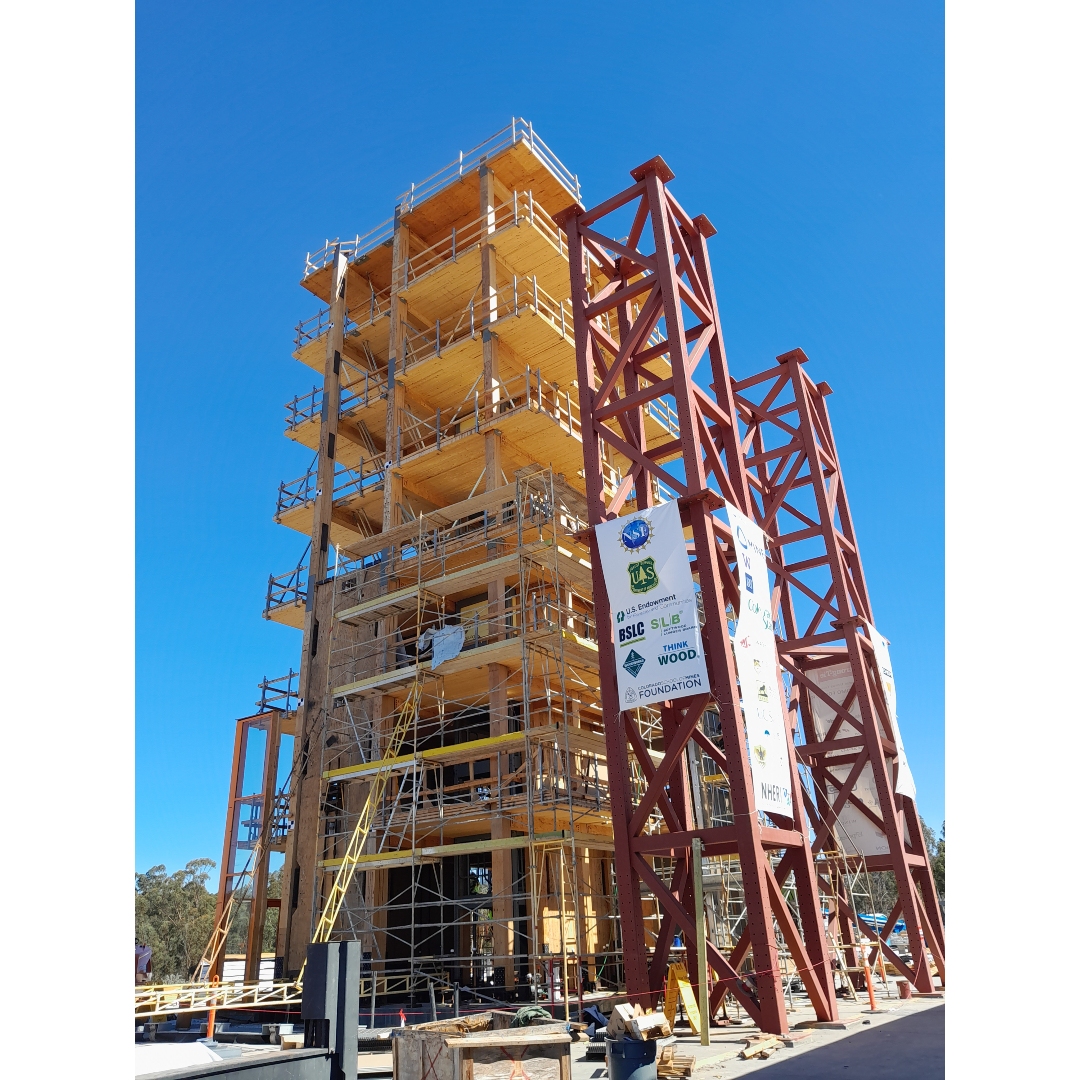
These qualities were recently put to the (ground-shaking) test using the world’s largest outdoor earthquake simulator, which echoed the 3D ground tremblings of the 6.7-magnitude Northridge earthquake in Los Angeles in 1994, and the 7.7-magnitude Chi-Chi earthquake in Taiwan in 1999. The equipment mimicked the natural disasters in all six degrees of freedom: longitudinal, lateral, vertical, roll, pitch, and yaw.
According to ArchDaily, the US National Science Foundation (NSF) has dedicated a whopping US$17 million to fund this simulator, also known as a shake table. The technology measures 25 x 40 feet, can carry payloads of up to 4.5 million pounds—the weight of 1,300 sedan cars—and is built with over 800 sensors.
You can watch the remarkable simulation in the video below.
[via ArchDaily and Building Products, images via various sources]


