
NYC Is Slowly Sinking In Part From The Weight Of Skyscrapers, Scientists Surmise
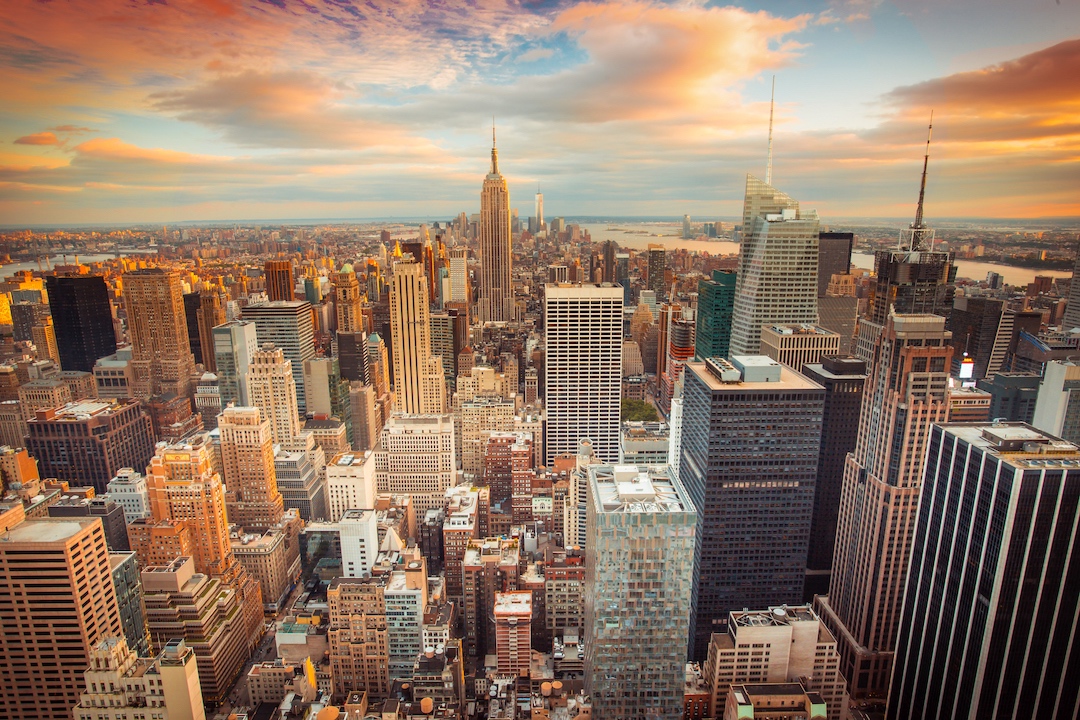
The Big Apple is taking a bob. In a new study, scientists have found that the pressure from large buildings and skyscrapers is contributing to its dipping lower into the ocean.
Rising sea levels and greater storm intensity also figure into New York City’s growing susceptibility to sinking, note oceanologists at the University of Rhode Island and a geophysicist from the US Geological Survey, who have shared their research in the Earth’s Future journal.
The city of eight million residents is gradually subsiding at a rate of 0.04 to 0.08 inches a year, per satellite data. GPS data also indicates that lower Manhattan is sinking at a rate of 0.08 inches every year.
Nature + Nurture
Part of this phenomenon could be caused by the combined weight of the 1,084,954 buildings across the five boroughs, which is a startling 1.68 trillion pounds.
However, the team stresses that the sinking could also be affected by natural causes, such as how the earth began to change at the last leg of the ice age over 10,000 years ago. Computer models they looked at corroborate this idea with a consistent subsidence rate.
When the last ice age was at its coldest, large ice sheets formed on the planet’s surfaces, forcing some of the ground to go lower and edges of the land to tilt up, Live Science explains. Concurrently, when the ice melted away, the inclined areas began to sink.
With that said, the scientists also saw that some parts of the metropolis have a faster sinking rate, and they credit this to the added pressure of artificial causes, like the concentration of architecture.
All buildings, even those standing on hard rock, settle a little into the ground when they are set up, explains the study’s lead author, Tom Parsons of the US Geological Survey. Needless to say, structures on softer soils sink lower.
NYC isn’t the only metropolis vulnerable to these effects, however. It’s a model of the conditions affecting many other coastal cities around the world as they cope with rising sea levels.
“New York is emblematic of growing coastal cities all over the world that are observed to be subsiding, meaning there is a shared global challenge of mitigation against a growing inundation hazard,” the scientists detail.
And although the city is only sinking at a meager rate of 0.04 to 0.08 inch (one to two millimeters) per year, it’s doing so against rising sea levels. Every millimeter of subsidence, Parsons tells Live Science, is tantamount to “moving a year ahead” with climbing water levels.
[via Live Science and USA Today, cover photo 41666282 © Littleny | Dreamstime.com]


