
Self-Healing Lens Can ‘Erase’ Scratches To Prevent Driverless Car Accidents
As the world inches closer to autonomous vehicles becoming the norm, not everyone trusts driverless technology just yet. In particular, due to the reliance of these systems on data-gathering sensors, what happens when some of them fail?
Despite how high-tech and sensitive these sensors are, their capabilities can be massively hindered just by simple scratches. As such, scientists at the Korea Research Institute of Chemical Technology have come up with a “self-healing” lens.
The team acknowledged that due to repeatedly-occurring “traffic accidents caused by recognition and malfunctions of vision systems such as LiDAR sensors and image sensors,” public “confidence in the safety of self-driving cars is rather low.”
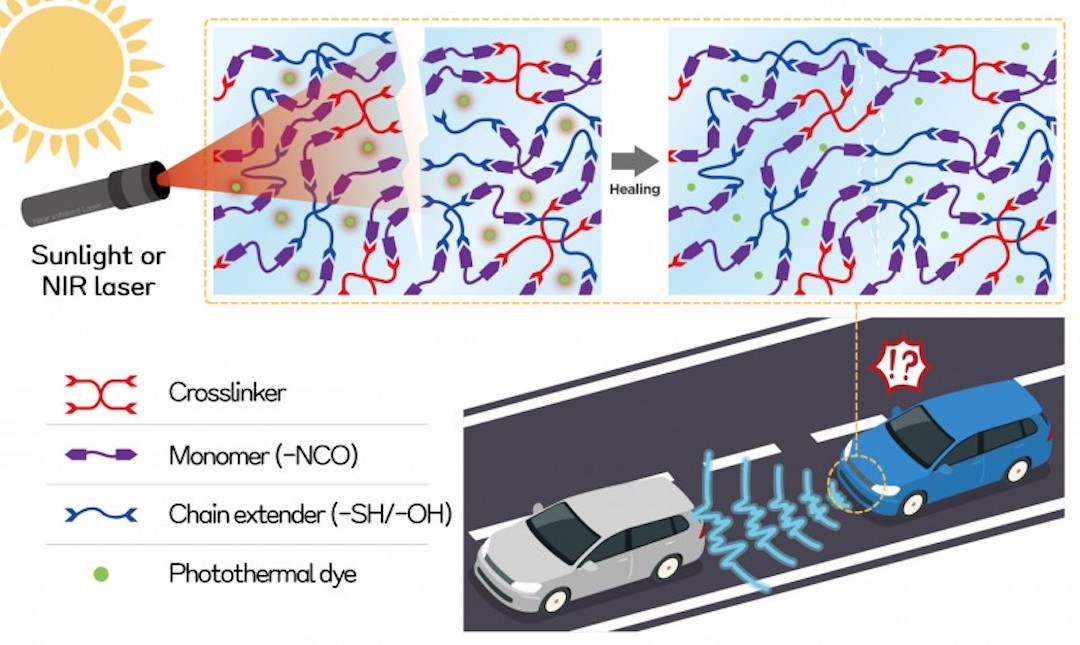
With its innovative lens, instead of the sensors within the vehicle being “severely distorted” by scratches on the lens surface, the transparent material simply solves the problem by restoring the part that’s been damaged.
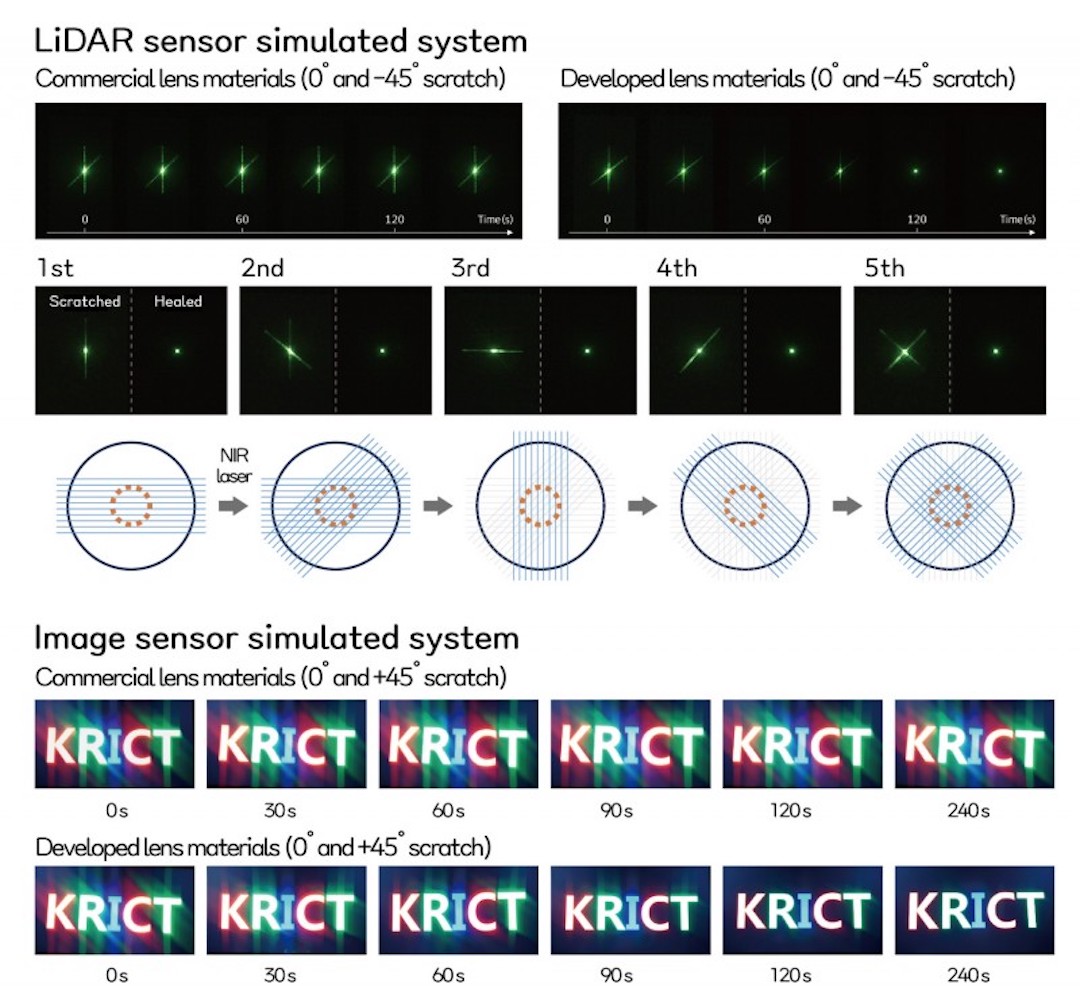
The self-healing coating works when concentrated sunlight is irradiated onto its surface, much like when beams are passed through a magnifying glass. Scratches are “erased” on the surface of the sensors in under 60 seconds.
Typically, lenses are made from harder materials, making it difficult to hold self-healing capabilities, which are often found more easily in flexible substances due to the molecular mobility of the material.
To overcome this, the team combined a thiourethane structure with a see-through photothermal dye to form a “dynamic chemical bond” in which the polymers of the material disassemble and recombine under direct sunlight.
In addition, the researchers claim that the material has “perfect” healing properties, considering it can repair itself even if the scratches take place at the same spot more than five times.
Not only does this help to increase the life expectancy of these sensors, which can often be costly, but it can also help make driverless cars safer by minimizing malfunctions that occur due to surface damage.
[via Interesting Engineering and Tech Xplore, images via various sources]


