
‘Self-Healing’ Electronic Skin Can Patch Itself Up After A Cut, Just Like Humans

Researchers at Stanford University have come up with synthetic electronic skin that can “recognize” itself and self-heal when injured, just like how our real skin works. This invention could be a key step in developing robot skin that mimics the human organ.
The team successfully demonstrated a multi-layer, thin polymer sensor that can automatically realign itself when injured, following how the many layers of human skin reassemble themselves after suffering an injury to begin the healing process.
Impressively, the soft, stretchable material the scientists have invented has the ability to sense thermal, mechanical, pressure, or electrical changes in its environment. Once punctured or cut, each layer automatically restores itself so the complete sample can continue functioning.
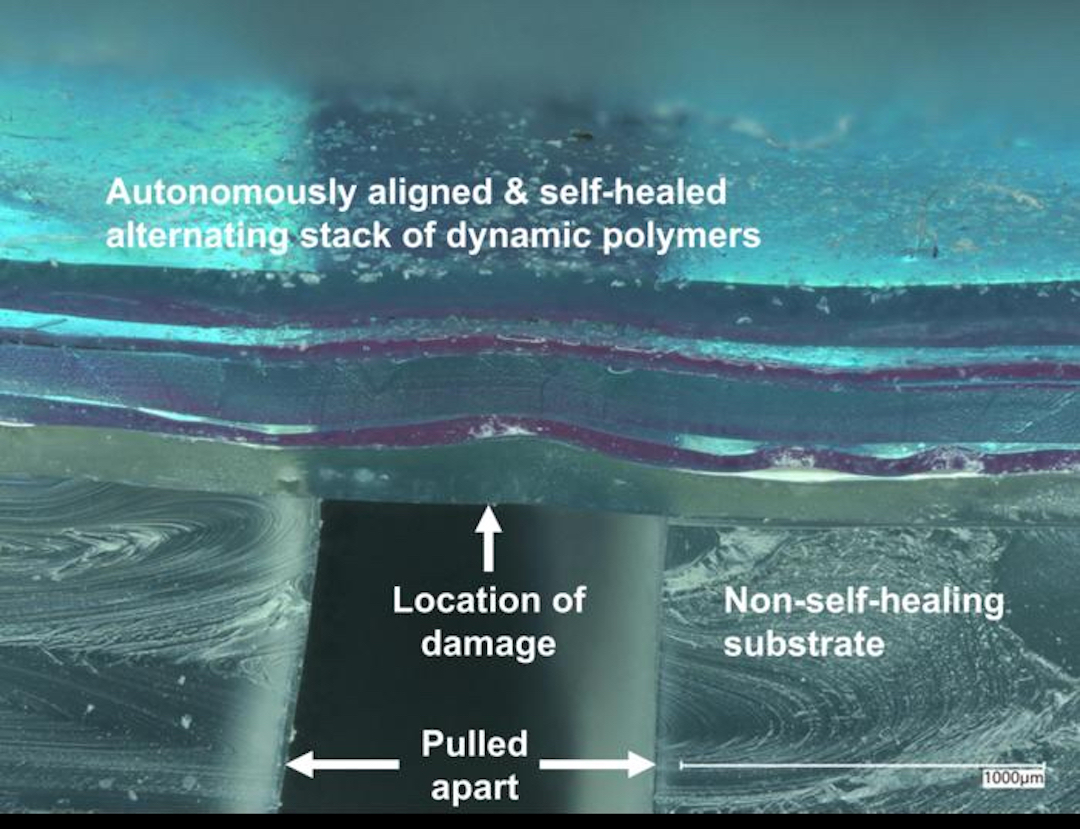
According to the researchers, the special material can put itself back together in just 24 hours when warmed to 158°F, though the process slows down to about a week when kept at room temperature.
Going forward, the team is looking to incorporate different abilities into different layers of material. For example, one layer could be configured to sense changes in temperature, while the layer below it could be alerted by changes in pressure—bringing it even closer to real skin.
This isn’t the first instance of scientists creating human-like skin for robots. Previously, a team at the University of Maryland developed an artificial skin that gave androids a sense of touch, while Cornell University researchers invented a soft robot that showed similar self-healing properties.
[via Interesting Engineering and Engineering & Technology, images via various sources]


