
3D Pen ‘Paints’ Healing Gel Directly Onto Wounds To Speed Up Repair Process
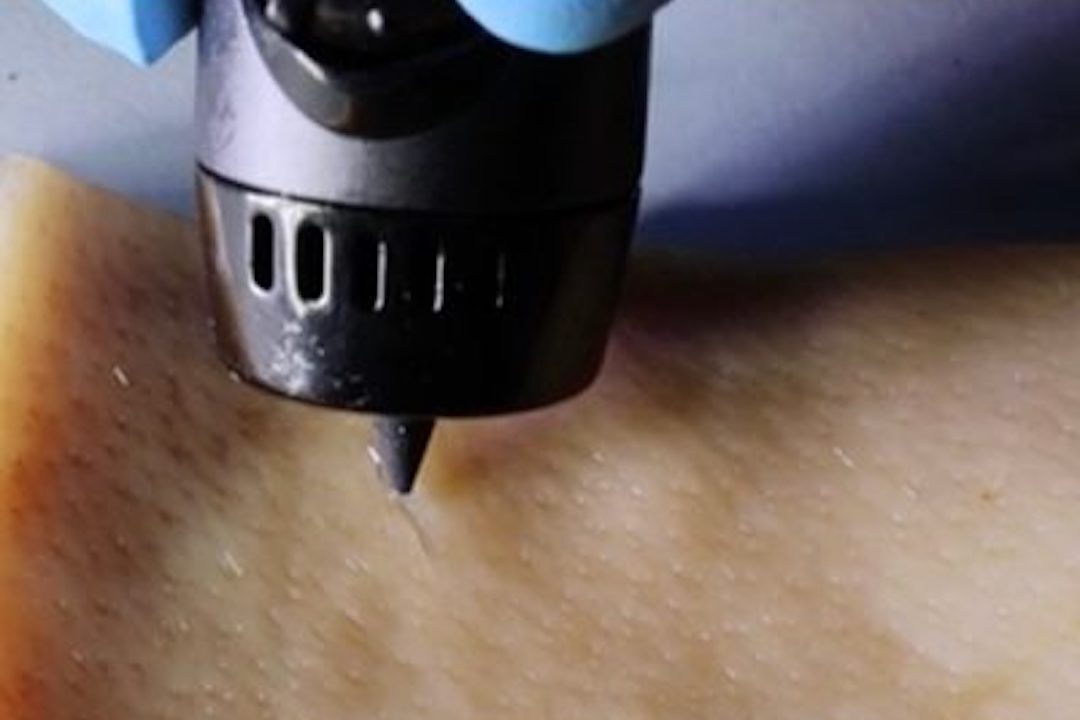
When dressing a cut, the bandage typically used only covers the injury and protects the site from being infected by harmful bacteria. But what if we could paint a healing ink directly onto wounds to speed up the repair process?
That’s what scientists at China’s Nanjing University are looking into with its PAINT technology, an acronym that stands for “portable bioactive ink for tissue healing.” The high-tech system uses a 3D-printing pen to extrude sodium alginate gel right onto the skin’s surface.
The substance that speeds up the healing is a mixture of sodium alginate gel and extracellular vesicles (EVs) particles—a compound produced by white blood cells that help to reduce inflammation and form new blood vessels when humans suffer from injuries.
When the two mix together at the tip of the pen, they form a viscous, gelatinous ink that can be applied to cuts of any shape and size. The best part? Research on human epithelial cells showed that the ink helped produce new blood vessels and reduce inflammatory substances on cuts.
In addition, when tested on laboratory mice, PAINT showed the ability to boost collagen fiber production. Rather impressively, large wounds on the creatures were nearly completely healed in just 12 days, whereas the control group without the gel wasn’t nearly as patched up.
Perhaps, in the near future, fixing up an injury will be as easy as squeezing some gel onto the wound instead of fumbling around with bandages or plasters or having to make a trip to the hospital for stitches.
[via New Atlas and Hackster.io, cover image via ACS Applied Materials & Interfaces, 2023, DOI: 10.1021/acsami.3c03630 / American Chemical Society]


