
Special Concrete Helps Clean Polluted Air In Traffic Tunnels With Just Sunlight
Just ask the Washington State Department of Health, and it’ll reveal a startling reality about bustling cities: residents living in urban, high-traffic regions are likely to be exposed to higher levels of air pollution than those situated elsewhere.
This shouldn’t come as a surprise, considering how the multitude of cars on highways are known to produce particles such as carbon monoxide and benzene. People suffering from underlying health conditions, including asthma or heart disease, are even more susceptible to dirty air.
To correct this, scientists at the Korea Institute of Civil Engineering and Building Technology (KICT) have come up with a potential solution to the problem in the form of photocatalytic concrete. Simply put, this special material reacts with sunlight to purify the air around it.
Upon coming into contact with light, the concrete produces molecules known as reactive oxygen species (ROS) that have strong oxidizing power. This helps them break down air pollutants such as volatile organic compounds (VOCs), nitrogen oxides, sulfur oxides, and ammonia.
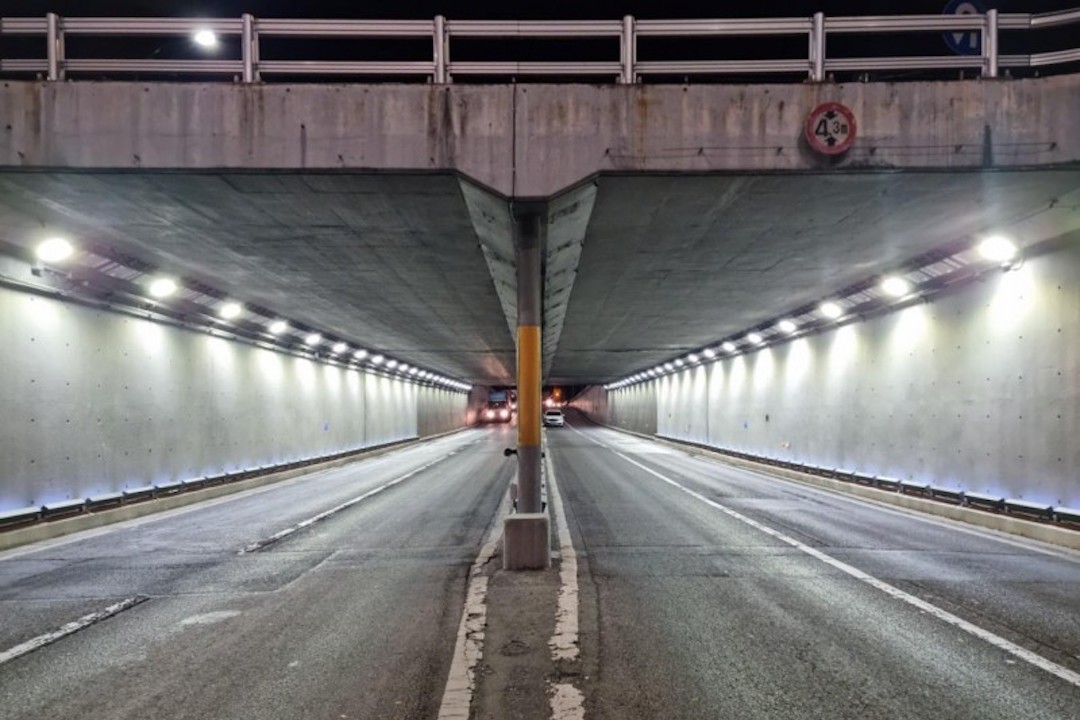
In addition, the compounds help prevent the formation of fine particulate matter in the air. The researchers decided to put the material to the test in a traffic tunnel, where pollution is often at its highest due to the lack of circulation. To activate the concrete, artificial lights were installed.
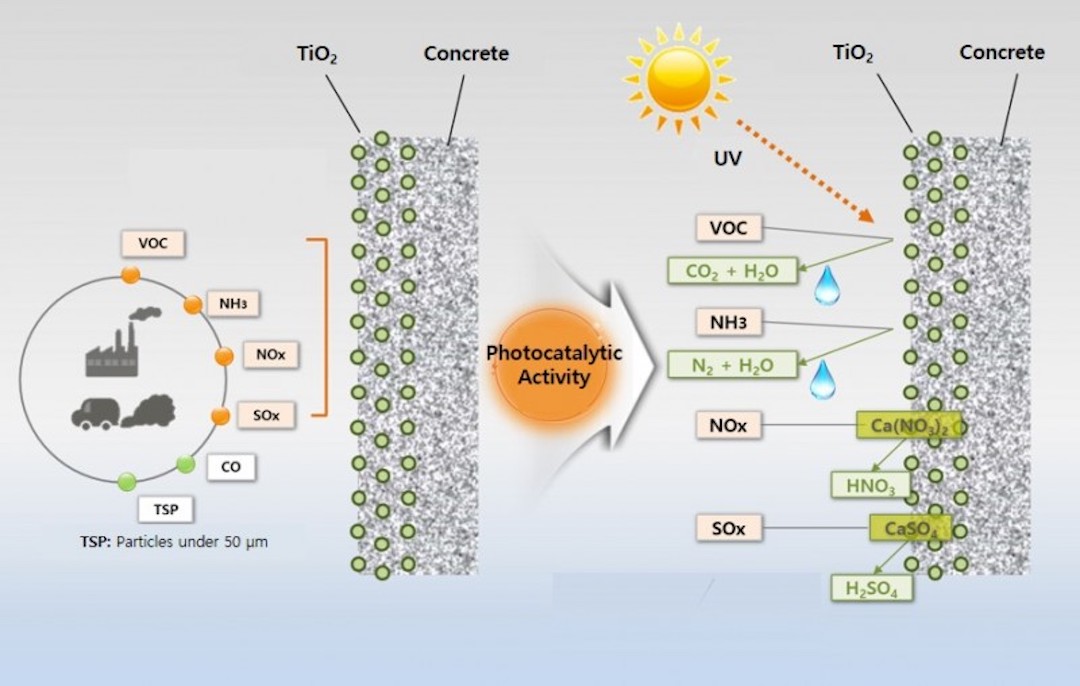
Incredibly, the photocatalytic concrete successfully reduced nitrogen oxide levels by 18% over a period of 24 hours. The only byproduct from the reactions? Salts from the calcium content in the material, which were quickly washed away once it rained.
This means the system could function indefinitely, all on its own, without the need for additional maintenance when compared to using regular concrete. Going forward, the team plans to continue working on the system so it can one day be available for commercial use.
“Construction technology using photocatalysts can have an immediate effect on reducing fine particulate matter on the nation’s living environment,” said Dr Jong-Won Kwark, Head Researcher of the study.
“We plan to build a system of cooperation with local governments and public corporations to expand trial demonstrations to other sites to achieve commercialization and distribution with practical effects,” he concluded.
[via New Atlas and Korea Institute of Civil Engineering and Building Technology / Newswise, images via Korea Institute of Civil Engineering and Building Technology / Newswise]


