
Apple’s Tim Cook Was Amused To Find An ‘iPhone’ Inside A 350-Year-Old Painting

Image via Rijksmuseum Amsterdam / Wikimedia Commons {{PD-US-expired}}
Did Apple really “think different” for this age and invent the world-altering iPhone? The answer is an unequivocal yes. However, the sighting of a painting from 1670 has sparked a playful flight of fancy questioning if the company was the smartphone’s true originator.
As self-explanatory in its title, the 350-year-old Man Handing a Letter to a Woman in the Entrance Hall by Dutch painter Pieter de Hooch pictures a male figure entering a hall to pass a letter to a woman, who is seen seated on a chair and looking on with anticipation.
The artwork, depicting an ordinary day in a home overseeing a canal, thoughtfully captures both outdoors and indoors with lovely lighting and shading. There are two dogs in this picture, with one sitting on the woman’s lap and another approaching the door with its head turned back, directing the viewer’s attention to the outside world.
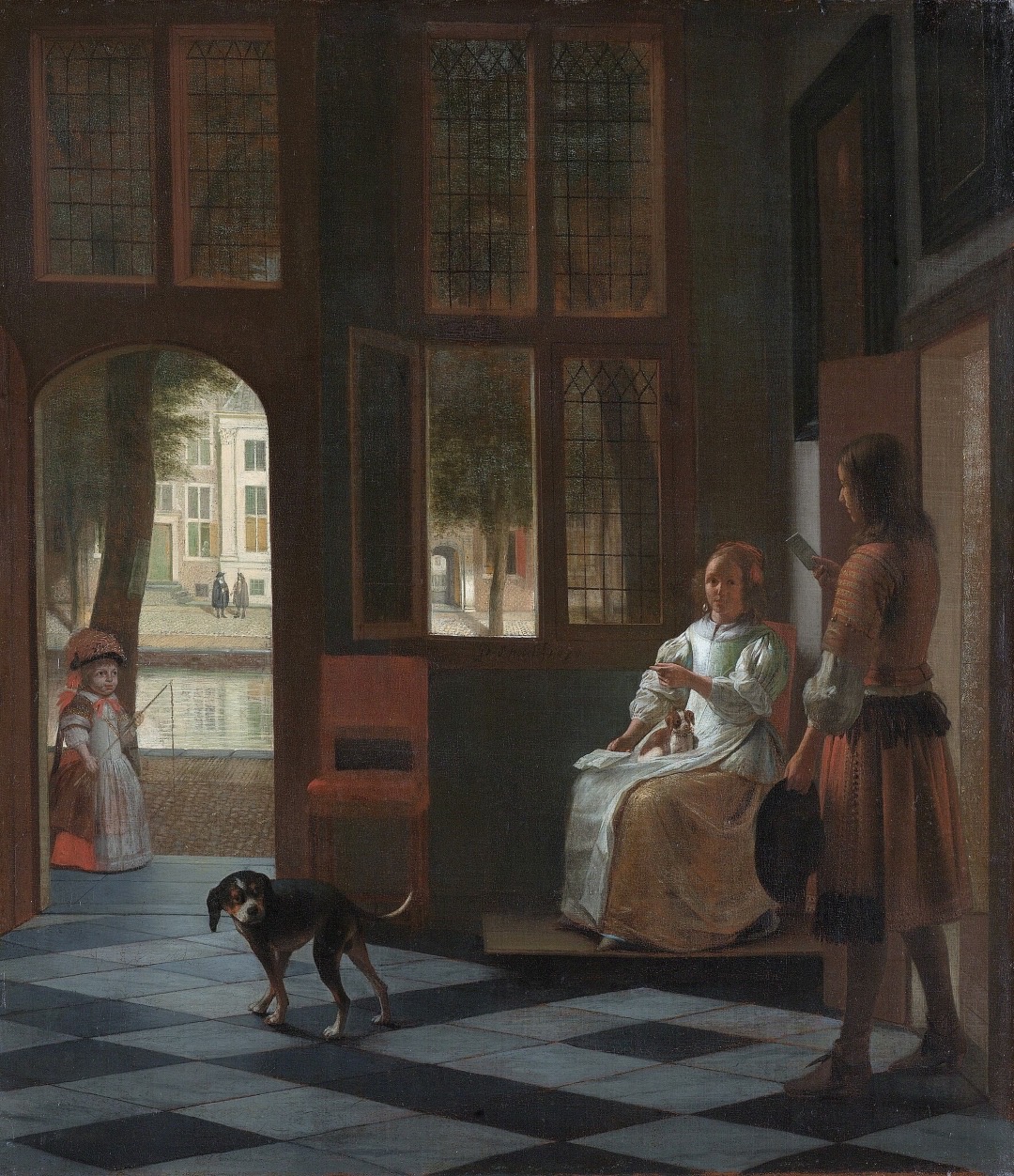
But all these delicate elements aren’t why this Dutch Golden Age piece, held by the Rijksmuseum in Amsterdam, is gaining a resurgence in attention today.
Modern onlookers are reinterpreting the “letter” in the man’s hand as an iPhone. It helps that the character even got the all-too-familiar “tech neck” look down pat!
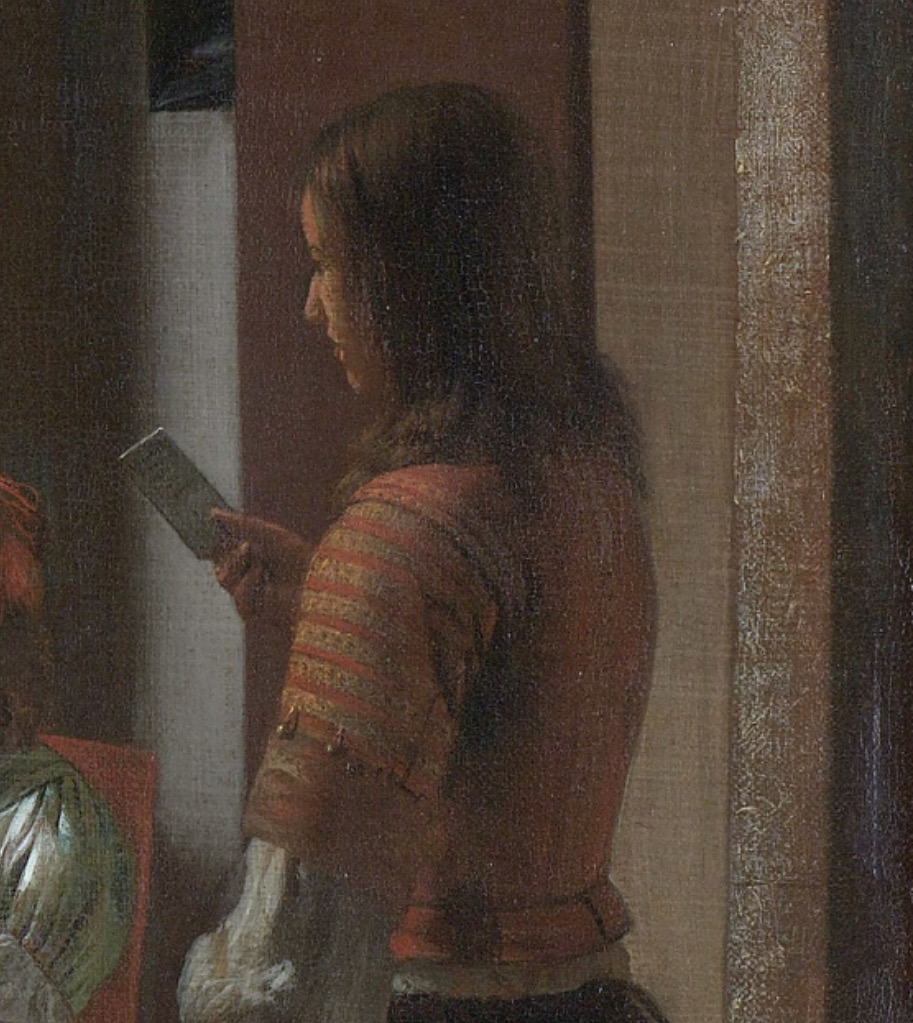
The scene has delighted even Apple CEO Tim Cook, who first spotted the masterpiece while browsing at the museum in 2016.
He later recounted the encounter with reporters at a press conference, stating that he always thought he knew when the iPhone came to be, but “now I’m not so sure.”
Holding up a photo of the artwork to those in presence, Cook declared then: “There was an iPhone in one of the paintings.”
Interestingly enough, other “iPhones” have appeared in paintings throughout history, the most notable of them all being Ferdinand Georg Waldmüller’s The Expected One (1860), which showed a woman looking down at a smartphone-like object—identified as a prayer book—in her hands. The vision has sparked jokes about time travel.
In the same vein, art lovers were recently tickled when they spotted an eight-year-old “time-traveler” donning a pair of “Nikes” in a 1652 Dutch painting.
[via WION and LADbible, images via Rijksmuseum Amsterdam / Wikimedia Commons {{PD-US-expired}}]


