
3D Walking Origami Robot Shapeshifts Into A Flat-Pack Droid
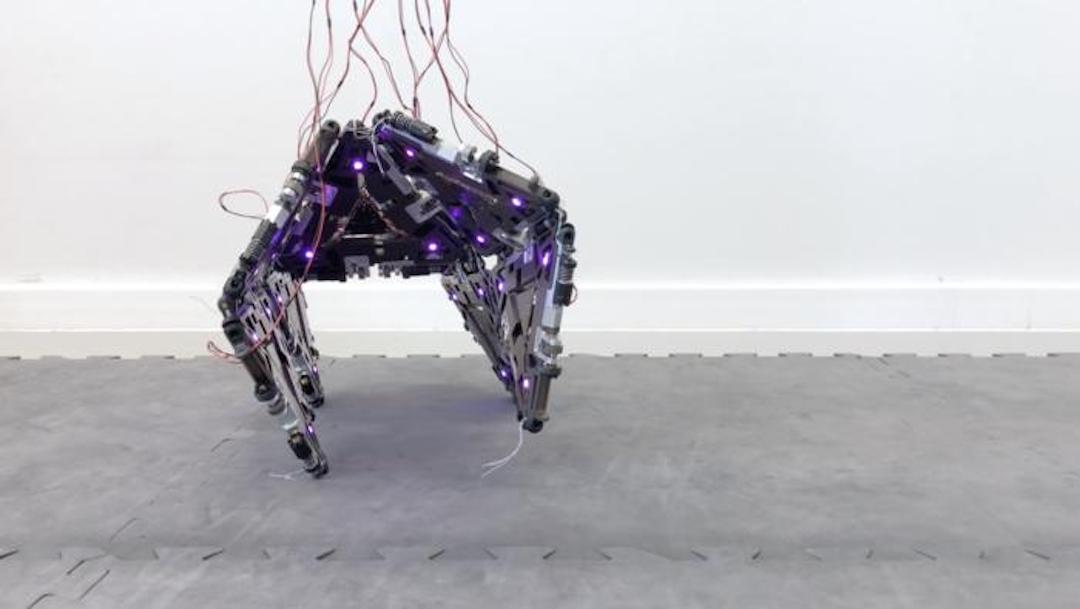
Switzerland’s Ecole Polytechnique Fédérale de Lausanne (EPFL) is looking to the humble craft of origami for its latest project: a robot that can twist and fold itself into various 3D shapes.
Introducing Mori3, the robot with a polygonal shape and triangular limbs. In its dormant state, it rests as a flattened triangle. However, once it springs to life, it skillfully contort itself into various configurations, allowing it to walk, roll, and perform other movements. Mori3 primarily operates autonomously but can also communicate and interact with fellow robots to construct intricate structures.
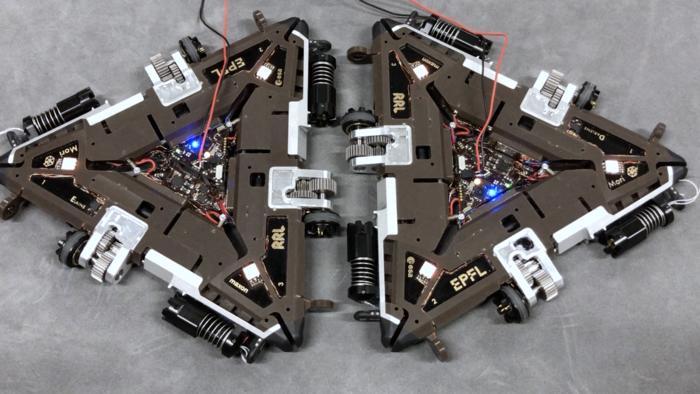
“We had to rethink the way we understand robotics,” said co-inventor Christoph Belke, a post-doctoral researcher in robotics at EPFL, in the statement. “These robots can change their own shape, attach to each other, communicate and reconfigure to form functional and articulated structures.”
A demo video of the robot shows it coming to life, twisting itself into a standing position, joining up with its siblings, and even creating a ring formation.
So what are these types of bots for? The team proposes that Mori3 would come in handy one day up in space, aiding astronauts aboard a rocket that might not have space to carry different types of robots. Thanks to Mori3’s ability to flat-pack itself, it could one day be headed for the galaxy. Concept art for this even shows it helping astronauts with basic tasks.
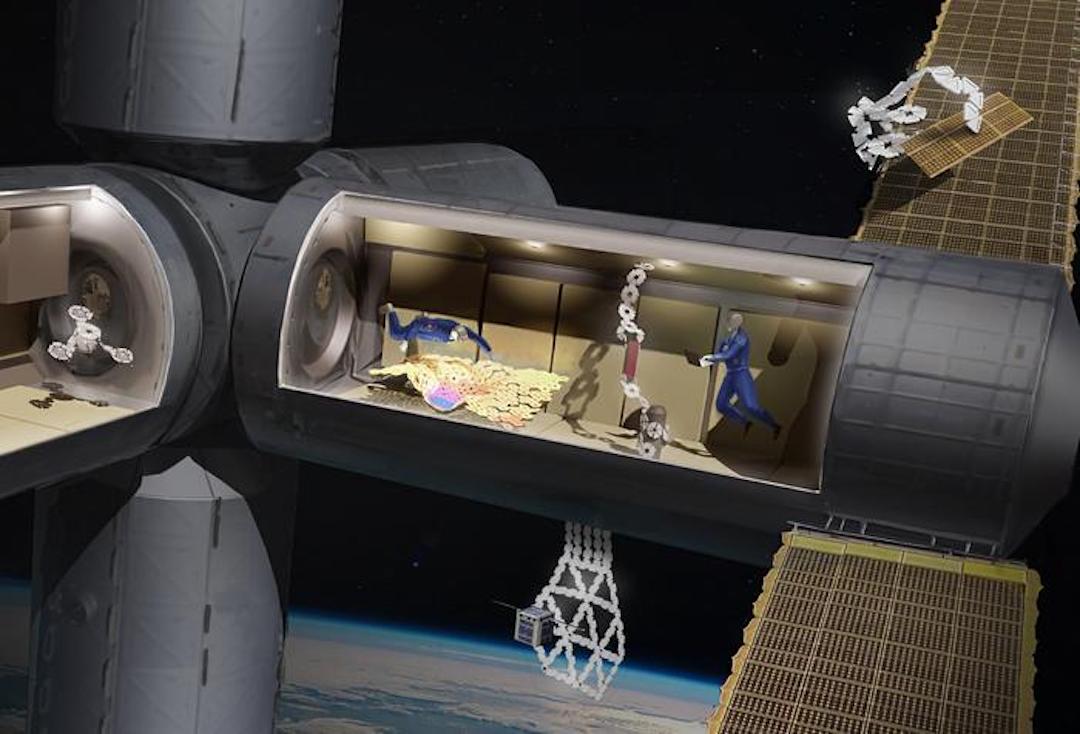
And basic tasks are about all it’s suited for. The researchers explain that while it can potentially be sent on a future mission to the Moon, it isn’t designed for anything too complex. Though, its versatility and capacity to shapeshift could potentially aid astronauts and NASA, especially with a goal like lunar colonization.
[via Futurism and BGR, images via EPFL/EurekAlert]


