
7th-Century Anglo-Saxon Teen’s Face Gets Reconstructed, And Her Life Explored
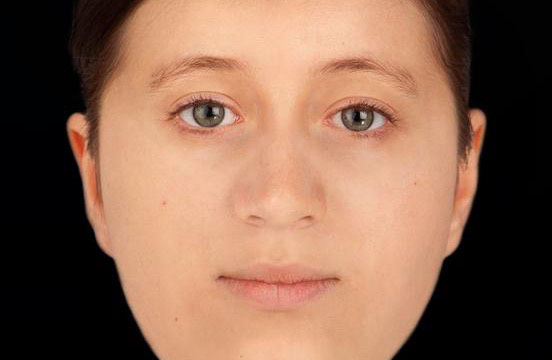
Image via Hew Morrison ©2023 / University of Cambridge / EurekAlert
This girl could easily look like your neighbor’s child or someone you cross paths with at the park. In truth, she walked the earth over 1,300 years ago.
The face of this 16-year-old Anglo-Saxon woman has remained a mystery ever since her skeleton was uncovered on a wooden bed, with a gold and garnet cross on her chest, in Trumpington, Cambridgeshire, in 2012. Now, with the help of forensic artist Hew Morrison, researchers at the University of Cambridge have reconstructed her face with photorealistic effect.
Morrison based the seventh-century girl’s likeness on measurements of her skull, along with tissue depth data for Caucasian females. DNA analysis confirmed the precise color of her brown eyes and hair, which would have been a question mark otherwise.
The result is believed to depict the young woman’s face not long before her death.
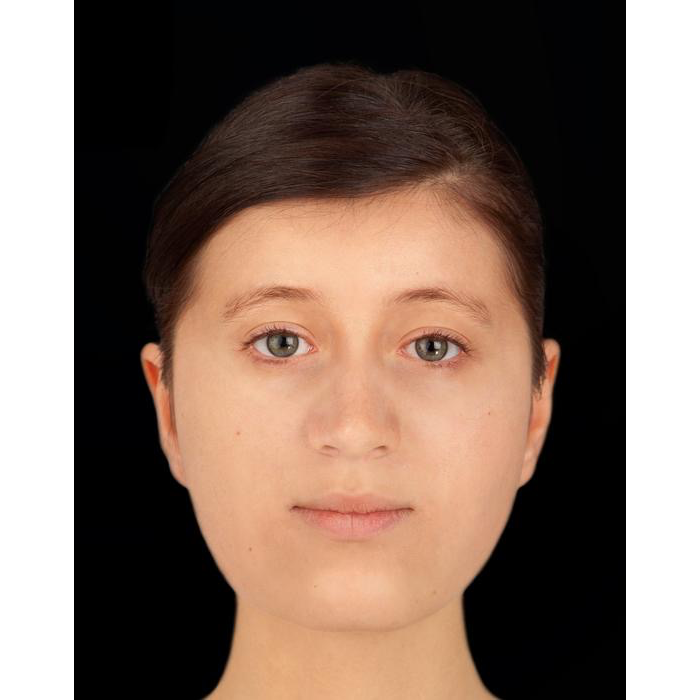
“It was interesting to see her face developing,” Morrison notes in a statement.
“Her left eye was slightly lower, about half a centimeter, than her right eye. This would have been quite noticeable in life.”
Archaeologists have known for some time that the girl had been struck with an unknown illness toward the end of her short life, the BBC reports. New context picked up from her diet—known as “you are what you eat” analysis—now tells researchers more about her life.
The girl spent her early childhood near the Alps, perhaps in southern Germany, and moved to “a very flat part of England” at around the age of seven.
After migrating, her eating habits changed. The amount of protein she consumed had decreased “by a small but significant amount,” reads the news release. This showed she was eating less meat and dairy in her new home in Trumpington, says Anglo-Saxon specialist Dr Sam Lucy (via the BBC).
The gold and garnet cross—dubbed the ‘Trumpington Cross’—found buried with her suggests she was Christian and had hailed from an aristocratic or royal family.
The cross, adorned with gold and garnet pins, could have once been pinned to the girl’s veil. The finish on the vibrant pins would have danced with the light whenever she moved.
“She was probably quite unwell and she traveled a long way to somewhere completely unfamiliar,” empathizes Dr Sam Leggett, a bioarchaeologist who was part of the team who studied the teenager’s bones and teeth. “Even the food was different. It must have been scary.”
Dr Leggett continues: “So it seems that she was part of an elite group of women who probably traveled from mainland Europe, most likely Germany, in the seventh century, but they remain a bit of a mystery. Were they political brides or perhaps brides of Christ? The fact that her diet changed once she arrived in England suggests that her lifestyle may have changed quite significantly.”
The girl’s likeness, in addition to the cross and decorative headboard from her burial bed, will go on display at Cambridge University’s Beneath Our Feet exhibition, which will run through April 14, 2024 at its Museum of Archaeology and Anthropology.
[via Phys.org, BBC, EurekAlert, images via Hew Morrison ©2023 / University of Cambridge / EurekAlert]


