
These High-Tech Pavement Markers Help Driverless Cars ‘See’ In Bad Conditions
With Mercedes-Benz recently launching its first “hands-free, eyes-off” autonomous cars for sale, it’s certain that driverless technology has come a long way from its nascent stages. However, there are still challenges engineers face when it comes to these vehicles’ reliability.
As such, researchers from the Department of Energy’s Oak Ridge National Laboratory and Western Michigan University have come up with a solution that works from the outside of a car in the form of sensors embedded into roads.
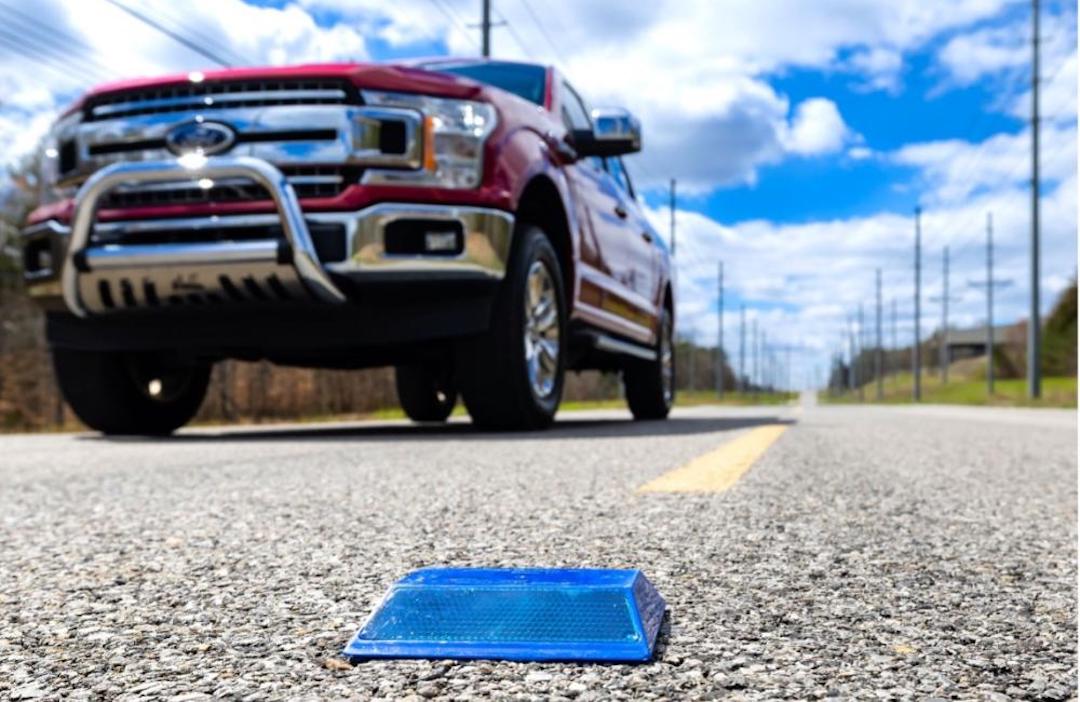
To put this high-tech solution to the test, the department’s engineers placed low-powered sensors within the reflective raised pavement markers typically used to aid drivers in identifying different lanes on a highway.
According to the study, microchips inside these markers transmit information to cruising cars, informing the driverless systems about the road shape. These markers are effective even when cameras or LiDAR don’t work as well due to fog, snow, flare, or inclement weather.
“We are working to make autonomous driving features accurate and safe in more remote areas. And we are doing it by converting a dummy piece of infrastructure into something with many more uses,” researcher Ali Ekti explained.
As the researchers pointed out, this solution not only provides cars with more accurate information but also lessens the burden on the car’s software, bypassing some of the processing load onto the road infrastructure.
This could be as significant as helping electric vehicles conserve battery power. In fact, compared to cameras and LiDAR-based systems, the chip-enabled markers can reduce navigational power consumption by up to 90%.
To ensure the markers work in any weather, the engineers discovered the best combination of transceiver, battery, and antenna that could withstand anything that comes their way, including the likes of snowplows.
They were then equipped with a communications protocol that uses a certain radio frequency spectrum that transmits it up to 50 times a second. The result? A fix that’s inconspicuous, defends against interference, is affordable to manufacture, and is energy efficient.
“With the hindsight of 10 years of highly-funded development, we now know that software and cameras alone don’t provide an easy solution,” said Zachary Asher, Assistant Professor of Mechanical and Aerospace Engineering.
“Perhaps a more patient approach, using infrastructure-based hardware in coordination with government transportation agencies, is the way to achieve zero-accident vehicles which actually use energy sustainably.”
[via New Atlas and Tech Xplore, cover image via Carlos Jones/ORNL, US Department of Energy]


