
NASA Presents Images Of Mars In A New Light With Vibrant Colors
Mars, also known as the Red Planet specifically for its fiery hue, has come about thanks to the iron oxide that covers its surface. The reddish shade encompassing the planet has encaptured the hearts of many enthusiasts and scientists as space exploration teams like NASA try to find a way to set foot on the rusty land.
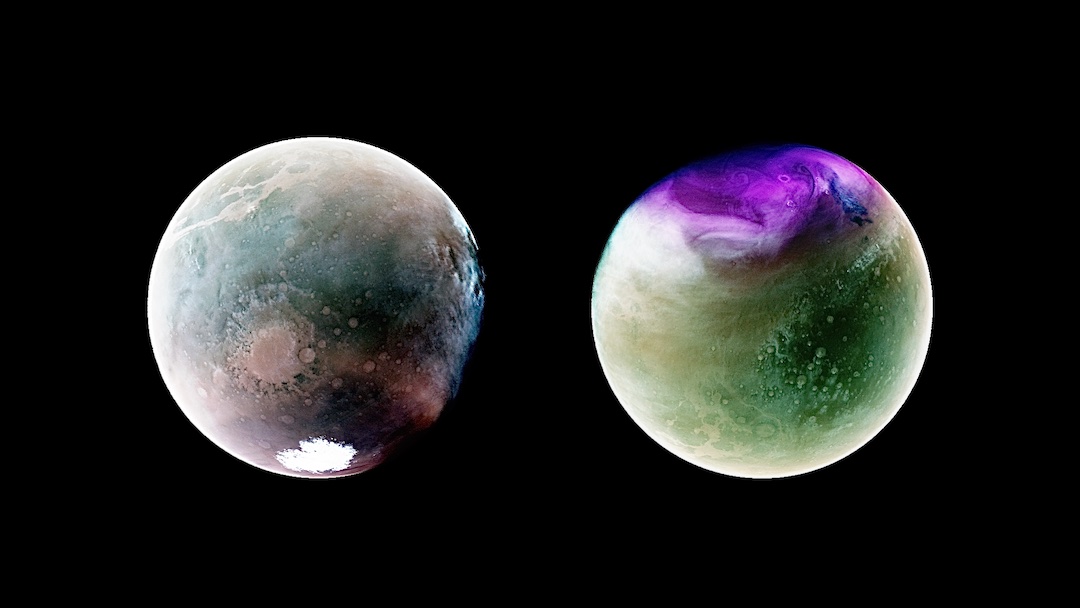
And, speaking of the space agency, its Mars Atmosphere and Volatile Evolution (MAVEN) mission has just captured the celestial body in a new light and new colors. The images of the southern and northern hemispheres were caught with the Imaging Ultraviolet Spectrograph (IUVS) during the summer months.
MAVEN was launched in 2013 to study Mars’ upper atmosphere, ionosphere, and its interactions with the Sun. The goal is to gain insights into the loss of its atmosphere millions of years ago, and viewing it in ultraviolet light offers a fresh perspective on the planet.
The mission craft takes renders with wavelengths ranging from 110 to 340 nanometers beyond the visible spectrum. To ensure visibility, NASA translates these images into three ultraviolet wavelength ranges represented as red, green, and blue.
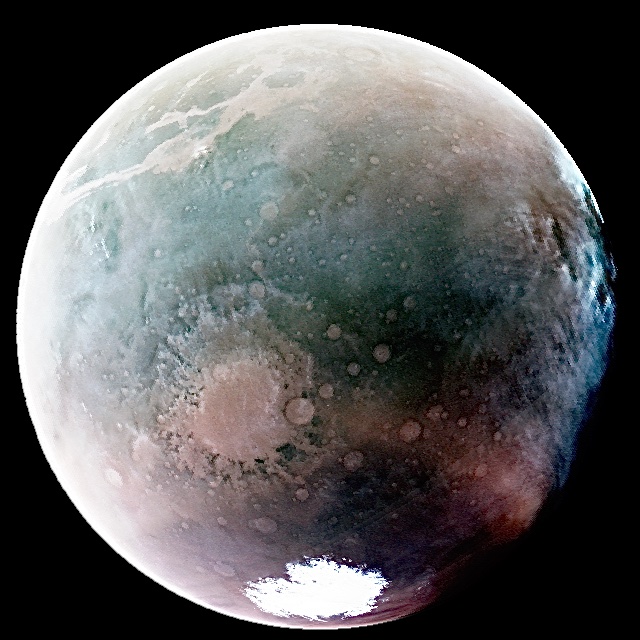
In the first image, the stellar object is shrouded in a pink atmospheric haze covering the Argyre Basin, one of Mars’ deepest craters, at the bottom left. The upper area of the render depicts a deep series of canyons called the Valles Marineris, and at the bottom, the stark white spot marks its southern polar ice cap.
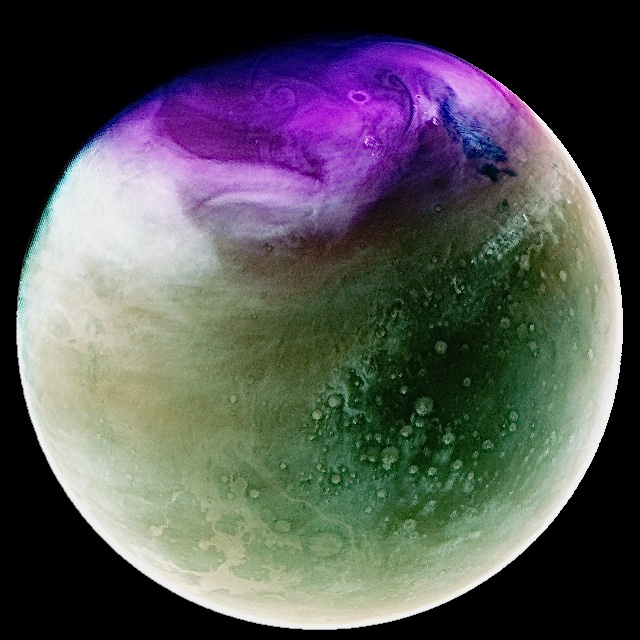
The following picture comes from January 2023, right in the heart of its winter when it’s at its farthest from the Sun. The northern hemisphere here experiences harsh winter conditions, represented through the bright magenta hue, which shows the accumulation of the planet’s ozone. Come springtime, the ozone is destroyed as it reacts with water vapor in the atmosphere, which remains confined to lower altitudes during the winter.
The captivating images captured by NASA’s MAVEN mission offer a glimpse into Mars’ unique and intriguing world. These visuals, coupled with our understanding of Mars’ red hue, remind us of its rich geological history and ongoing mysteries waiting to be unraveled.
[via Gizmodo and Space.com, images via NASA]


