
Heat-Resistant Drone Could Help Firefighters Take Down Flames At High-Risk Sites
In just one year alone, fire departments in Switzerland were tasked with handling over 12,000 firefighting missions—many of which involved charging into burning buildings with lethal levels of heat reaching 1,000°C (1832°F).
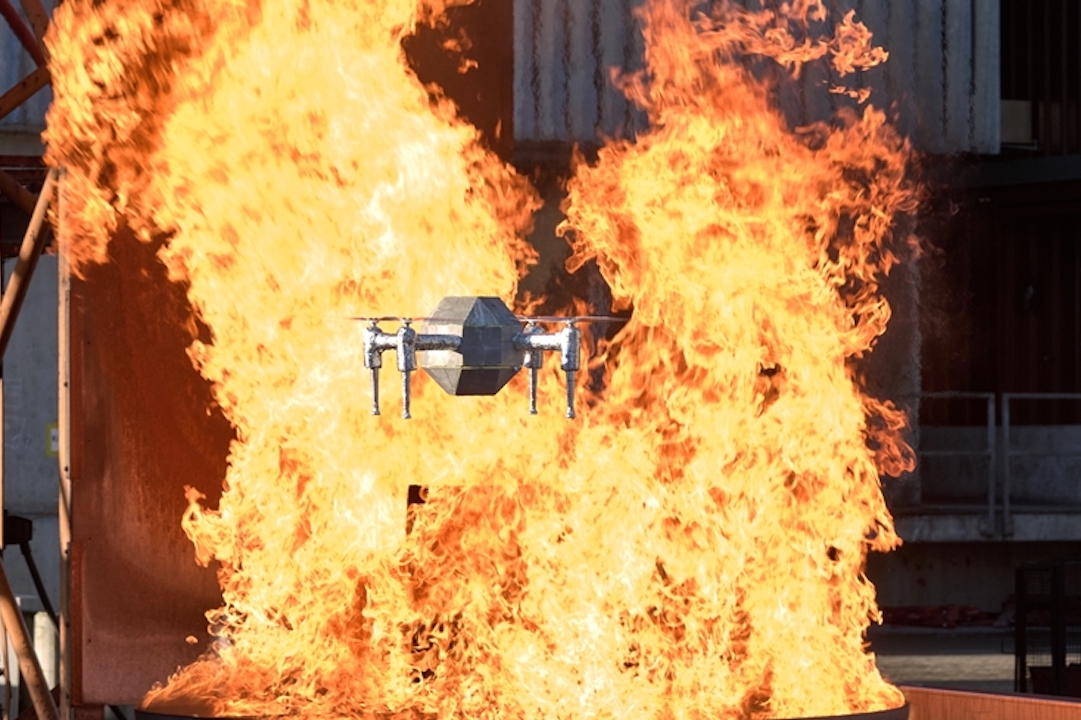
To help mitigate the life-threatening risks these brave men and women take on a daily basis, researchers at Empa and Imperial College London have teamed up to develop a heat-resistant drone that could be the first to surveil a reported hot spot.
The data gathered from the location of the building or forest fire would allow firefighters in the response team to optimize their strategy before venturing into the actual inferno, so they’re aware of what may await them and what obstacles they could possibly encounter on the mission.
For example, these flame-proof drones could be equipped with cameras and carbon dioxide sensors to rely important information about how the fire sources within the site are distributed, if there are any unexpected hazards, or where trapped residents may be located.
At the moment, according to Empa, flying machines are already being employed to fight fires, such as to snap aerial photographs of a hot spot, lift fire hoses onto skyscrapers, or even dispense extinguishing agents when a remote fire occurs deep in the wilderness.
However, till now, most drones aren’t able to fly closer to the source of the fire as they can’t withstand the astonishing heat. Therefore, the team set out to create a drone that could fly right into the heart of a fire to help firefighters.
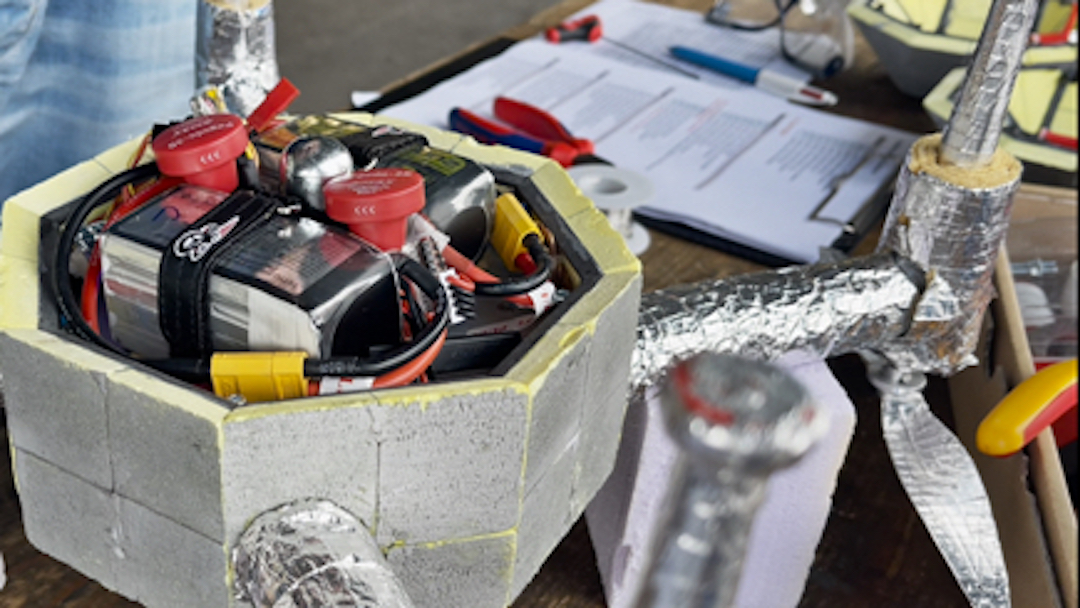
Working together with the fire department to determine the list of features a drone would require in a fire mission, researcher David Häusermann first sourced a material that could protect the heart of the drone, including its motors, batteries, sensors, and electronics, from the heat.
Scientists Shanyu Zhao and Wim Malfait from Empa’s Building Energy Materials and Components laboratory were able to create an ultralight aerogel by synthesizing an insulating material that could withstand high temperatures to make the flame-resistant exterior of the drone.
Overall, the design of the FireDrone was inspired by wild animals, such as penguins, spittlebugs, and arctic foxes, who often guard themselves against extreme temperatures. One thing all these creatures had in common was protective thermoregulating material, as used for the drone.
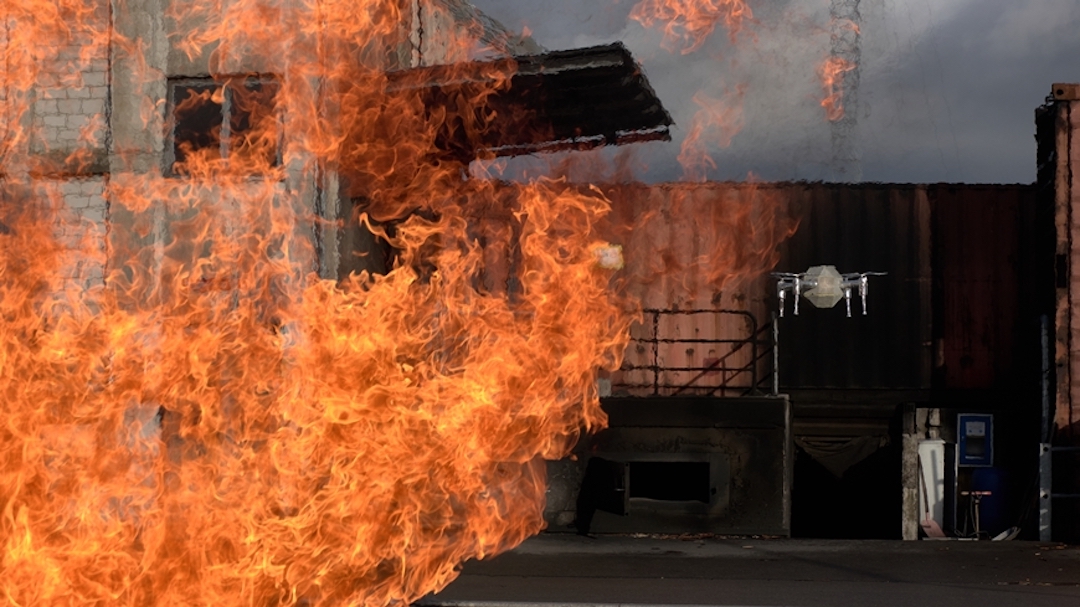
Initial tests at Empa’s flight arena showed that the drone could indeed play a large role in fighting future fivers. Measuring 50 centimeters (19.6 inches) tall, the machine’s insulation material and the additional built-in cooling system allowed it to survive multiple trials undamaged.
Going forward, discussions are being held for researchers to develop a FireDrone for freezing cold environments, with scientists testing out the robot in a glacier tunnel to understand better how it works in extremely low temperatures.
“The use of drones is often limited by environmental factors such as extreme temperatures. With the FireDrone, we are showing a way to significantly expand the future range of applications for drones in extreme environments,” said Mirko Kovac, Head of Empa’s Aerial Robotics Laboratory.
[via New Atlas and SWI Swiss Info, images via Empa]


