
Meta’s Threads Unravels With Noticeable Frays For People With Disabilities
Photo 283222531 © Andrii Yalanskyi | Dreamstime.com
Twitter is building Twitter 2.0, but it seems Meta has cut in and beaten it in its own race. On July 5, the Mark Zuckerberg-led company announced Threads, a direct rival to the bird app with a similar interface and functionality.
Registering a Threads account is easy. If you’re on Instagram, you can simply sync your profile and account details into the new real estate. Thanks in part to this seamless integration, the app already has 70 million users as of the time of writing, according to Meta’s CEO.
Threads hopes to achieve with text what Instagram has done with photos and videos, connecting billions of people with “a positive and creative space to express your ideas.”
“There should be a public conversations app with one billion-plus people on it,” Zuckerberg penned in the new app. “Twitter has had the opportunity to do this but hasn’t nailed it. Hopefully, we will.”
But Meta can only reach that goal if it ties Threads’ loose ends regarding accessibility needs.
“The core accessibility features available on Instagram today, such as screen reader support and AI-generated image descriptions, are also enabled on Threads,” Meta asserted in a blog post. However, as Mashable points out, glaringly missing are much-needed features, like customizable alt-text, that are necessary for users with disabilities to digest content.
Mobile-first, desktop-not-even-an-afterthought
Screenshot via Threads
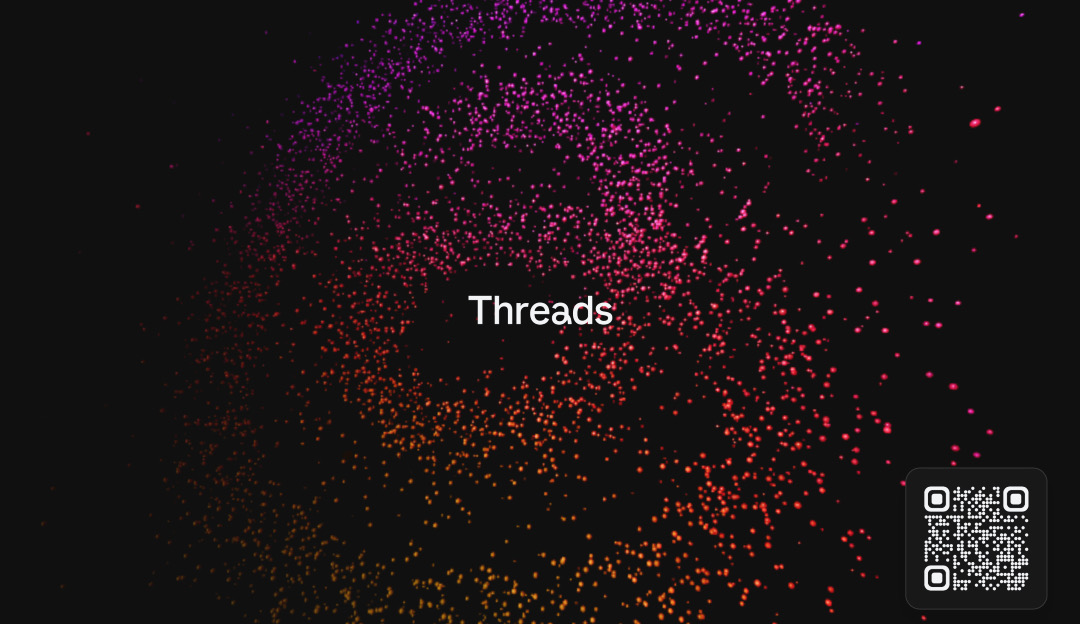
Firstly, at launch, Threads is mobile-only. If you visit its website, you’ll be met with a simple landing page containing a QR code to download the app on your smartphone. This immediately excludes those who will need to browse from expanded desktop screens or modify their surfing experience with special plugins.
Alt-text, schmalt-text
Threads is kinda cool, but @Meta launched the app without basic accessibility functions like adding alt text to images and captions to videos, which is decidedly uncool.
— Social Media Tea (@SippinSocialTea) July 6, 2023
Please post responsibly. Don't exclude folks with disabilities from your content. Thank you!
At the get-go, Threads pales in comparison with Twitter in making visual content more comprehensible for people with low vision or blindness. Although AI-generated descriptions can be appended to images, there’s currently no option for users to add alt-text, which would be essential in explaining more complex imagery, Allon Mason, CEO and founder of web accessibility solution provider UserWay, tells the publication. Twitter—and even the beta version of Bluesky, the alternative app headed by former Twitter CEO Jack Dorsey—has this feature built in.
No alt text on Threads, of course. No accessibility information at all for Threads. Doesn't even come up with an option if you search in it.
— Fiona Robertson fionaswriting.bsky.social (@FionasWriting) July 6, 2023
Text vexed
Furthermore, display changes for readability—such as altering font size and color, and the addition of dynamic text—aren’t yet possible, says Mashable.
General users would appreciate how Threads lets you instantly switch to dark mode by tapping the logo at the top of the screens, as though flicking a light switch on and off. However, UX Collective’s Camryn Manker says the dim version still needs work as it has “contrast issues” that make text difficult to read.
threads has some nice design details
— morgan evetts (@morqon) July 5, 2023
on the web, tap the @ logo to switch between dark and light mode
yes, it’s default dark mode pic.twitter.com/RcEsV9I5ZA
“Smaller text like the like count, reply count, and time posted need to be adjusted,” Manker elaborates.
TL;CR (couldn’t read)
It’s worth noting that Threads posts have a limit of 500 characters, as opposed to 280 for basic Twitter users. The Meta app also offers support for videos lasting up to five minutes, in contrast with Twitter’s two minutes and 20 seconds. While it’s still early days for Threads, it can be argued that it has a greater responsibility in empowering users with accessibility needs due to its accommodation for longer-form content. It’s time to t(h)read with caution.
[via Mashable and UX Collective, images via various sources]


