
NASA’s Perseverance Rover Has Just Discovered Organic Matter On Mars
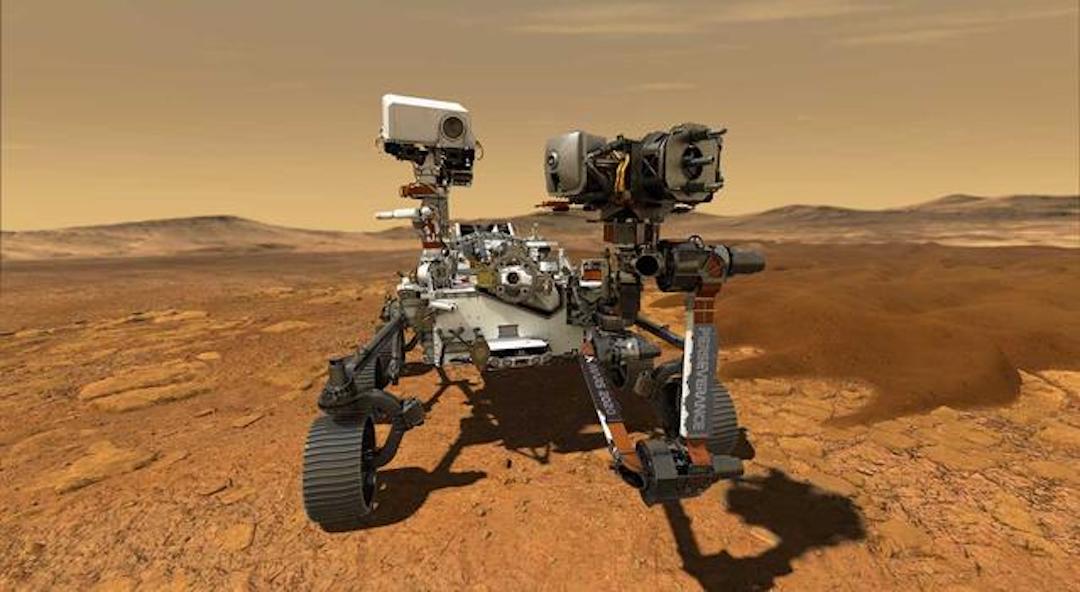
NASA’s Perseverance rover has made a rather groundbreaking discovery on Mars, uncovering a range of diverse organic matter in the Jezero crater. This finding challenges previous beliefs about the Red Planet’s history and hints at a potentially more complex system that existed in the past.
Scientists have put forth various explanations for the origin of this organic matter, including interactions between water and rocks, interplanetary dust or meteor deposits, and even the possibility of biotic origins. Understanding the nature of these Martian compounds is crucial, as it could provide valuable insights into the availability of carbon sources and aid in the ongoing search for signs of extraterrestrial life.
Perseverance, which touched down in the Jezero crater in February 2021, specifically selected this location due to its high potential for habitability.
The rover’s Scanning Habitable Environments with Raman and Luminescence for Organics and Chemicals (Sherloc) instrument has played a pivotal role in this discovery, allowing for fine-scale mapping and analysis of organic molecules and minerals on Mars.
The detection of organic molecule signals, particularly in the Maaz formation on the crater floor, has revealed a diverse mineral association and spatial distribution. These findings suggest the involvement of different sources and origins for the matter found on Mars.
This discovery points to a more active past for the Red Planet and has significant implications for the ongoing search for extraterrestrial life. Even if the organic material is not of biological origin, it still holds valuable information about Mars’ potential to support alien life. However, to confirm the types of organic matter, the data would need to be sent back to Earth for examination.
As Perseverance continues its mission on Mars, further exploration and analysis of these compounds will be conducted, unveiling more insights into the mysteries of the Red Planet and advancing our understanding of the potential for life beyond Earth.
[via The Independent and Metro.co.uk, cover image via NASA/JPL-Caltech]
This article was crafted with assistance from an AI engine, and has been reviewed, edited, and fact-checked.


