
Horse Barn In Florida Gallops To Become World’s Largest 3D-Printed Building
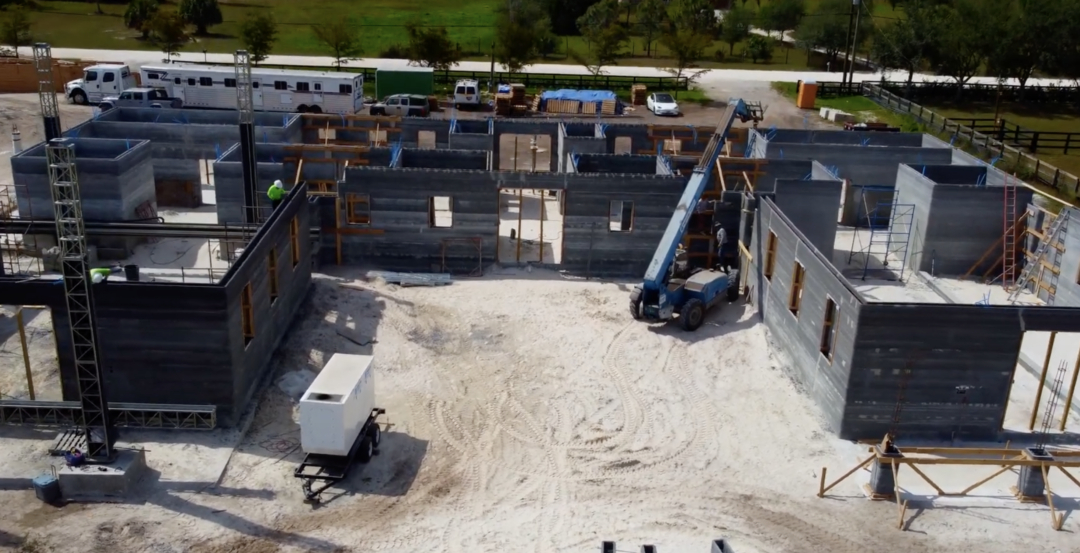
Image via COBOD
Racing against potential neigh-sayers, a Florida-based startup has 3D-printed a luxury horse barn that’s set to be the largest building in the world to be constructed with the technique.
Situated in Wellington, Florida, this princely structure boasts a staggering total floor area of over 10,100 square feet, surpassing the previous record of the world’s biggest 3D-printed building held by an Oman home.
To carry out the feat, Printed Farms used the BOD2 construction equipment by leading 3D printer maker COBOD.
The equestrian facility spans a length of 155 feet and a width of 83 feet, with a height of 13 feet. Its location in Southern Florida underscores the need to endure extreme local weather conditions, including tropical storms and hurricanes.
The versatility of 3D-printing technology is further showcased in the design of the building. Its unique walls create a cavity and air gap, facilitating natural cooling within the structure. The construction process involved multiple moves of the printer, with the two sides completed twice and the middle section executed once.
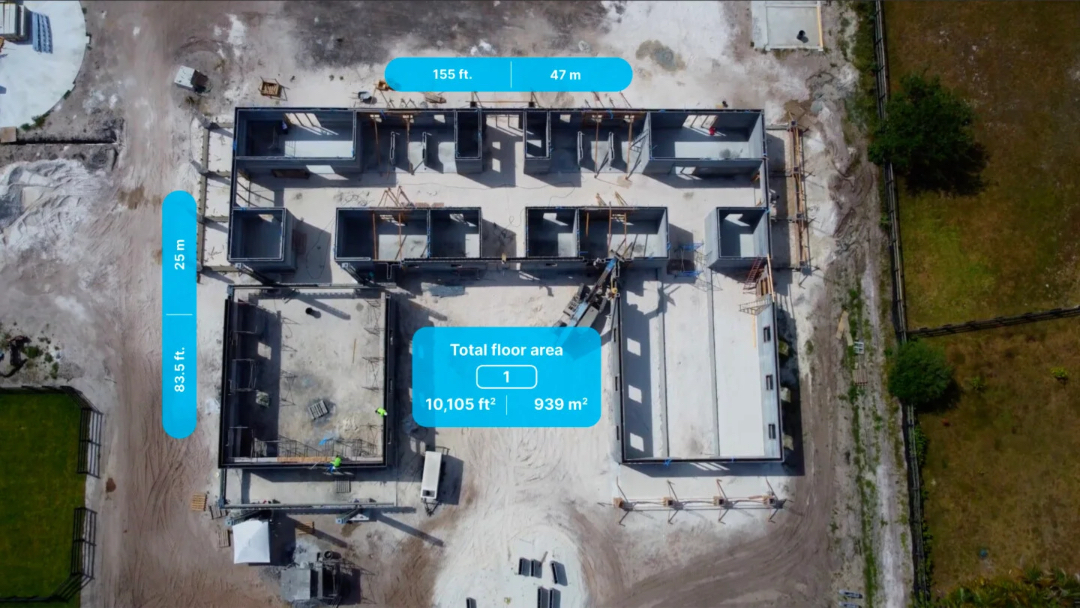
Image via COBOD
COBOD’s printer dispenses a mixture of concrete, mortar, and other printable components through a nozzle, and then forms its structures layer by layer, Axios reports.
And though 3D-printing technology is often lauded for its role in lightening environmental impact in the construction sector, it’s not completely guilt-free. For one, many buildings created under this method—like this horse farm—are made with concrete, which gravely contributes to global CO2 emissions.
Printed Farms’ founder Jim Ritter, however, stresses that the barn’s makeup prioritizes “a mortar mix” instead of using plain old concrete.
“There’s always a tradeoff,” Ritter tells Axios. With that, he notes that his company is also on the lookout for greener alternatives.
View this post on Instagram
Philip Lund-Nielsen, COBOD’s co-founder and head of Americas, expresses pride in the project, stating, “Printed Farms has done a remarkable job in completing this massive structure, and the project demonstrates again how 3D printing is transforming the construction industry for the better.” Lund-Nielsen also highlights the wide range of applications for COBOD’s 3D printers, noting their utilization in turbine bases, schools, office buildings, data centers, silos—and now, horse barns.
While the skeleton of the building is now in place, Printed Farms has yet to add the doors, windows, and other structural parts. The barn is slated for completion at the end of next month.
[via Axios and Good News Network, images via various sources]
This article was crafted with assistance from an AI engine, and has been reviewed, edited, and fact-checked.


