
Houston’s ‘Arch Of Time’ Could Be World’s Largest Sundial That Generates Energy
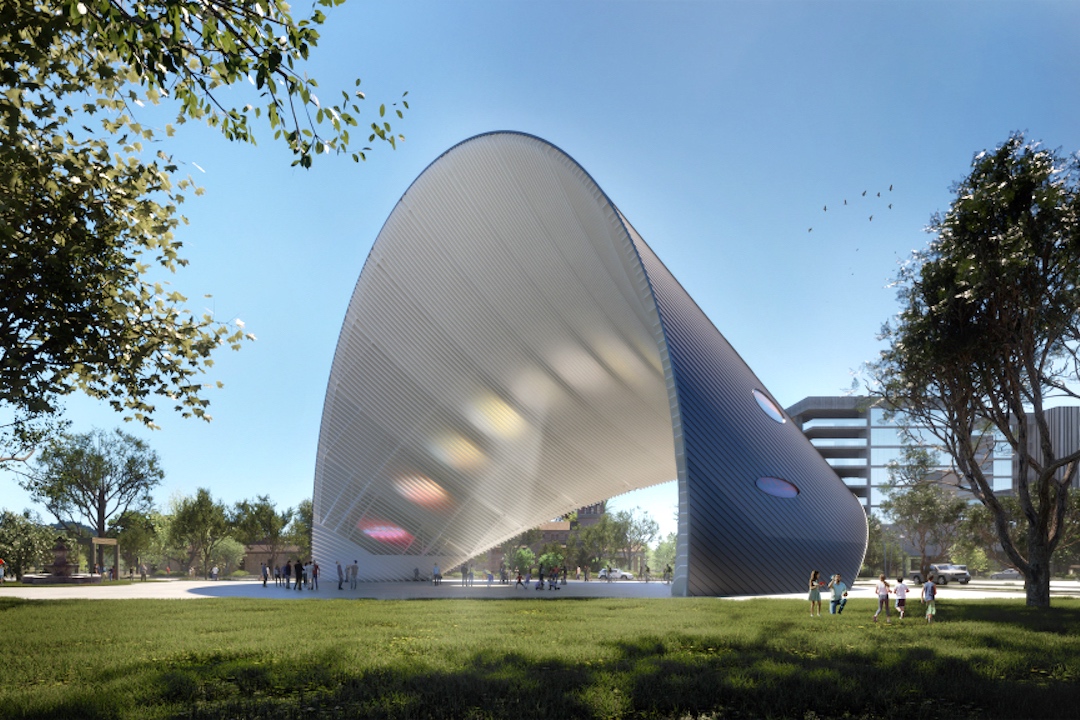
Soon, the city of Houston, Texas, could be home to the world’s largest sundial—dubbed the Arco del Tiempo (Arch of Time)—that would double up as a solar panel generating nearly 400,000 kWh of electricity per year.
Designed by Berlin-based architect Riccardo Mariano, the 100-foot archway will be located in East End, acting as the gateway to the Second Ward district. Meant to be more than just a sculpture, the structure will feature a roof covered in photovoltaic modules that will help generate power.
“It is a renewable energy power plant. It is a monument to a new era of energy. The City of Houston has always stood at the vanguard of energy innovation, and the Arco del Tiempo (Arch of Time) artwork stands in that tradition,” remarked Mayor Sylvester Turner.
According to a statement, the project was spearheaded by the non-profit organization Land Art Generator Initiative (LAGI), which focuses on solutions to the ongoing climate crisis through creations that pair functionality with aesthetics.
It will stand as an interactive time-measuring device, commonly known as a sundial, by beaming sunlight onto the ground of the park. Each beam of light, which is unique to the season and hour of the day, will respond to the specific latitude and longitude of the city.
At the moment, the title of the world’s largest sundial belongs to the Samrat Yantra—known as a Jantar Mantar, or an assembly of stone astronomical instruments—in Jaipur, India.
View this post on Instagram
“The apparent movement of the sun in the sky activates the space with light and colors, and engages viewers who participate in the creation of the work by their presence,” Mariano commented.
“It is a practical example to illustrate the movement of the earth around the sun in a playful way. Arco del Tiempo (Arch of Time) merges renewable energy generation with public space and into the everyday life of the Second Ward,” he continued.
Throughout its lifetime, the artwork is expected to generate over 12 million kWh of clean energy—or the equivalent of removing 8,500 metric tons of carbon dioxide from the atmosphere—allowing it to cover the carbon footprint involved in making the structure.
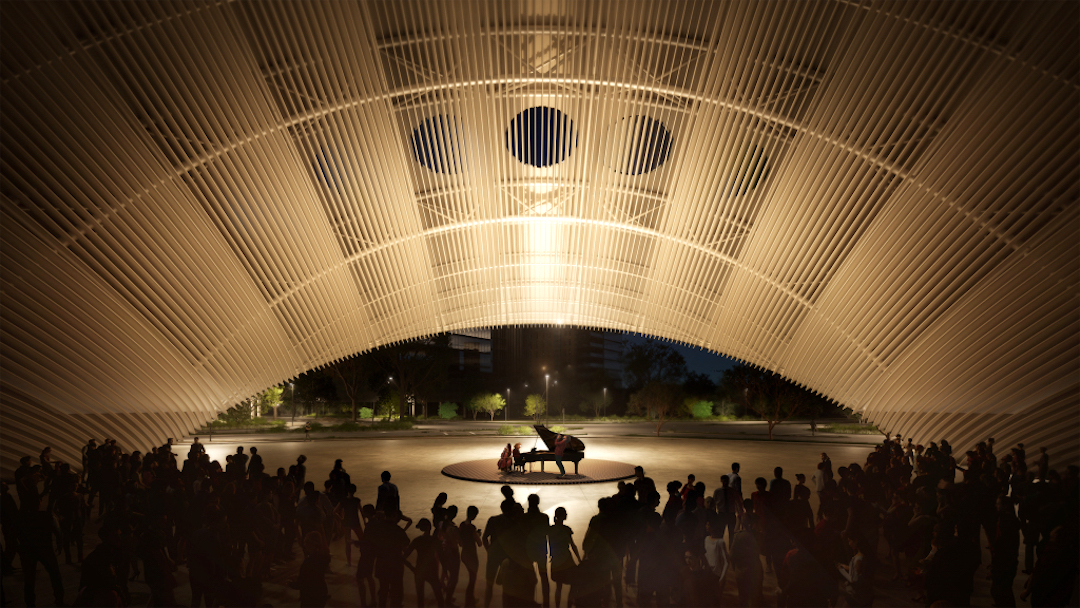
Beyond this break-even point, the Arco del Tiempo (Arch of Time) will help contribute to a healthy climate in the region. Going forward, there are plans for the space to be used as a shaded place for locals and tourists to meet up, linger, experience, and even perform.
[via Interesting Engineering and Dezeen, images via City of Houston]


