
Scientists Could Predict Earthquakes Just Two Hours Ahead Thanks To GPS Findings
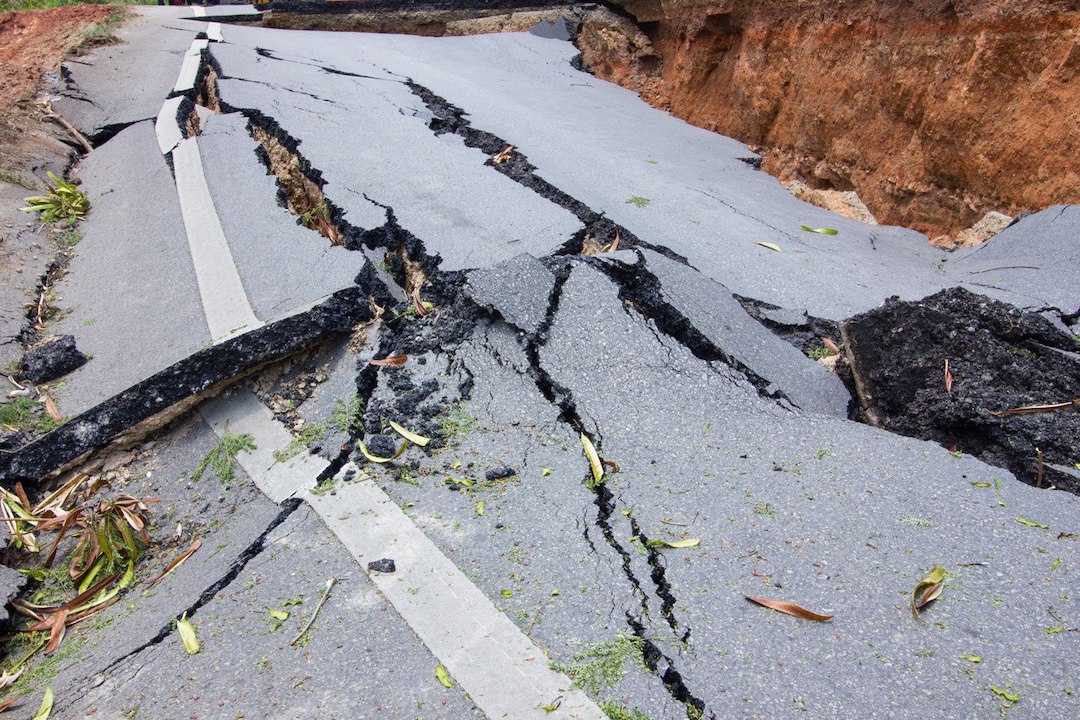
Recently, scientists may have made a significant breakthrough in earthquake prediction research, providing evidence for a potential precursor to large earthquakes.
This advancement in predictions is thanks to a recent analysis of Global Positioning System (GPS) time-series data. Researchers looked at information from 100 earthquakes worldwide, which revealed a precursory phase of fault slip occurring approximately two hours before seismic rupture.
The study’s findings have sparked interest among experts, as the existence of a reliable precursor signal for large earthquakes has long been a challenging goal. Short-term earthquake prediction, which involves issuing warnings from minutes to months before a quake occurs, relies on identifiable geophysical signals.
However, previous studies have struggled to establish a clear link between observed precursory aseismic slip and subsequent seismic ruptures. Now, the experts may have made headway.
Led by researchers Quentin Bletery and Jean-Mathieu Nocquet, the team embarked on a systematic global search for fault slips that occur before magnitude seven and above earthquakes. They analyzed GPS data from 3,026 geodetic stations and measured fault displacement in the lead-up to 90 large rumblings.
Remarkably, the analysis revealed a subtle signal consistent with a period of exponential acceleration of fault slip, beginning about two hours before the earthquake’s hypocenter. This discovery suggests that many large earthquakes may initiate with a precursory phase of slip.
However, despite these promising findings, the study’s authors noted a critical challenge. The current sensors used to monitor earthquakes lack the precision and coverage required to identify or observe precursory slips on the scale of individual earthquakes. Should they be updated with better instrumentation, predictions could become more accurate.
The potential to issue precursor warnings is exciting, but more research and advancements in monitoring technology are needed to fully understand and utilize the precursory phase of fault slip.
Hopefully, earthquake prediction and early warning systems will soon be significantly improved to help mitigate the impact of devastating seismic events.
[via Interesting Engineering and New Scientist, cover image via Tawatchai Khid-arn | Dreamstime.com]
This article was crafted with assistance from an AI engine, and has been reviewed, edited, and fact-checked.


