
Roald Dahl Museum Issues Apology For Author’s ‘Undeniable’ Racism
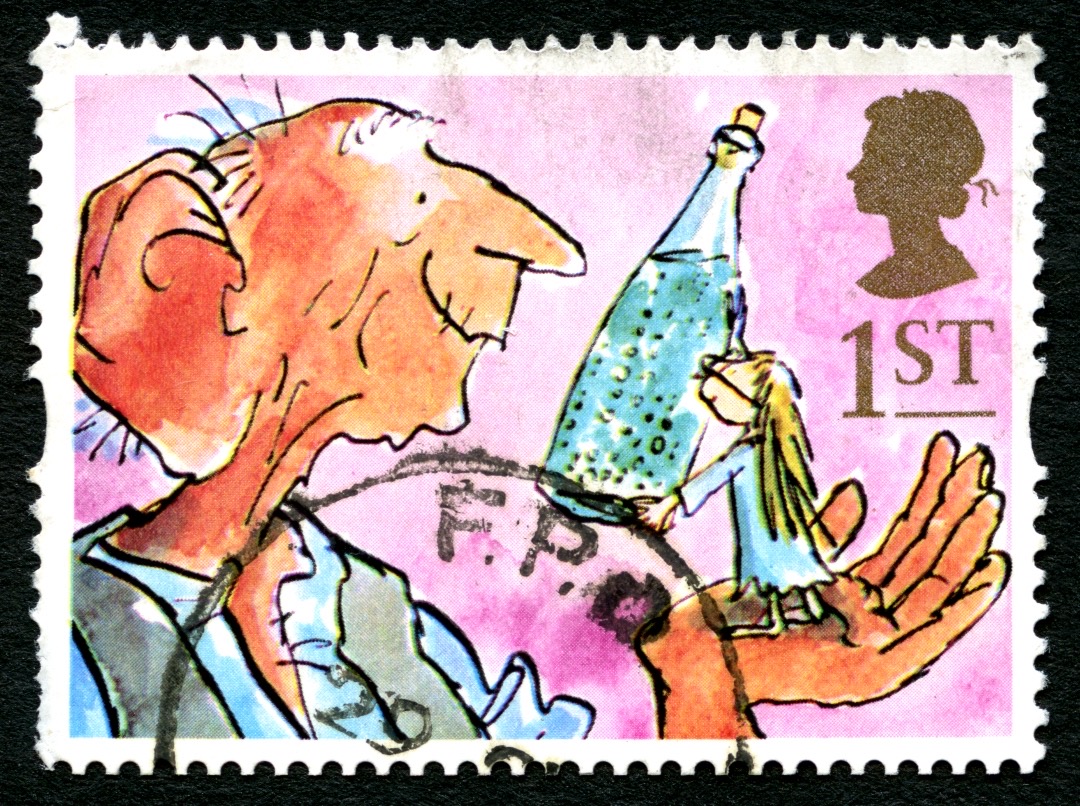
Illustration 85183946 © Chris Dorney | Dreamstime.com
“A person who has good thoughts cannot ever be ugly,” Roald Dahl wrote in The Twits. “You can have a wonky nose and a crooked mouth and a double chin and stick-out teeth, but if you have good thoughts, they will shine out of your face like sunbeams and you will always look lovely.”
Alas, the children’s book author was infamous for having some not-so-good thoughts, leaving audiences conflicted about enjoying his work.
“In his life, Roald Dahl was a contradictory person. He could be kind; he often helped people, donated to charity, and contributed to medical science. However, there are also recorded incidents of him being very unkind and worse, including writing and saying antisemitic things about Jewish people,” acknowledges the Roald Dahl Museum and Story Center in Buckinghamshire, England, on its website.
The establishment, founded in 2001 by Dahl’s widow Felicity, has now offered a formal apology for the controversial figure’s prejudiced and hurtful views, and promises that it will never align with them.
“Roald Dahl’s racism is undeniable and indelible,” addresses the museum. “We do not repeat Dahl’s antisemitic statements publicly, but we do keep a record of what he wrote and said in the museum’s collection, so it is not forgotten,” it continues.
The Roald Dahl Museum says it is looking to be “more welcoming, inclusive, diverse, and equitable,” and it hopes to achieve this by “listening and talking to explore how our organization might make further contributions towards combating hate and prejudice, [and] supporting the work of experts already working in this area, including those from the Jewish community.”
At the same time, “what we hope can also endure is the potential of Dahl’s creative legacy to do some good,” the museum adds.
The late Dahl openly directed hateful comments at the Jewish community on numerous occasions. “Even a stinker like Hitler didn’t just pick on them for no reason,” he shockingly said to British magazine New Statesman.
Just months before his death in 1990, the author expressly identified as antisemitic.
The museum says it seconds the apology issued by the Dahl family and the Roald Dahl Story Company back in 2020, in which they “deeply [apologized] for the lasting and understandable hurt caused by Roald Dahl's antisemitic statements.”
“Those prejudiced remarks are incomprehensible to us and stand in marked contrast to the man we knew and to the values at the heart of Roald Dahl’s stories, which have positively impacted young people for generations,” the Roald Dahl Story Company wrote then. “We hope that, just as he did at his best, at his absolute worst, Roald Dahl can help remind us of the lasting impact of words.”
To craft its objectives moving forward, the museum and charity consulted with Jewish advocates, including the Board of Deputies of British Jews, the Community Security Trust, and the Antisemitism Policy Trust. It says employees and trustees have also undergone training to ensure they don’t repeat Dahl’s missteps.
Dahl’s offensive statements have driven organizations to overwrite his problematic side, a move that’s been regarded by some as censorship.
As reported by Smithsonian Magazine, in 2018, the Royal Mint walked back on its decision to dedicate a commemorative coin to the author due to the controversy that followed him.
And although it was more focused on uplifting young readers than covering up Dahl’s antisemitic past, Puffin Books said it would replace terms in his books that could be deemed as offensive, like “fat” and “ugly.” However, it later agreed to keep the original texts after receiving considerable backlash.
Members of the Jewish community have lauded the apology as an “important starting point” for acceptance and understanding.
Marie van der Zyl, president of the Board of Deputies of British Jews, tells the Washington Post that she welcomes the museum’s “acknowledgment of the author’s antisemitism” and the way it will bring the “full story about a man whose works are enjoyed by millions” to light.
Besides publishing the apology on its website, the institution has printed a longer version of it and displayed it at its entrance.
[via Smithsonian Magazine and Washington Post, cover illustration 85183946 © Chris Dorney | Dreamstime.com]


