
When Faced With An Architectural Problem, Honey Bees & Wasps Design Alike
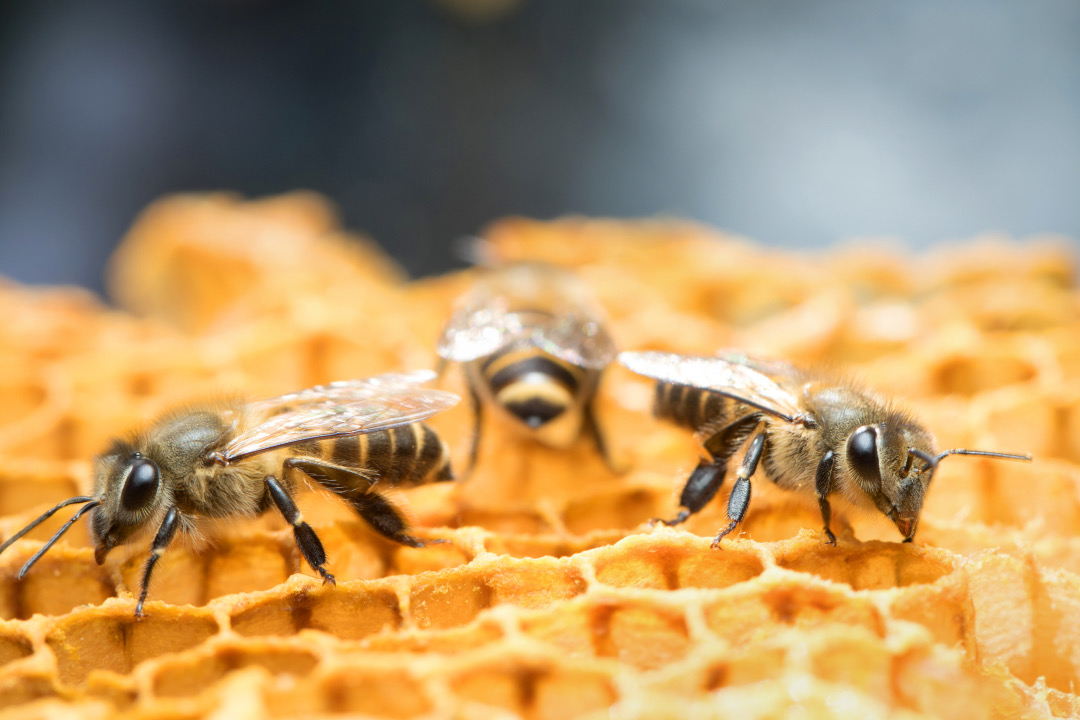
Photo 79521243 © Apisit Wilaijit | Dreamstime.com
When it comes to architectural ingenuity, bees and wasps prove to be astonishing problem solvers. Their creation of hexagonal cells for their hives and nests is nothing short of remarkable, but what’s even more surprising is that they achieve this feat in different ways. Honey bees use wax and build double-sided combs vertically, while social wasps utilize paper and construct single-sided comb structures horizontally.
The hexagon is the brilliant result of their engineering, maximizing strength and storage capacity without using too many building resources. It’s like a perfect engineering solution that nature has discovered independently in these two groups of insects.
However, what happens when these tiny architects encounter a problem that cannot be solved with perfectly hexagonal cells? This intriguing question prompted researchers, led by Michael L. Smith from the Department of Biological Sciences at Auburn University, to delve deeper into the architectural challenges faced by bees and wasps. The team has published its buzzy findings in the PLOS Biology journal.
In some species, they found that workers construct two different sizes of hexagons: smaller ones for rearing worker insects and larger ones for rearing reproductives like drones and queens. This size difference creates a fascinating dilemma: how do they stack two hexagons of varied sizes within a single comb?
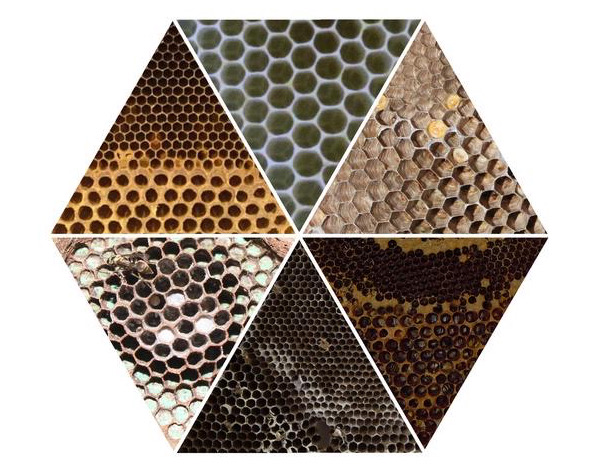
Image via Michael L. Smith / Auburn University College of Sciences and Mathematics via EurekAlert
Having analyzed nest images from various species of honey bees and social wasps, the researchers extracted per-cell data from 22,745 individual hexagonal cells. Through this, they noted that the greater the size difference between workers and queens within the species, the more dire the architectural problem for the bees and wasps.
Their findings revealed an intriguing pattern, and here’s where the wasps and bees have converged in problem-solving. As the size difference between worker and reproductive cells increased, workers began incorporating non-hexagonal cells into the comb.
These irregular cells, mostly five- and seven-sided, were consistently built in pairs, with the five-sided cells on the worker-side followed by seven-sided cells on the reproductive side. This phenomenon was observed in all the honey bee and wasp species with a significant cell-size difference to overcome.
Digging deeper, the researchers noticed that these insects also incorporated intermediate-sized cells into the transition region. These intermediate hexagons allowed the bees and wasps to “split the difference” and turn the cell-size transition into a series of smaller ones, avoiding the need for non-hexagonal cells altogether.
The universality of these building tricks is remarkable, indeed. Regardless of evolutionary distances (over 179 million years apart) and the use of different building materials, both bees and wasps had adopted the exact same architectural solutions.
It’s a testament to the adaptive brilliance of these tiny creatures and their ability to converge on effective remedies to complex problems.
[via Phys.org and Tech Explorist, images via various sources]
This article was crafted with assistance from an AI engine, and has been reviewed, edited, and fact-checked.


