
Butterflies Lend Inspiration To Vivid Films That Cool At The Same Time
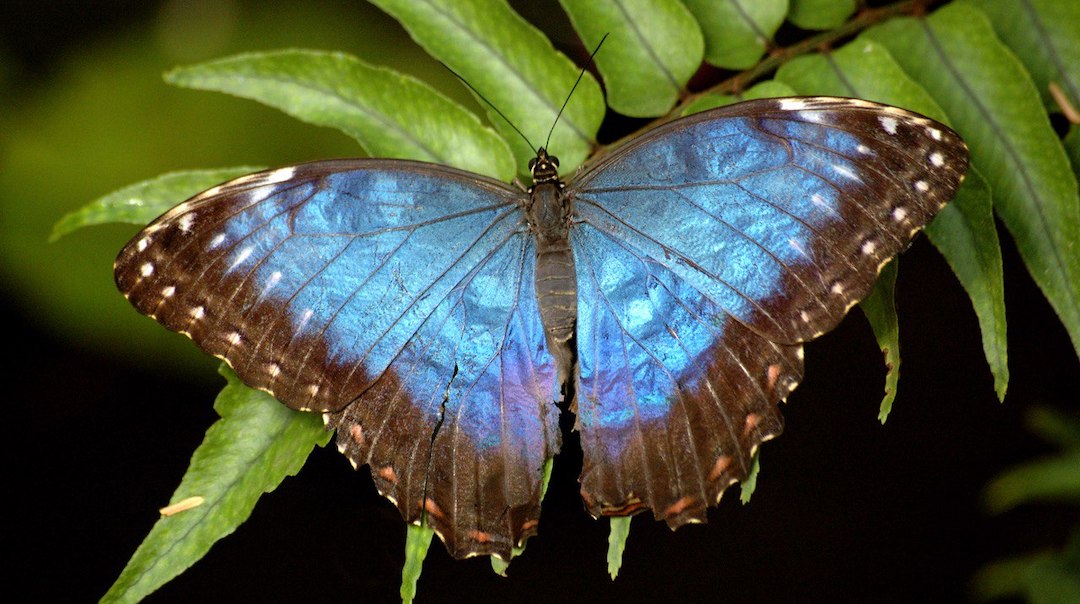
A new research initiative from Shenzhen University in China has developed cooling films inspired by Morpho butterfly wings. The main idea behind the study is to essentially develop materials that can retain the same vivid shades of the insects’ wings while not succumbing to the heating effect.
This heating effect is brought on by darker colors absorbing light. And just like how you would probably choose to wear white over black on a hot summer’s day, the team is finding ways to create materials that don’t absorb any heat in general.
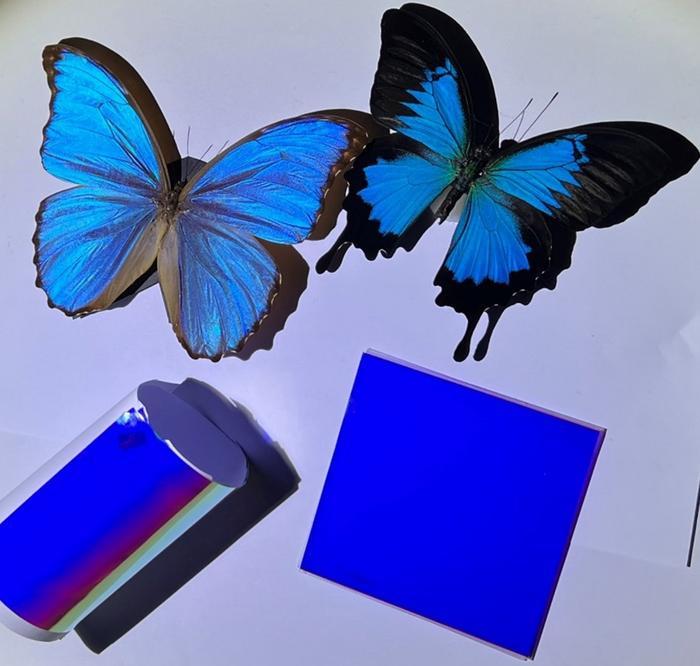
If you were to look at a car that is painted blue, it only appears as such as it takes in yellow light and reflects blue. In Morpho butterfly wings, they can produce these highly saturated shades thanks to their nanostructure. This is essentially what the researchers are trying to recreate.
When it comes to these films, they consist of various layers that include titanium dioxide and aluminum dioxide. Moreover, they have a reflective silver layer coated with a disordered material. They reflect light to create vivid and bright colors.
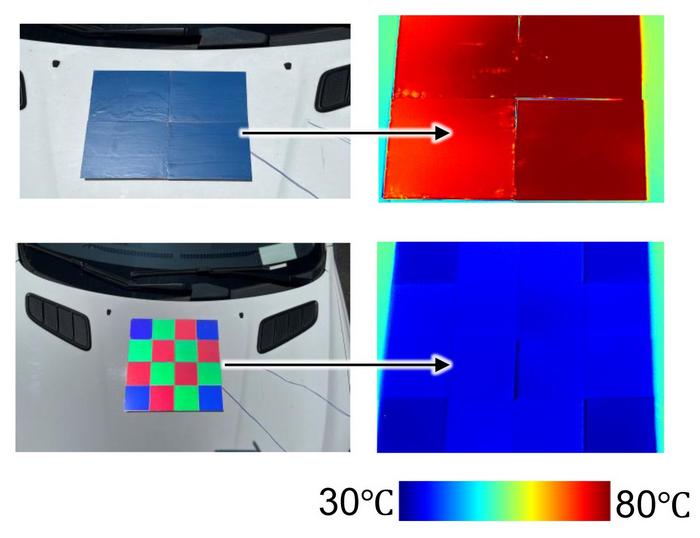
Testing, as shown in a release from the Optica journal, has demonstrated that they can lower the temperature of colorful objects by about 35 °F below the ambient temperature. For instance, blue and yellow films were placed outdoors on cars, roofs, clothes, and cell phones during the winter and summer, and the team found that they were 59°F cooler than the surfaces they were placed on in the winter and 95°F cooler in the summer.
Additionally, the blue version was approximately 79°F cooler than traditional blue car paint, translating to significant energy savings of about 1377 MJ/m2 per year.
By integrating these cooling nanofilms into buildings and electric vehicles, energy sustainability and carbon neutrality can be significantly advanced. Researchers are also optimizing the films for mechanical and chemical robustness and exploring cost-effective aluminum manufacturing methods.
[via Interesting Engineering and ScienceDaily, images via various sources]
This article was crafted with assistance from an AI engine, and has been manually reviewed & edited.


