
IBM & NASA Create Their Own GPT To Democratize Climate And Earth Science Data
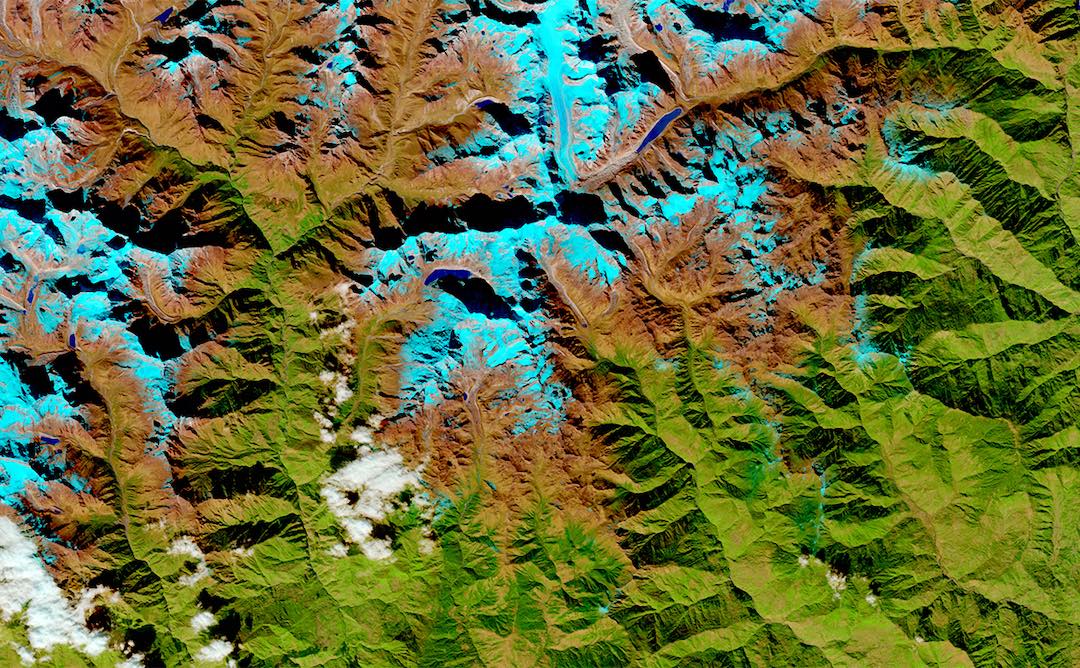
By next year, NASA estimates that its Earth science missions will garner a quarter of a million terabytes of data. That hefty sum is about to pose a potential nightmare for researchers to sift through and study. As such, machine learning company Hugging Face and IBM have teamed up with the space exploration team to develop their own GPT service to bring a new geospatial foundation model to the public and potentially offer a wealth of possibilities for AI applications in climate and Earth science.
One unique feature of this model is its enormous scale, making it the largest geospatial foundation model available on Hugging Face. Built from NASA’s satellite data, specifically the Harmonized Landsat Sentinel-2 satellite (HLS), the model has been extensively trained over one year, covering the entire continental United States. Furthermore, it has been fine-tuned using labeled metrics to excel in flood and burn scar mapping tasks.
The initiative primarily aims to democratize access to AI in climate and Earth science, making advanced technologies accessible to researchers, scientists, and the public through IBM’s recently released Watsonx.ai.
Another advantage of this geospatial model is its versatility. It can be effectively employed for various tasks, such as monitoring deforestation, predicting crop yields, and detecting greenhouse gases. With the potential to assist in crucial environmental research and decision-making, its application holds immense value.
IBM and NASA researchers are working with Clark University to enhance the model’s capabilities further and adapt it for various applications. This partnership is crucial to NASA’s Open-Source Science Initiative and aligns perfectly with their Year of Open Science.
“The essential role of open-source technologies to accelerate critical areas of discovery such as climate change has never been clearer,” Sriram Raghavan, VP of IBM Research AI, said in a press release. “By combining IBM’s foundation model efforts aimed at creating flexible, reusable AI systems with NASA’s repository of Earth-satellite data, and making it available on the leading open-source AI platform, Hugging Face, we can leverage the power of collaboration to implement faster and more impactful solutions that will improve our planet.”
[via Engadget and VentureBeat, cover image via IBM]


