
NASA’s James Webb Snaps Image Of One Of The Most Ancient Galaxies Recorded
Bagley/Z. Levay.
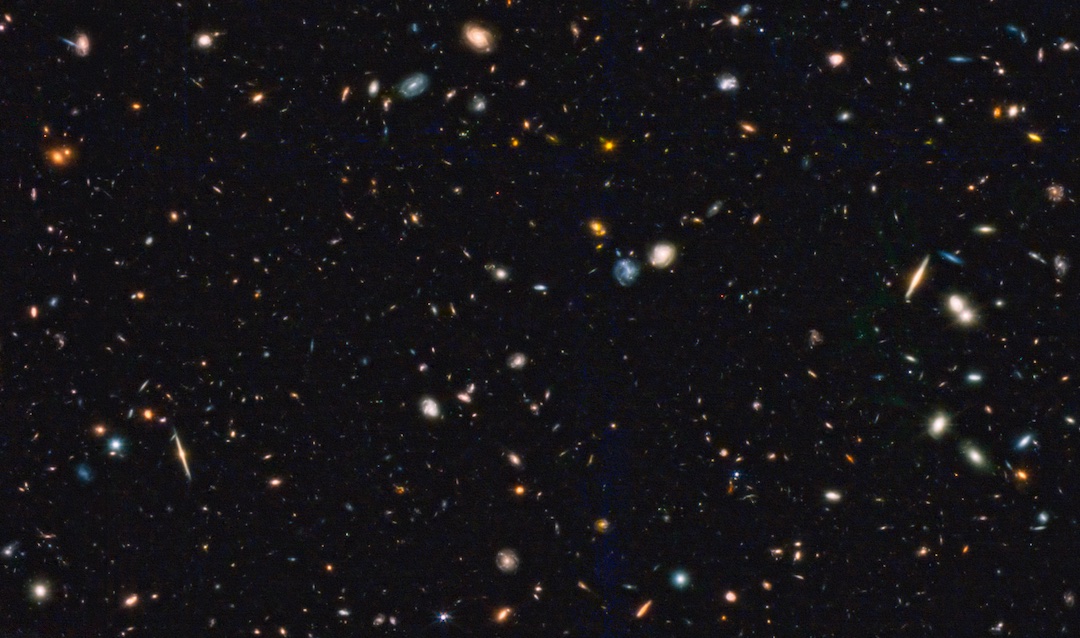
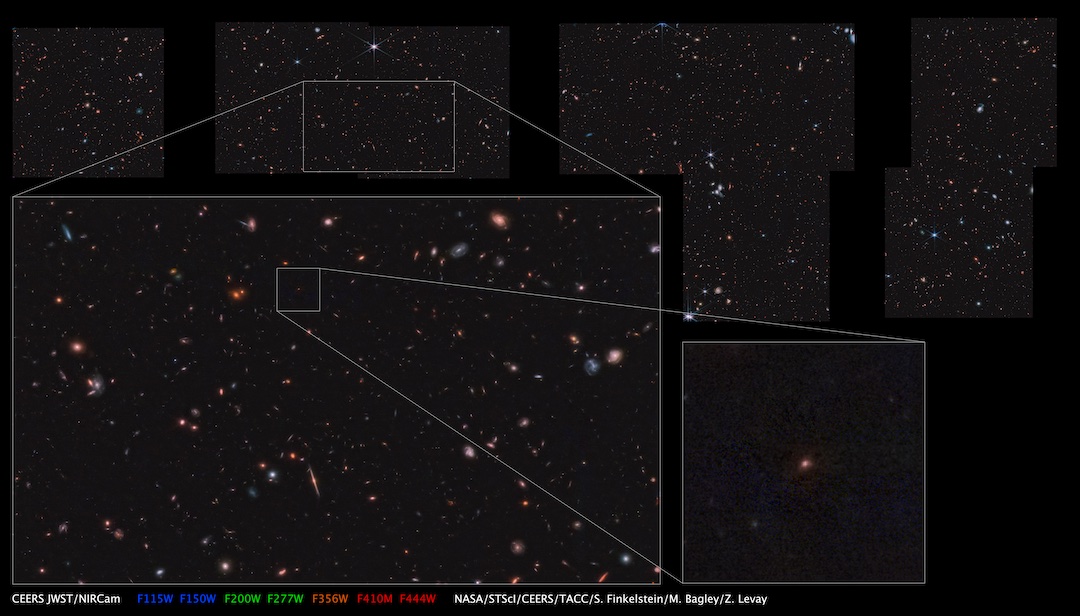
In June 2022, James Webb Space Telescope (JWST) caught an enigmatic galaxy in the far distant corner of our universe. When it was first discovered, a team from the University of Texas at Austin estimated the point of creation of the Maisie galaxy at 290 million years after the Big Bang.
However, after further analysis, it might be much older than that. The team led by astronomer Steven Finkelstein discovered the system and named it after his daughter Maisie, whose birthday it was founded on. Finkelstein now posits that it could be 100 million years older than originally thought, putting its inception at 390 million years after the Big Bang, or 13.4 billion years old.
Now, it’s not the oldest ever found. Still, Finkelstein states that it is the only one that has been spectroscopically confirmed—what this essentially means is that astronomers have used a spectrograph to analyze the light emitted or absorbed by the system.
Spectroscopic confirmation uses a special tool to analyze the light from objects in space. It helps us figure out what they’re made of, how warm they are, and how they move. This tool measures “redshift,” which tells us how far away these objects are and when they existed.
“This was a kind of weird case,” Finkelstein said. “Of the many tens of high redshift candidates that have been observed spectroscopically, this is the only instance of the true redshift being much less than our initial guess.”
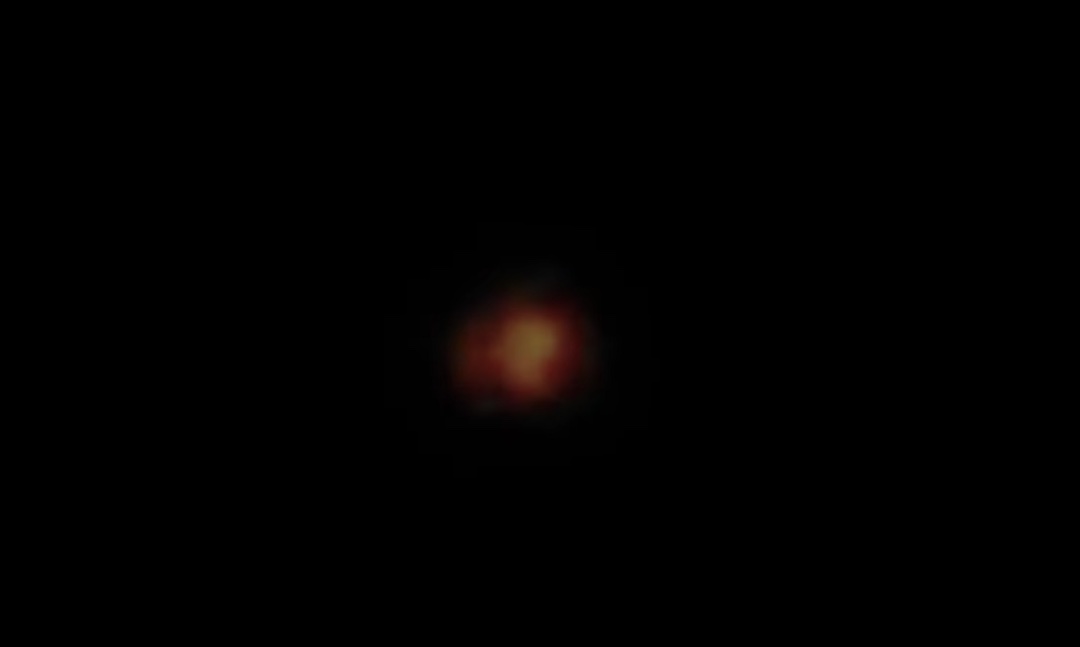
For instance, with the JSWT’s Near InfraRed Spectrograph (NIRSpec), scientists found the truth about Maisie’s galaxy. Another system, CEERS-93316, seemed much older originally, but this tool revealed it’s only about a billion years after the Big Bang. The reason for the mix-up was that the galaxy’s light made it appear bluer than it was.
So, this tool is like a detective, helping us understand the universe’s story by analyzing light and colors from faraway objects.
“It would have been really challenging to explain how the universe could create such a massive galaxy so soon,” Finkelstein said. “So, I think this was probably always the most likely outcome because it was so extreme, so bright, at such an apparent high redshift.”
[via Interesting Engineering and Universe Today, images via various sources]


