
Like A Bird, This Drone Relies On Just Wind To Soar
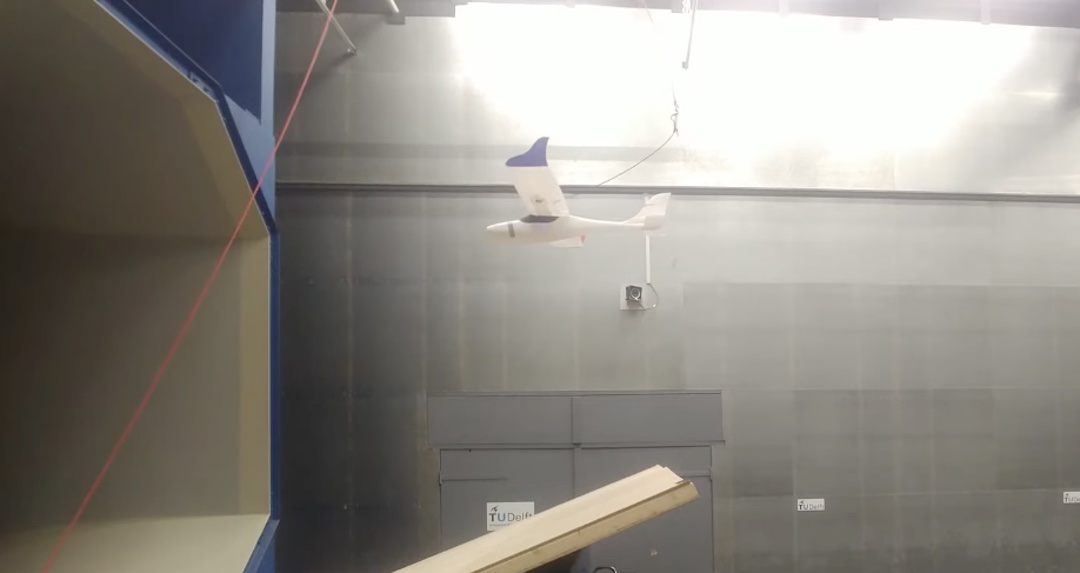
In the Netherlands, researchers have fashioned an innovative winged drone that takes inspiration from nature’s aviators, operating via “orographic soaring,” akin to how birds masterfully utilize updrafts and controlled descents for aerial travel.
In a controlled wind tunnel setting, this 1.5 lb birdlike drone relied on its propellers for merely 0.25% of its stationary hover time, a stark contrast to the 38% customary for conventional flight.
To accomplish this feat, the research team engineered an autonomous algorithm employing an array of sensors, including airspeed, GPS, and a camera. These sensors enabled the unmanned aerial vehicle (UAV) to adapt seamlessly to shifting wind conditions.
While flight durations failed to exceed the 30-minute mark, the drone showcased efficiency and autonomy, demanding minimal human intervention.
However, unlike wind tunnel experiments, the real world is susceptible to changing winds, storms, and even still days. The team has yet to find a way to test the flying robots in such conditions.
Based on the study, such drones could potentially soar in fields such as surveillance and reconnaissance as they can stay in the air for longer periods and cover larger land areas. They would also do well in search and rescue missions, wildlife conservation, and just about any other application that needs UAVs to fly for long periods in sensitive environments.
[via Futurism and New Scientist, screenshot via MAVLab TU Delft]


