
First ’Hyperspectral’ Phone Gadget Can Spot Invisible Problems In Healing Wounds
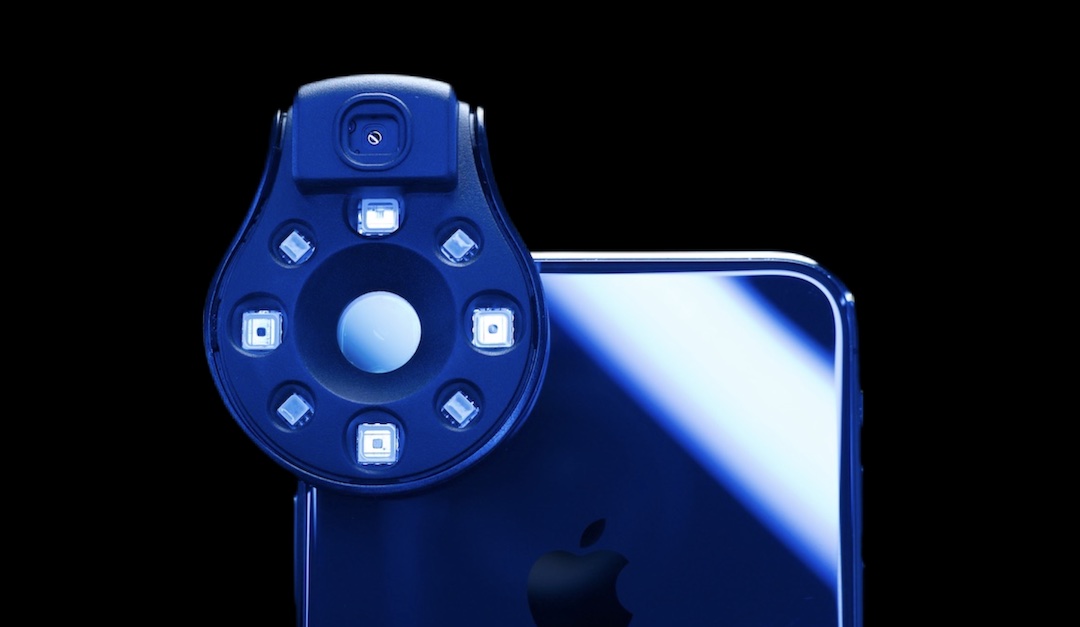
A collaboration between Canadian and Mexican scientists has given birth to a compact and handheld diagnostic tool for smartphones, the ‘Swift Ray 1’. This device, designed with healthcare professionals in mind, allows them to essentially see the invisible.
The Swift Ray 1 is described by Swift Medical as the “world’s first hyperspectral” gadget. Its main objective is to identify the areas around a wound that signal whether healing is going smoothly or has turned into an infection. Depending on the blood supply to the injury site, these reddened areas are often challenging for doctors to spot with the naked eye.
It operates by harnessing heat signatures and the illuminating properties of bacterial fluorescence to identify infected wounds effectively. It also attaches itself to smartphones like a clip-on lens. Notably, it captures the heat the affected area generates, a crucial feature that helps clinicians differentiate between inflammation and a deeper-seated infection.
Via a published journal in Frontiers in Medicine, a clinical study involving 66 wounds, the Swift Ray 1 proved its mettle by accurately categorizing each one into non-inflamed, inflamed, and infected categories. The device’s ability to provide medical-grade photographs, infrared thermography images, and bacterial fluorescence imaging through an associated app adds a layer of diagnostic depth.

The combination of thermography and bacterial fluorescence imaging offers valuable insights into inflammatory and circulatory changes, streamlining the identification of potential infections.
According to New Atlas, Dr Jose Ramirez-GarciaLuna of McGill University Health Centre noted that bacterial imaging can aid professionals in identifying nonviable tissue, though it cannot pick up on infection alone as it occurs below the skin. On the other hand, thermography is a viable option as it gives insight into the circulatory and inflammatory changes beneath the surface.
However, it’s essential to note that the device’s results may necessitate further exploration to account for additional factors influencing wound healing.
One standout feature of the Swift Ray 1 is its adaptability across various skin pigments. This enables clinicians to make informed triage decisions based solely on visual cues, enhancing early intervention and infection control efforts.
As this is a pilot study, further research will include studying patients with different wound types.
[via New Atlas and Science News, images via Swift Medical]


