
Long-Lost Baroque Painting Finally Emerges After Going ‘Missing’ For A Century
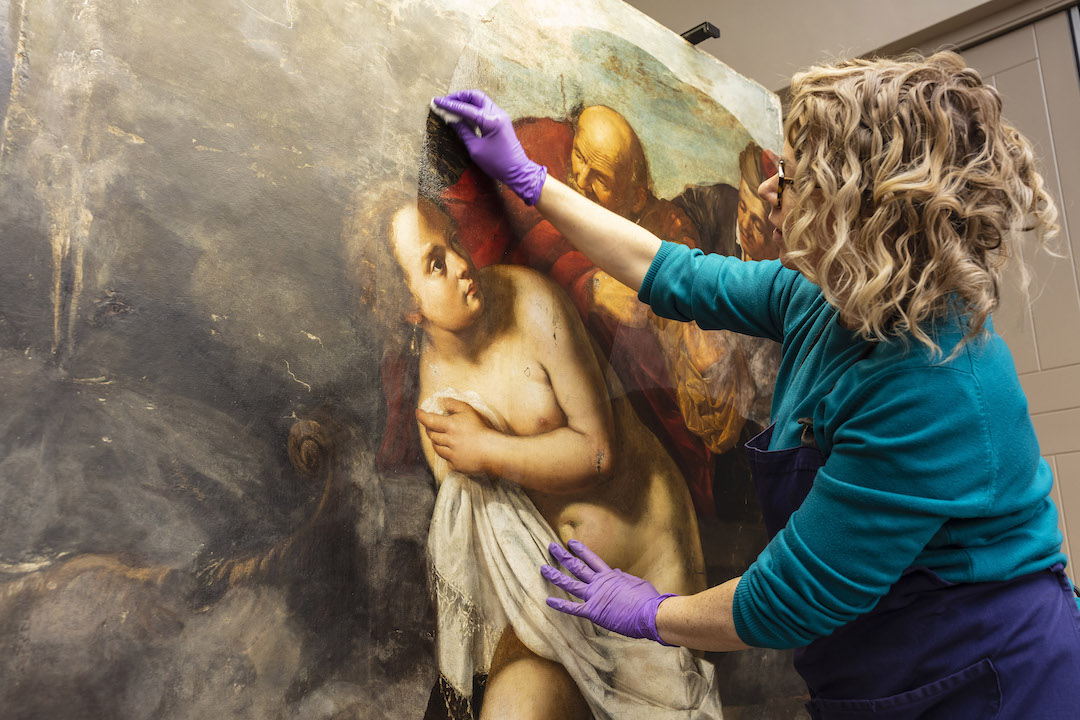
A long-lost painting by Artemisia Gentileschi, one of the most celebrated female artists of her era, has been uncovered in the Royal Collection after centuries of being “missing” due to misattribution.
The recently rediscovered masterpiece, titled Susanna and the Elders, marks a significant addition to the artist’s known body of work and provides fresh insights into her artistic process and her time spent in London during the late 1630s.
For the unfamiliar, Gentileschi made a name for herself across Europe in the 17th century, during a time when very few women artists received formal recognition. Trained by her father in Rome, she later worked for noble and royal patrons in cities such as Florence, Naples, Venice, and London.
Although her work fell into obscurity during the 18th and 19th centuries, the maestro’s powerful and empathetic depictions of women from history have garnered significant recognition over the past five decades.
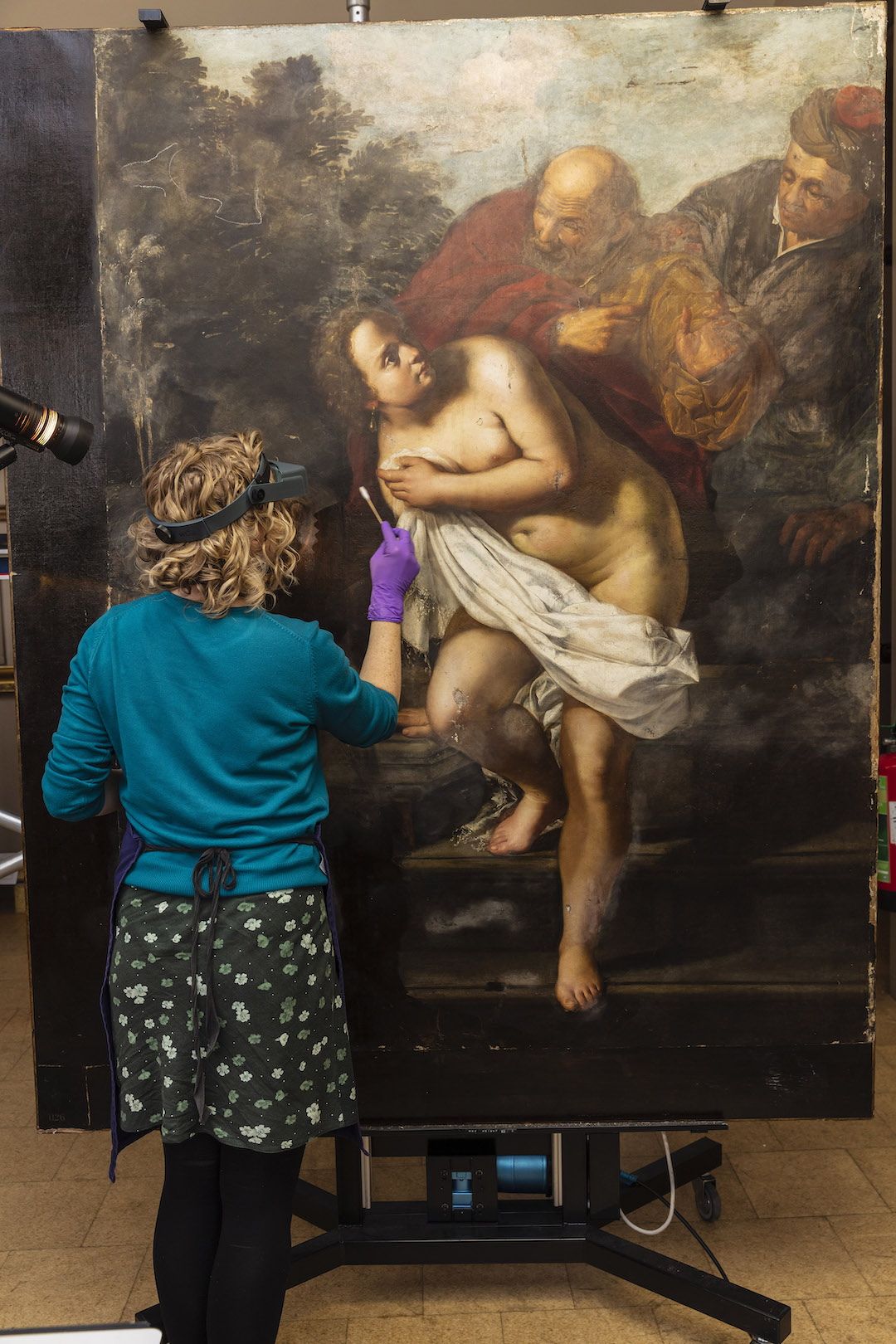
The painting portrays the biblical story of Susanna, who is confronted by two men while bathing in her garden. When she rejects their advances, she is falsely accused of infidelity, a crime punishable by death, before her innocence is proven.
In contrast to the idealized or sexualized depictions common in artworks of this period, this particular portrayal of the titular character emphasizes her vulnerability and discomfort as she turns away from her lecherous accusers.
According to the Royal Trust, it’s possible this theme held particular significance for Gentileschi, likely due to her own traumatic experience of sexual assault at the age of 17, an event that led to a grueling trial.
As for the rediscovery of the artwork, Dr Niko Munz, a former staff member and art historian, played a pivotal role in tracing paintings that had been dispersed across Europe after the execution of Charles I.
Seven paintings by Artemisia were documented in Charles I’s inventories, but until now, only her self-portrait was believed to have survived.
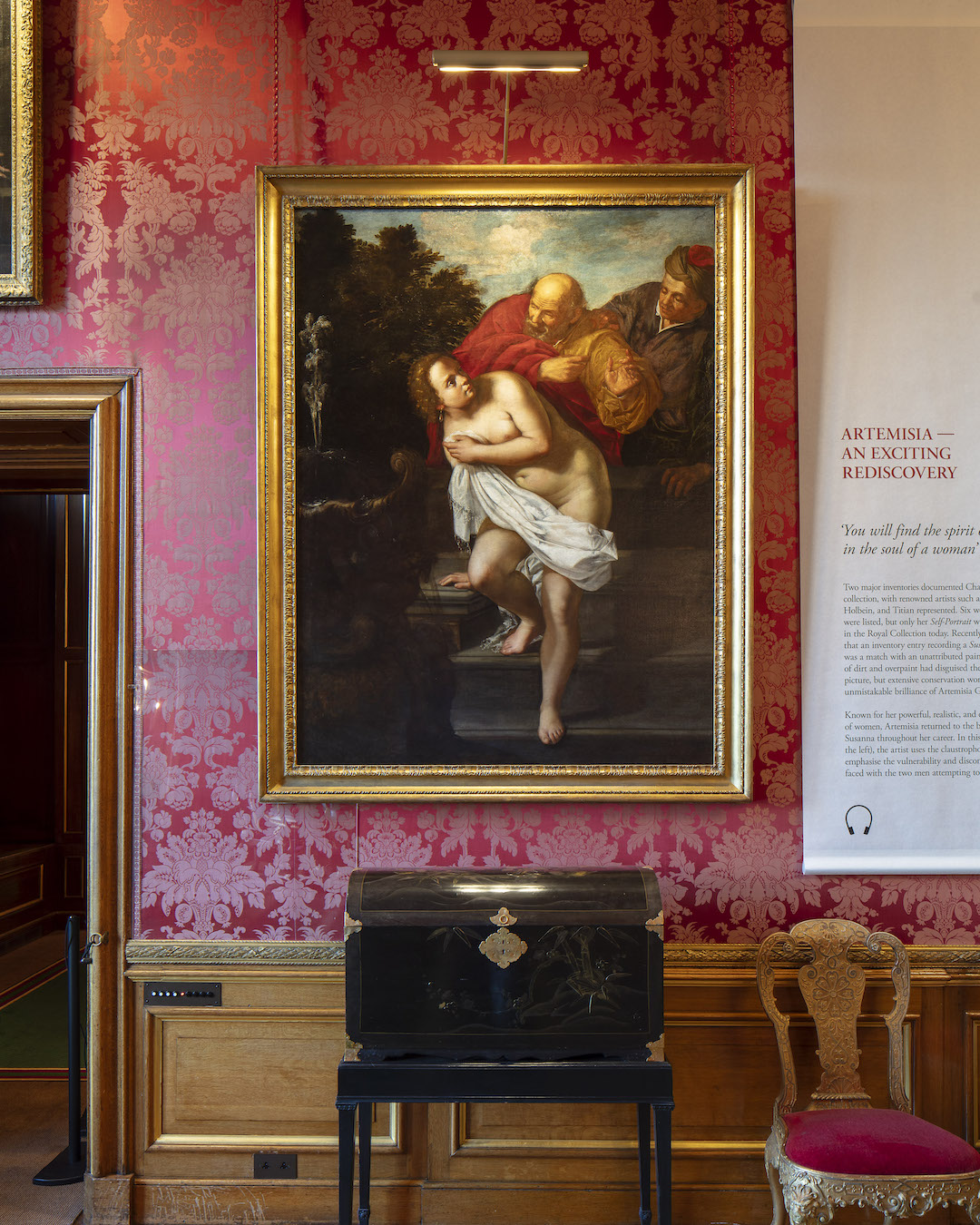
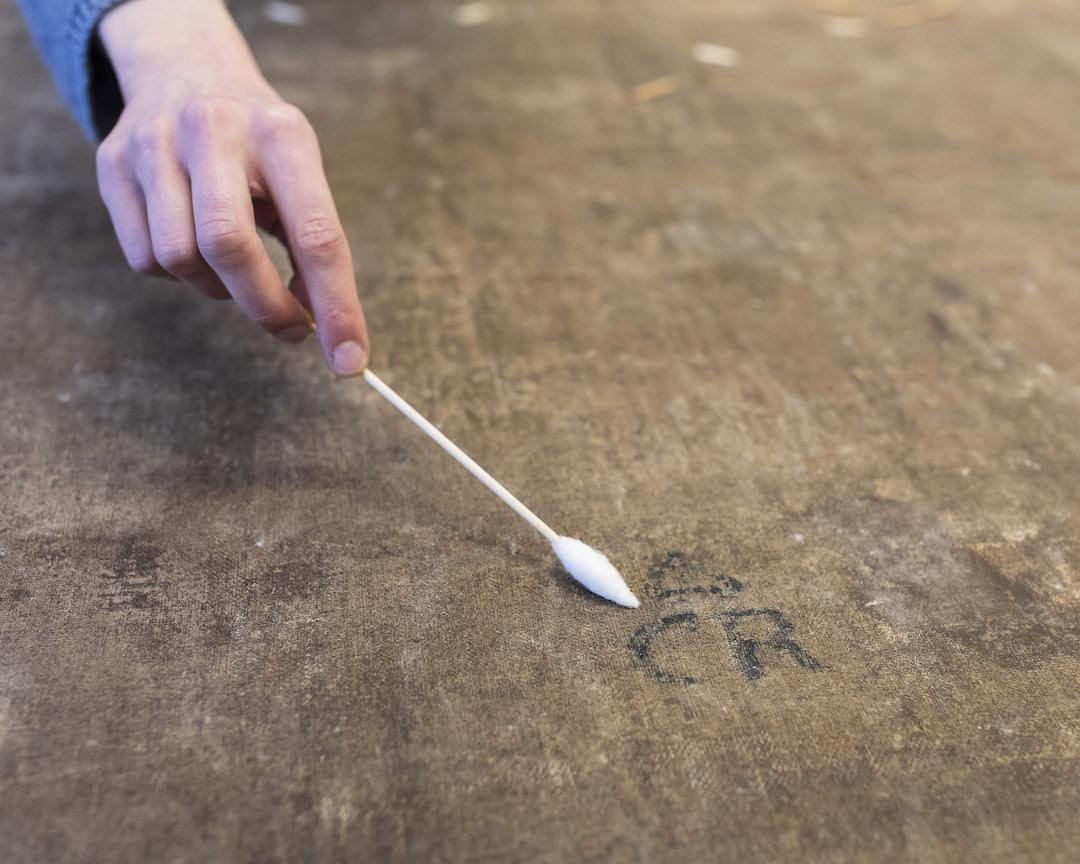
However, recent research allowed curators to match the description of Susanna and the Elders to a painting stored at Hampton Court Palace for over a century. Initially attributed to the “French School” and in poor condition, the artwork was found to bear a “CR” (Carolus Rex) brand on the back of the canvas, confirming its place in Charles I's collection.
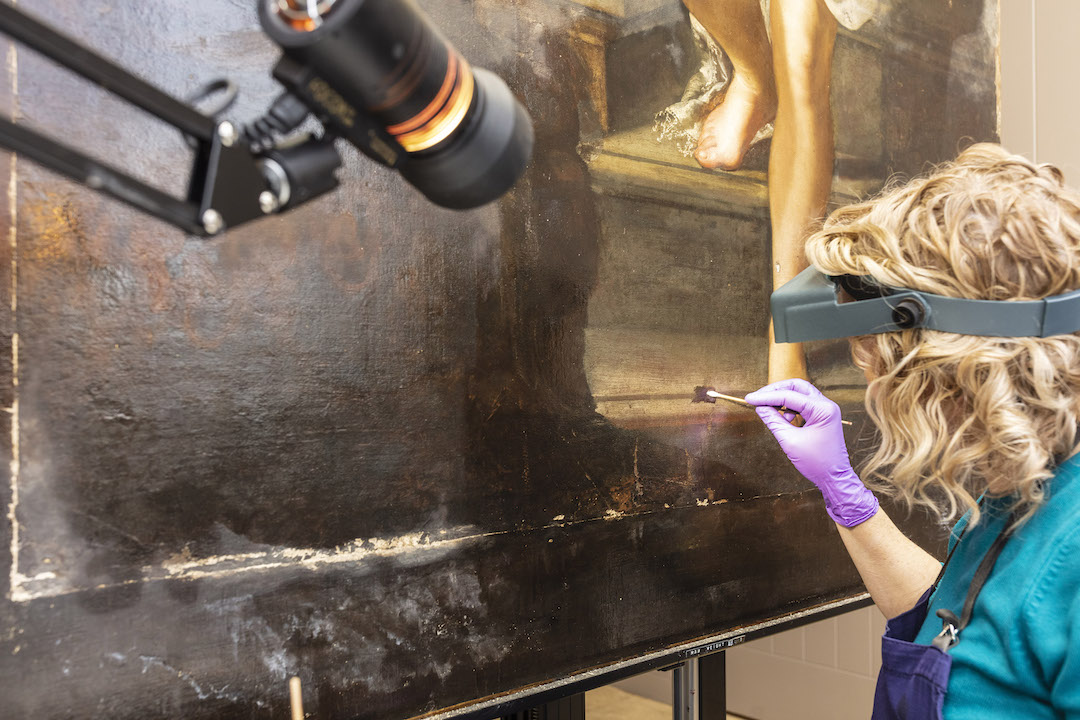
The artwork has since undergone extensive restoration, which involved the removal of centuries of accumulated dirt, discolored varnish, and non-original paint layers.
Additionally, canvas strips added to enlarge the painting at some point were removed, and the canvas was relined, old damages were retouched, and a new frame was commissioned. Susanna and the Elders is now available for public viewing at Windsor Castle.
[via Hyperallergic and ARTnews, images via Royal Collection Trust / © His Majesty King Charles III 2023]
This article was crafted with assistance from an AI engine, and has been manually reviewed & edited.


