
Smallest ‘Nerf Blaster’ Is The Size Of A Hair, Fired At A ‘Disinterested’ Ant
Video screenshot via Brigham Young University
After constructing the world’s largest Nerf blaster, former NASA engineer turned YouTuber Mark Rober went for the small guns in hopes of building the tiniest Nerf blaster. For help, he turned to his alma mater at Brigham Young University (BYU), where he teamed up with mechanical engineering professors Larry Howell and Brian Jensen, along with a group of talented students.
The challenge was clear from the outset: create a Nerf gun so minuscule it could perch on your fingertip. The initial question posed by Jensen was, “How small do you want to get?” They settled on designing a dart that measured a mere 100 micrometers across, about as wide as a human hair. This size was ideal for the manufacturing technologies they intended to use.
Video screenshot via Brigham Young University
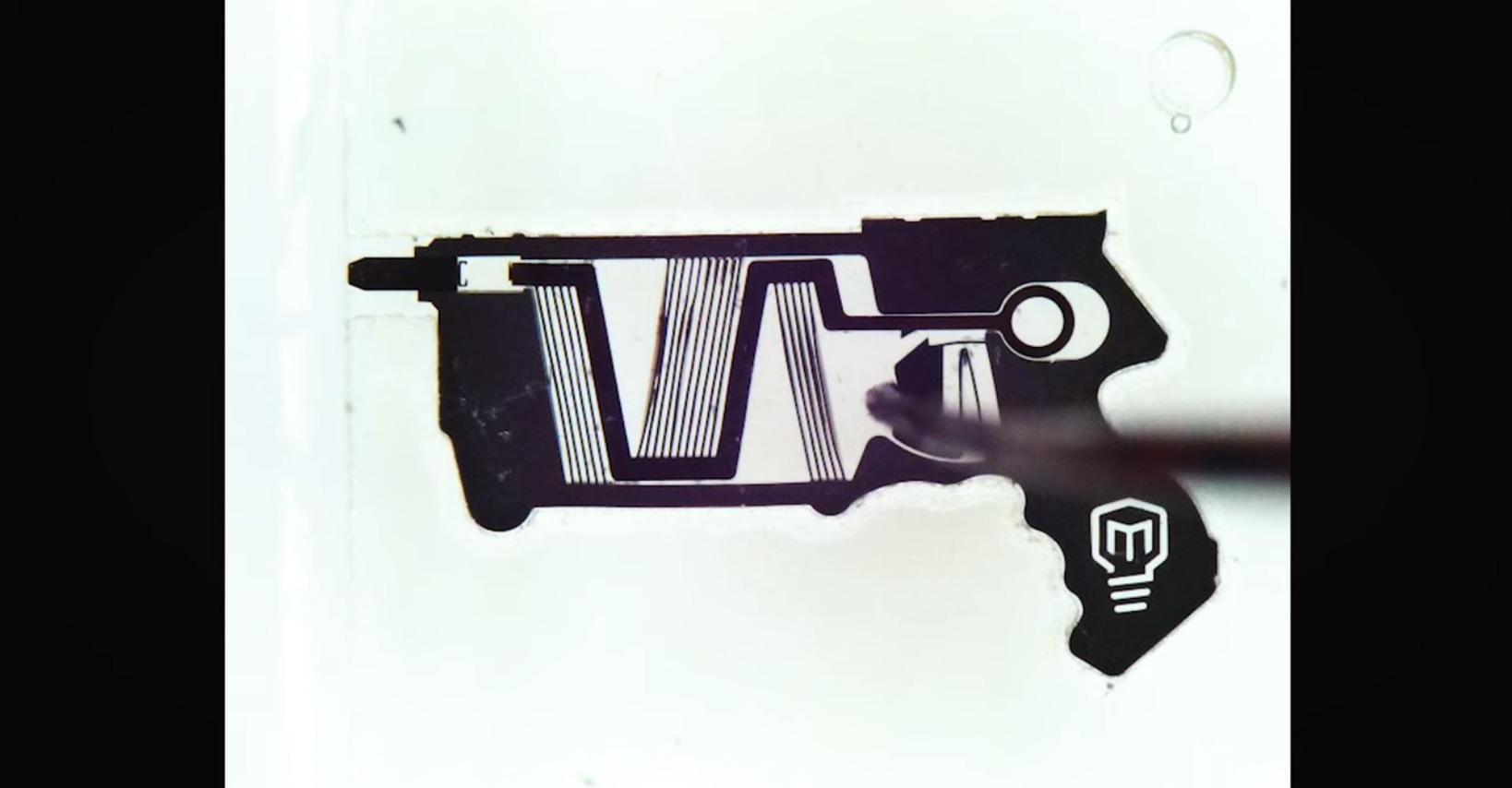
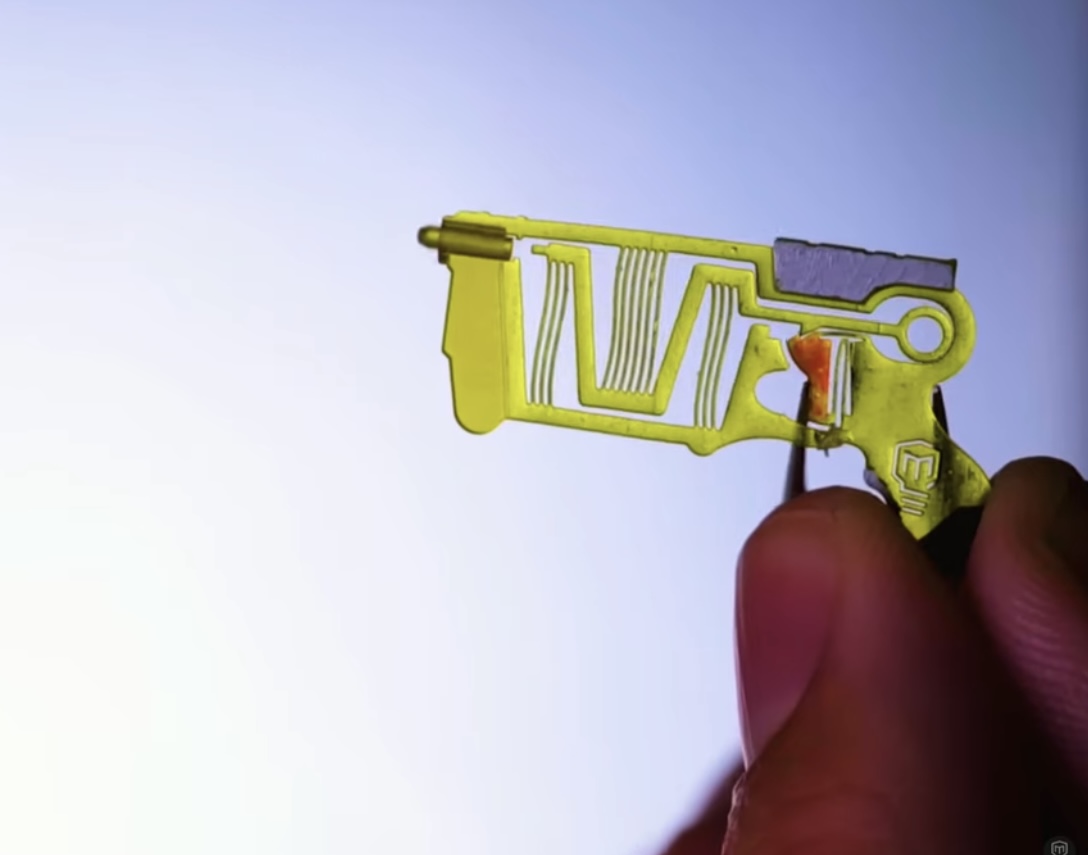
One of the monumental hurdles was designing a one-piece compliant mechanism to replace the multitude of parts found in a typical Nerf blaster, which usually requires moving components and springs to facilitate propulsion. To perfect the design, the team built large, small, and, finally, microscopic iterations using carbon nanotube technologies.

Nerf prototypes in large, small, and, finally, microscopic sizes. Video screenshot via Brigham Young University
As the blaster would be too tiny to be 3D-printed, the researchers turned to photolithography, the same process employed to create computer chips. Overcoming this highly technical obstacle took months of persistent trial and error.
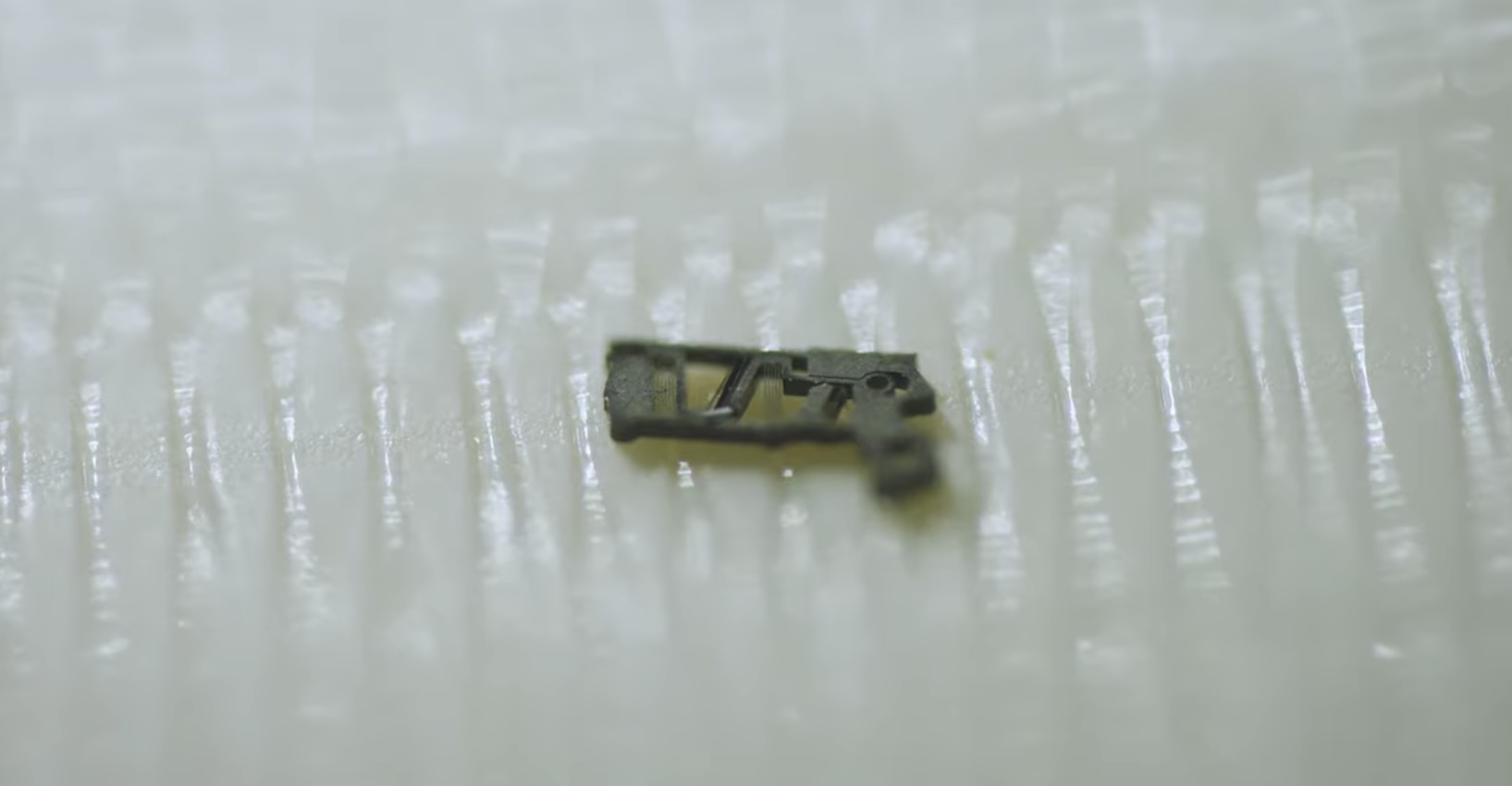
The team’s perseverance paid off when they unveiled a fully functional Nerf blaster on a nano-scale, approximately the size of a fleck of pepper. This miniature marvel, equipped with inbuilt springs just a couple of centimeters long, could accurately fire a microscopic dart. Their target? A somewhat “disinterested” but deserving adversary: an ant.
To sidestep issues related to friction between moving parts, the team chose to construct their mini-Nerf from a single 3D-printed block. The end result was a fully operational model capable of propelling a dart nearly three feet.
Video screenshot via Brigham Young University
For those hoping to have a shot (literally) at building their own, the team has released the designs for the public to 3D-print at home for free.
[via IGN and Brigham Young University, video and screenshots via Brigham Young University]
This article was crafted with assistance from an AI engine, and has been manually reviewed & edited.


