
AI Voice Evaluator Could Help Test Patients For Diabetes
Merging the power of voice technology and artificial intelligence, life sciences company Klick Labs has unveiled a new method that could potentially revolutionize how Type 2 diabetes is detected.
According to research published in Mayo Clinic Proceedings: Digital Health, a mere six to 10 seconds of a person’s speech, coupled with basic health data, might be all that’s needed to determine if someone has the illness.
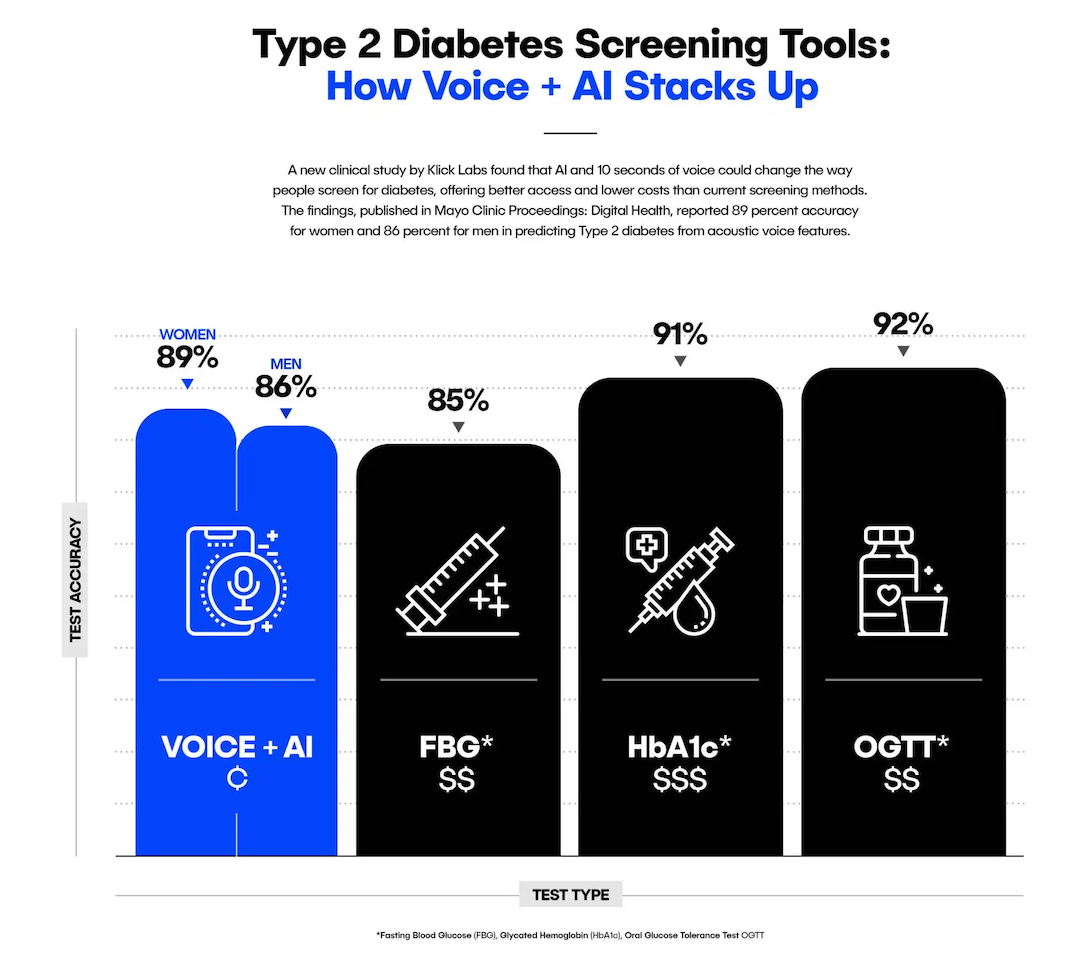
The AI model developed during this study, which involved a mix of 267 diabetic and non-diabetic subjects, exhibited impressive accuracy rates of 89% for women and 86% for men.
Over a two-week period, these individuals were asked to record a specific phrase on their smartphones six times a day. After this, scientists analyzed over 18,000 recordings for 14 distinct acoustic features.
These components were crucial in distinguishing the subtle vocal differences between patients with Type 2 diabetes and those who were healthy.
Intriguingly, the changes in voice associated with Type 2 diabetes appeared differently in men and women.
In fact, some of the alterations in pitch and intensity that were picked up were so subtle that they were imperceptible to the human ear, emphasizing the sensitivity and precision of AI in this diagnostic process.
This innovative approach to diabetes detection holds immense potential, especially considering that nearly half of the 240 million adults living with the disease worldwide remain unaware of their condition.
Currently, conventional diagnostic tests for prediabetes and Type 2 diabetes often involve visits to healthcare providers, including glycated hemoglobin (A1C), fasting blood glucose (FBG), and OGTT tests.
Klick Labs’ non-intrusive voice-based method could potentially screen vast numbers of people and help identify those who are undiagnosed.
According to vice-president Yan Fossat, the next phase of research will aim to replicate these results and explore voice diagnostics for other health conditions, including prediabetes, women’s health issues, and hypertension.
“Our research underscores the tremendous potential of voice technology in identifying Type 2 diabetes and other health conditions,” Fossat said.
“Voice technology could revolutionize healthcare practices as an accessible and affordable digital screening tool.”
This article was crafted with assistance from an AI engine, and has been manually reviewed & edited.


